Hindu woman pressured into forced conversion and nikah by Muslim man in Karnataka
 Bagalkot, Karnataka, India
  11 March, 2026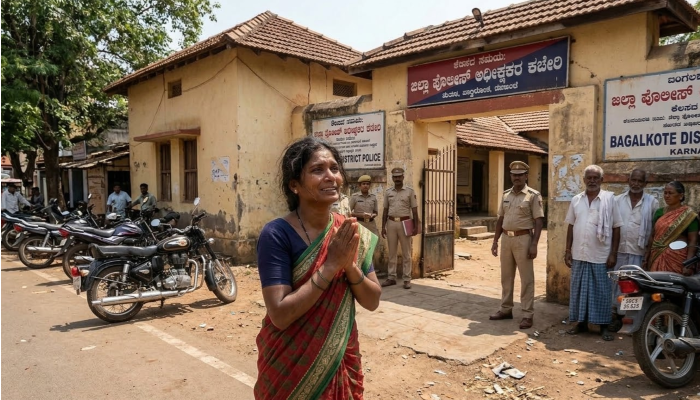
Case Summary
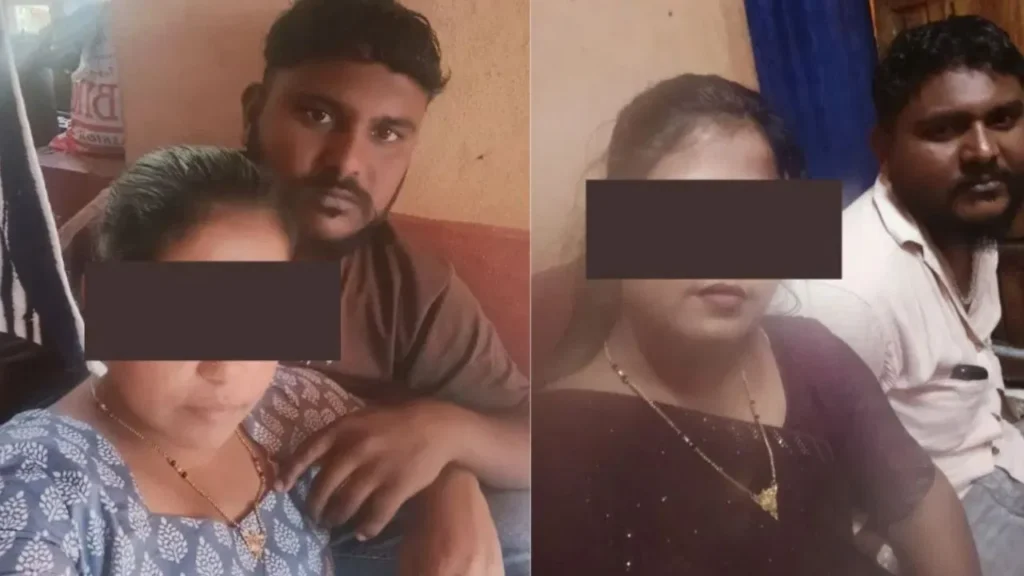
A Hindu woman from Mudhol in the Bagalkote district of Karnataka approached the office of the Superintendent of Police to demand justice after a Muslim man deceived her into a relationship. He coerced her into converting to Islam and subsequently subjected her to harassment, financial exploitation, and abandonment. Sridevi was manipulated into changing her religion and marrying him through a nikah (Islamic marriage ceremony), at which point her name was changed. Following the marriage, she faced relentless harassment and was eventually abandoned after the perpetrator seized her money and jewellery, leaving her in a distressed and vulnerable state. Sridevi, who belongs to the Kuruba Hindu community, was previously married within her own community fourteen years earlier and had children from that union. While she was working in Mudhol, she came into contact with a Muslim man identified as Safiq Qureshi, who gradually established a relationship with her. He promised to marry her and convinced her to end her previous marriage. During the course of their relationship, he pressured and threatened her to abandon her Hindu faith and convert to Islam. Following this forced conversion, her name was changed to Habiba. The marriage was solemnised through a nikah on 7 February 2023, but the situation deteriorated immediately after the ceremony. The perpetrator began mistreating Sridevi, subjecting her to constant harassment and intimidation. He took approximately four lakh rupees in cash along with four tolas of gold jewellery that she possessed. Once he had secured her assets, he returned to live with his first wife. He then physically assaulted Sridevi and threw her out of the house, leaving her entirely without support while she continued to care for her children. Sridevi initially approached Mudhol Police Station to register a complaint regarding the harassment and exploitation she endured, but officers failed to act upon her statement immediately. Feeling ignored and denied assistance, she later approached the office of Bagalkote Superintendent of Police Siddharth Goyal to appeal for justice and describe the ordeal she had survived. After hearing her account, he directed that a case be registered at Mudhol Police Station and ordered a full investigation into the matter.
Case Images
Why it is Hate Crime ?
The primary category for this case is "Crimes against women in relationships and other sexual crimes". The sub-category here is "Forced conversion before marriage ". The tertiary category is "Forced to do Nikah". In such cases, a non-Hindu man is in a relationship with a Hindu woman when the pressure to convert her religion begins to manifest. In such cases, typically, two patterns emerge. First, when the relationship is consensual, and the religious identity of the perpetrator is known to the Hindu woman in the relationship, however, at some point during the relationship, the non-Hindu man starts to force the victim to convert her religion and give up her Hindu religious identity. The second is when the woman marries a man who pretends to share her faith. Later, when the truth is revealed, the man starts pressuring the woman to convert to his religion and give up her religious identity. In both situations, the methods used to force the victim to convert her religion often revolve around force-feeding beef, forcing her to wear hijab, forcing her to read the Kalma or even pressurising the victim to do ‘Nikah’, which is marriage under Islamic law, with a prerequisite being conversion to Islam. Cases where a Hindu woman consensually converts to Islam in a relationship will be left out of the hate crime database, even though it could be argued in several cases that the conversion was a result of religious brainwashing. Another sub-category for this case is "Assault or threat upon refusal to convert". When Hindu women are in a relationship with non-Hindu men, there are cases where the woman faces threats or assault after she refuses to convert and change her religious identity owing to pressure/force by the non-Hindu man. Such relationships may be consensual with the religious identity of the non-Hindu man known to the victim. Somewhere along the relationship, the non-Hindu man starts pressurising the Hindu woman to convert to Islam and upon her refusal, assaults or threatens the victim. Such cases are driven by specific religious motivations and against the religious identity of the victim and are therefore qualified as hate crimes. Cases where the Hindu woman converts to Islam and does not file a complaint about the force or threat, are not considered a part of the hate tracker, even though, it may be argued that the woman was brainwashed or threatened to convert to Islam. Another sub-category here is Brainwashed and/or groomed. The sub-categories are "Victims say she was brainwashed/groomed" and "Rape and sexual assault/harassment". In our database, we have not added incidents where women have converted to another religion of their free will, and no allegations of forced/involuntary conversion have been made. However, there are certain cases of conversion where the consent itself is a result of the brainwashing or grooming of a minor by the non-Hindu perpetrator trying to victimise a woman for her Hindu religious identity. The phenomenon of grooming points to non-Hindu perpetrators identifying their Hindu victims’ vulnerabilities and exploiting them over months and sometimes years, to extract the supposed ‘consent’ to convert their religion. In most cases of grooming, the victims are minors, or the grooming started when the victim was a minor. In other cases of grooming, the non-Hindu perpetrator brainwashes and grooms a minor victim to extract their trust and then proceeds to rape them repeatedly with the intent of converting them to their faith. It is pertinent to understand here that when the victim is a minor, the ‘consent’ to convert or enter into a romantic relationship with an adult itself is redundant – addressed by POCSO. While every case of conversion of a minor and incidents of establishing a physical relationship with a minor by an adult are crimes, for this database, a case would be considered a hate crime only if there is a distinct religious angle to the grooming. For example, in the UK, if a Hindu minor is targeted by Pakistani grooming gangs, it would be considered a hate crime because the victims are specifically targeted owing to their non-Muslim religious identity, with the perpetrators being Muslim. In other cases, if a Hindu minor is brainwashed into entering a physical relationship with the non-Hindu adult perpetrator and the family alleges grooming/brainwashing of the minor to convert her religion, it would form a part of this database. If the victim is a Hindu adult, the case would form a part of this database only if the victim herself says that she was brainwashed/groomed to convert her religion. However, if the victim is deceased (murdered or otherwise), the case would form a part of this database if her family/friends provided testimony that the victim was brainwashed/groomed to convert her religion. Since these crimes have a distinct religious angle where the victim is being targeted owing to her Hindu religious identity, these cases are considered hate crimes. This case bears clear indicators of a religiously motivated hate crime as it involved deception, coercion, and sustained pressure aimed at forcing a Hindu woman to abandon her faith and adopt Islam. The circumstances surrounding the relationship demonstrate that the victim’s Hindu identity was specifically targeted and gradually eroded through manipulation and intimidation. A key religious marker in this case is the coercion used to compel the victim to convert from Hinduism to Islam. Conversion represents the renunciation of one’s inherited religious identity and the adoption of a new faith. The victim was pressured and threatened to abandon her Hindu beliefs to continue the relationship and proceed with marriage. This demand directly targeted her religious identity, placing her in a situation where acceptance within the relationship depended on relinquishing her Hindu faith. Notably, there is no indication that the accused concealed his Muslim identity at the outset of the relationship. This suggests that the victim entered the relationship with the belief that her own Hindu faith would not be treated as a barrier and that her religious identity would be respected within the partnership. However, the events that unfolded after the relationship deepened and culminated in marriage demonstrate a stark shift. The sudden escalation of pressure to convert after the relationship had been firmly established indicates that the coercion was not incidental but formed part of a calculated attempt to compel the victim to abandon her faith once she had become emotionally and socially invested in the relationship. The imposition of a Nikah ceremony following the conversion further illustrates the religious dimension of the coercion. Nikah is an Islamic marital institution governed by Islamic personal law and applies within the religious framework of Muslim marriages. By forcing the victim to undergo religious conversion and subsequently marrying her through a Nikah ceremony, the perpetrator compelled her to enter a marital structure rooted in a religious system that she had not freely chosen. The change of her name following the conversion further reflects an attempt to erase her prior Hindu identity and replace it with a new religious identity aligned with Islam. The pattern of abuse that followed the marriage demonstrates how religious coercion was intertwined with exploitation and control. After securing the conversion and marriage, the perpetrator subjected the victim to harassment, intimidation, and financial exploitation, eventually abandoning her after taking her money and jewellery. The sequence of events shows that the victim was manipulated into abandoning her faith and entering a religiously structured marriage, only to be later discarded once her assets were appropriated. The targeting of the victim’s faith, the pressure to convert, the imposition of Islamic marital practices, and the subsequent abuse and abandonment collectively demonstrate that the victim’s Hindu identity was central to the harm inflicted upon her. The coercive effort to compel a Hindu woman to renounce her religion and adopt another faith represents a form of predatory proselytisation in which emotional relationships are exploited as a mechanism for religious conversion. Given the deliberate targeting of the victim’s Hindu identity, the sustained pressure to abandon her faith, the imposition of Islamic religious practices, and the exploitation that followed the conversion, the incident displays clear markers of a religiously motivated hate crime. Accordingly, it has been recorded in the Hinduphobia Tracker database under predatory proselytisation and coercion aimed at forcing religious conversion.
Victim Details
Total Victim
1
Deceased
0
Gender
- Male 0
- Female 0
- Third Gender 0
- Unknown 1
Caste
- SC/ST 0
- OBC 1
- General 0
- Unknown 0
Age Group
- Minor 0
- Adult 0
- Senior Citizen 0
- Unknown 1


Case Status
Complaint filed


Perpetrators Details
Perpetrators
Muslim Extremists
Perpetrators Range
One Person
Perpetrators Gender
male
 Sources




