Haryana: Unidentified miscreants enter Chandi Mata Temple with shoes, steal Rs 5 lakh cash; gold and silver items worth Rs 6.50 lakh
 Panchkula, Haryana, India
  10 January, 2024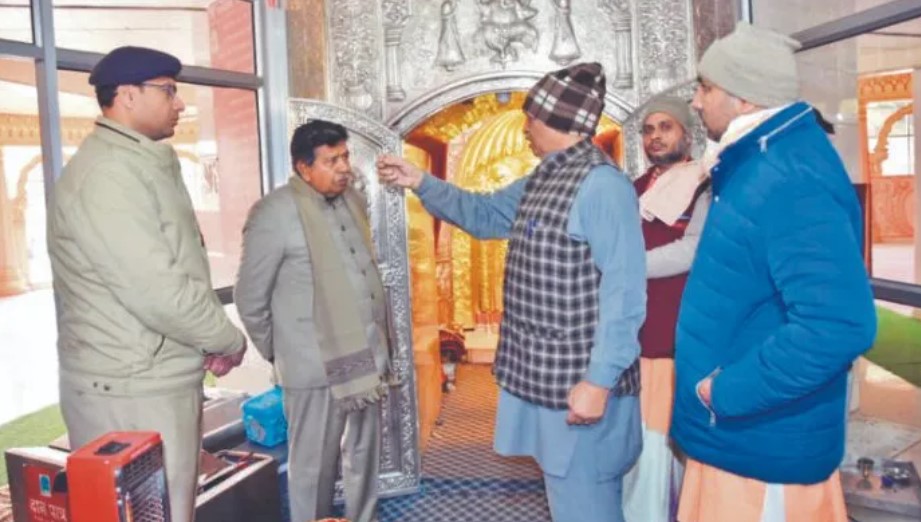
Case Summary
On the night of January 10-11, three men broke into the Chandi Mata Temple in Haryana’s Chandimandir, Panchkula district, stealing around ₹5 lakh in cash from donation boxes, 2.5 kg of gold jewelry, and other valuables worth ₹6.50 lakh. The robbers entered through the back gate after breaking its lock, as captured on CCTV, and remained on the premises for about 45 minutes. They were seen wearing shoes in the temple's sanctum sanctorum. The police were promptly informed, and investigations began using CCTV footage from the temple and nearby areas, including the Chandi Mandir toll plaza. Several impoverished localities near the temple were raided, and numerous individuals were taken into custody for questioning. Speaker of the Haryana Assembly, Gyan Chand Gupta, visited the temple on January 11 to assess the situation. He instructed police and temple authorities to enhance security and expedite the arrest of the culprits. Some stolen items, including a gold umbrella and a necklace, were recovered from the donation boxes, while other materials were found on a hill near the temple, indicating the escape route of the thieves.
Why it is Hate Crime ?
This case has been added as a religiously motivated crime under the prime category of 'Attack on Hindu religious symbols' of the tracker. Under this, three sub-categories have been selected, based on the case details. The first is- Breaking rules of place of worship. Sanatan Dharma is not a religion of one book, which is to say that while it has religious scriptures that form the central tenets of the faith, there are several traditions followed through thousands of years, mostly passed from generation to generation orally. One of these oral traditions or written traditions is the rules of specific temples. Certain temples have rules which are traditional rules, dependent on the worship of the presiding deities. These rules and traditions have been followed for thousands of years whether they find scriptural mention or not. Such traditions are based on the nature and rules of worship of the presiding deity of that temple. Any non-compliance of these traditions owing to animosity towards the faith or for the sake of activism stems not only from the lack of faith in the presiding deity but also disregard for the faith of the devotees of that deity/temple and implicit bias against the faith, the tradition and the deity itself. Since these specific traditions are central to the faith of the devotees of that specific temple and presiding deity, any non-compliance with these traditional rules would be considered a religiously motivated hate crime. The second sub-category selected here is- Attack on Temples. In Hinduism, a temple is the abode of the Deity. The Deity in the Temple is consecrated, thereby, making it a real, breathing entity. Hindus believe that not just the Deity but the temple premises itself are sacred to Hindus since Hindus hold the faith that the entire Temple space is an amalgamation of the divine energy of the deity. Given the central significance of Temples in Hindu Dharma, any attack against a Hindu Temple or its peripheral premises is an attack on the faith itself and is born out of animosity towards the faith, of which, the Temple is a central tenet. Any manner of attack against a Temple and/or its premises would therefore be considered a religiously motivated hate crime. The third sub-category under which this case has been placed is- Desecration of Hindu religious symbol. Icons and symbols or a religious representation of a spiritual ideal are widely revered in Hinduism. Iconography is of vital significance in the Hindu milieu. It helps connect people’s spiritual beliefs with the real world. Iconography within the Hindu faith takes several shapes and forms. Murtis are of most significance to Hindus, to which daily rituals, prayers and offerings are done. Besides the murtis, there are several other symbols which have deep significance in the Hindu faith – the Om and Swastika for example. Since these Hindu religious symbols hold paramount importance in Hinduism, any desecration of symbols, icons, murtis, religious representations and manifestations, is driven by animosity towards the faith itself which manifests itself through these murtis, icons and symbols. Therefore, any desecration of these Hindu religious symbols and representations is considered religiously motivated hate crimes under this category. In this case, the robbers not only broke into the Chandi Mata Temple, a sacred Hindu site, but also violated its sanctity by entering the sanctum sanctorum with shoes on, disregarding the religious norms and traditions upheld by the temple. This act demonstrates a lack of respect for the temple’s sanctity. Furthermore, the theft and mishandling of consecrated items, including gold jewellery and other offerings dedicated to the deity, amount to the desecration of Hindu religious symbols, as these articles hold significant spiritual and cultural value. The act of targeting a Hindu temple, a revered place of worship, for criminal purposes represents a temple attack, underscoring the deliberate targeting of a religious centre. Together, these elements highlight the incident's broader implications as an attack not just on property but on religious identity and practices, making it worthy of being documented here, in the tracker. It is important to mention here that though the last update was that the miscreants were unknown, regardless, the action stemmed out of hatred against Hinduism and resulted in the desecration of the sacred temple and would therefore be considered a religiously motivated hate crime.


Case Status
Complaint registered


Perpetrators Details
Perpetrators
Unknown
Perpetrators Range
Unknown
Perpetrators Gender
unknown
 Sources




