Hindu girl assaulted, raped and pressured for conversion by Muslim man feigning Hindu identity
 Karnataka, India
  7 March, 2025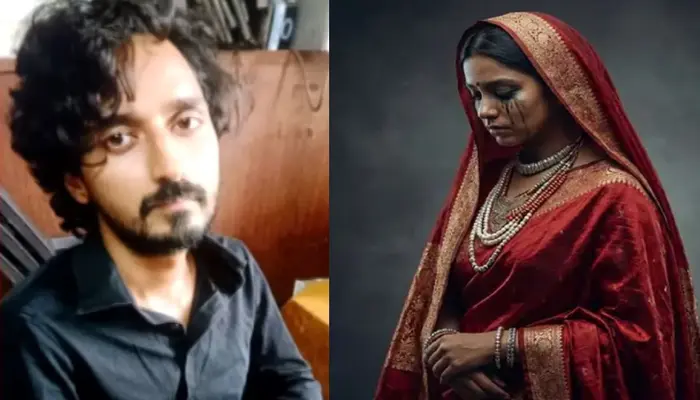
Case Summary
In Bhubaneswar, Odisha, a Hindu girl was deceived, sexually exploited and pressured for religious conversion by a Muslim man named Irfan Ansari, who posed as a Hindu. According to reports, the accused, Irfan Ansari, a resident of Karnataka, came into contact with the victim, who hailed from Bhadrak, Odisha, while working at a hotel in Karnataka, about one year ago (Some news reports stated that the accused came into contact with the victim through social media in December 2025). The accused befriended her by introducing himself as a Hindu man named Jayaram Sharma. The accused gradually lured her into a romantic relationship under this false Hindu identity, while promising to marry her. During the course of their interaction, the accused took the woman to a four-star hotel in Bhubaneswar, where he physically assaulted and sexually abused her. Over several months, he maintained his false Hindu identity while strengthening his influence over the victim by promising to marry her, while simultaneously attempting to convert her religion. The victim later returned to Odisha and started a job in Puri, where Irfan frequently visited her. During this time, the victim discovered two different Aadhaar cards belonging to the accused, one bearing the name “Jayaram Sharma” and the other revealing his real identity as Irfan Ansari. The victim understood that the accused's real name was Irfan Ansari and that he was a Muslim. When the deception came to light, and the victim attempted to distance herself from him, he became violent, beat her, and held her captive while threatening to forcibly take her out of Karnataka. Reports indicated that he intended to transport her to Karnataka. Acting on information about the situation, police from the Shaheed Nagar police station intercepted the accused while he was attempting to flee with the victim and rescued her safely. During the arrest, authorities recovered several fake identity documents and weapons from the accused, raising suspicions about broader criminal activity and the possible use of fabricated identities to target women. Investigators also found that he had used multiple social media profiles and identities while interacting with the victim. A case was registered against him under charges including rape, kidnapping, and criminal conspiracy under Section 120B of the Indian Penal Code, and he was subsequently produced before a court. Police continued to investigate the incident to determine whether he had been involved in similar offences in the past and to examine the wider circumstances surrounding the use of false identities and coercion in the case.
Why it is Hate Crime ?
This case has been added to the tracker under the primary category- Crimes against women in relationships and other sexual crimes. The subcategory selected is- Man pretends to be Hindu. The tertiary categories selected are- Name Changed. When a non-Hindu man pretends to be a Hindu to deceive a Hindu woman into a relationship, the act is seen as triggered by malafide intentions. In some cases, the woman eventually accepts the man’s original religious identity and converts after the man’s identity is revealed. These cases could be argued as cases of religious brainwashing and a result of the pressure a woman feels after getting into a relationship with a man. The woman, it can be argued, also changed her religious identity because of the stigma she believes she might face if she chooses to walk out of a deceptive relationship. However, for the purpose of documenting hate crimes, the cases in this subcategory are limited to those where there is explicit violence aimed at religious conversion against the wishes of the victim (force-feeding beef, blackmailing with intimate videos, rape on refusal to convert, etc), or if the woman herself complains of the man’s religious deception. In such cases, it is established that the deception of the non-Hindu man had a specific aim of religious conversion or targeting of the victim due to her Hindu religious identity, therefore, making it a religiously motivated hate crime. The other subcategory selected is- Brainwashed and/or Groomed. The tertiary categories is- Rape and sexual assault/harassment. In our database, we have not added incidents where women have converted to another religion of their free will and no allegations of forced/involuntary conversion have been made. However, there are certain cases of conversion where the consent itself is a result of the brainwashing or grooming of a minor by the non-Hindu perpetrator trying to victimise a woman for her Hindu religious identity. The phenomenon of grooming points to non-Hindu perpetrators identifying their Hindu victims’ vulnerabilities and exploiting them over months and sometimes years, to extract the supposed ‘consent’ in order to convert their religion. In most cases of grooming, the victims are minors or the grooming started when the victim was a minor. In other cases of grooming, the non-Hindu perpetrator brainwashes and grooms a minor victim to extract their trust and then proceeds to rape them repeatedly with the intent of converting them to their faith. It is pertinent to understand here that when the victim is a minor, the ‘consent’ to convert or enter into a romantic relationship with an adult itself is redundant – addressed by POCSO. While every case of conversion of a minor and incidents of establishing a physical relationship with a minor by an adult is a crime, for the purpose of this database, a case would be considered a hate crime only if there is a distinct religious angle to the grooming. For example, in the UK, if a Hindu minor is targeted by Pakistani grooming gangs, it would be considered a hate crime because the victims are specifically targeted owing to their non-Muslim religious identity with the perpetrators being Muslim. In other cases, if a Hindu minor is brainwashed into entering a physical relationship with the non-Hindu adult perpetrator and the family alleges grooming/brainwashing of the minor to convert her religion, it would form a part of this database. If the victim is a Hindu adult, the case would form a part of this database only if the victim herself says that she was brainwashed/groomed to convert her religion. However, if the victim is deceased (murdered or otherwise), the case would form a part of this database if her family/friends provided testimony that the victim was brainwashed/groomed to convert her religion. Since these crimes have a distinct religious angle where the victim is being targeted owing to her Hindu religious identity, these cases are considered a hate crime. The other sub-category selected is - Forced conversion before marriage. In such cases, a non-Hindu man is in a relationship with a Hindu woman when the pressure to convert her religion begins to manifest. In such cases, typically, two patterns emerge. First, when the relationship is consensual, and the religious identity of the perpetrator is known to the Hindu woman in the relationship, however, at some point during the relationship, the non-Hindu man starts to force the victim to convert her religion and give up her Hindu religious identity. The second is when the woman gets into a marriage with the man pretending to share her faith. Later, when the truth is revealed, the man starts pressuring the woman to convert her religion and give up her religious identity. In both the situations, the methods used to force the victim to convert her religion often revolve around force-feeding beef, forcing her to wear hijab, forcing her to read the Kalma or even pressurizing the victim to do ‘Nikah’, which is marriage under Islamic law, with a prerequisite being conversion to Islam. Cases where a Hindu woman consensually converts to Islam in a relationship will be left out of the hate crime database, even though it could be argued in several cases that the conversion was a result of religious brainwashing. This case constituted a clear instance of a religiously motivated hate crime, as a Hindu girl was deliberately targeted, deceived, sexually exploited and pressured for conversion by the Muslim accused, Irfan Ansari, faking Hindu identity. The pattern of crime was not incidental or purely interpersonal but rooted in hostility towards her Hindu background and aimed at subordinating and erasing her faith through force and intimidation. Firstly, the accused deliberately concealed his religious identity to initiate and sustain a relationship with a Hindu girl. This itself is a clear manifestation of bias and malicious intent towards the victim's religion. By concealing his true identity, he exploited her trust, targeting her under false pretences. This indicates a premeditated intent to manipulate her based on her religious background. In cases like these, the tactic of adopting a false Hindu identity to manipulate and "ensnare" a Hindu individual is not just an act of personal betrayal but can also be interpreted as an expression of disdain or disregard for Hinduism and its customs that reflects a deeper animosity towards Hindus and their beliefs. In such instances, identity concealment was not just a deceptive tactic for personal reasons, but a calculated strategy rooted in religious profiling and targeting. The accused knew that the victim, being Hindu, would likely refuse his advances if she knew his real identity, and he circumvented this by lying, which directly pointed to a religiously driven intent. Secondly, the accused claimed that he would marry her and later took her to a hotel where he sexually exploited her and physically assaulted her. These exploitations were not random acts of crime; rather, they functioned as religiously motivated tools aimed at humiliating and dominating a Hindu girl because of her faith, as he also pressured her to convert. The target was not the victim as an individual, but her Hindu identity. In such cases, sexual or physical violence serves a dual purpose: physical subjugation and religious humiliation. The intention was to break the victim down, emotionally, physically, and spiritually, so that she could be converted. This was not random violence; it was systematic, targeted, and rooted in religious animosity. Thirdly, pressuring a Hindu individual to discard her religious faith and embrace another was a direct attack on her religious identity and dignity. It was not a matter of personal choice; it was coercion rooted in hostility towards the victim's Hindu identity. Such an attempt reflects religious animosity because the act was not simply about personal differences but about erasing the victim’s Hindu faith, making it a religiously motivated crime. Such actions stem from inherent hostility towards the victim's professed faith since Abrahamic faiths believe that any non-adherent to the faith is subject to being dehumanised till they convert. Such acts were not merely personal crimes; they were rooted in a desire to dominate and erase the religious identity of the victim. Since such predatory actions stem from doctrinal animosity towards the Hindu faith and its adherents, this case is being documented as a religiously motivated hate crime. Disclaimer: It is important to clarify that none of the media sources covering this case specifies the exact date when the victim’s ordeal began, although it is mentioned that she came into contact with the accused about a year prior in Karnataka. Thus, for documentation purposes, an indicative date of 8 March 2025 has been used as a placeholder to represent the beginning of her suffering. While media coverage of the incident emerged on 8 March 2026, the Hinduphobia Tracker records incidents based on when the victim’s ordeal began rather than when the case was reported. Additionally, for the same reason, the place of the incident has been recorded as Karnataka. Since the initial contact and the beginning of the relationship between the accused and the victim reportedly took place there, the location has been documented based on where the victim’s ordeal appears to have begun. It is also important to note that different media reports provide varying accounts regarding how and when the victim first came into contact with the accused. A report by Jagran states that the victim met the accused while both were working at a hotel in Karnataka about a year earlier. In contrast, an OdishaBytes report states that the victim came into contact with the accused through social media in December 2025. Due to these conflicting timelines and in order to maintain consistency in documentation, the earlier timeframe has been selected for the purpose of recording the beginning of the incident.
Victim Details
Total Victim
1
Deceased
0
Gender
- Male 0
- Female 1
- Third Gender 0
- Unknown 0
Caste
- SC/ST 0
- OBC 0
- General 0
- Unknown 1
Age Group
- Minor 0
- Adult 0
- Senior Citizen 0
- Unknown 1


Case Status
Case sub-judice


Perpetrators Details
Perpetrators
Muslim Extremists
Perpetrators Range
One Person
Perpetrators Gender
male
 Sources




