Hindus attacked by Muslim men for celebrating Holi in Kanpur, Uttar Pradesh
 Kanpur Dehat, Uttar Pradesh, India
  4 March, 2026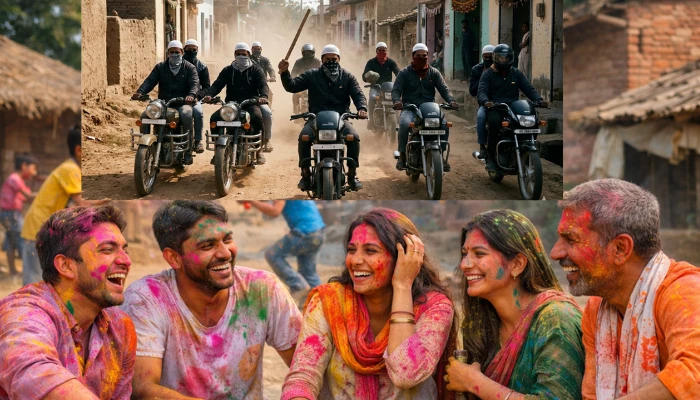
Case Summary
In Manethu village under Gajner police station, Kanpur Dehat, Uttar Pradesh, Hindus celebrating Holi were attacked by a Muslim group with sticks and stones. Five Hindus were injured. The clash took place on Thursday (5 March 2026) evening. According to reports, a few Hindu boys were sitting near a school during Holi, joking and celebrating. At that time, a Muslim youth passed by, and an argument started. Within minutes, groups from both sides gathered, and the quarrel escalated into violence as the Muslim side launched an attack on Hindus. Sticks and stones were used in the fight, and five Hindus sustained injuries. They were taken to the district hospital for treatment. Locals described the scene as tense, with families rushing indoors to avoid the violence. One Hindu villager said, “Children were playing Holi, but suddenly, Muslim people came with sticks. Everyone was scared.” Five Hindus, including Rekha Devi (35), wife of Sanjay, Sushil Kumar (50), Rajendra Kumar, and Shobha (22), wife of Surajbhan, were injured Police reached the spot soon after receiving information. Officers confirmed that FIRs were being registered and statements were being taken from both sides. The injured were admitted to the hospital, and patrolling was intensified in the area to prevent further escalation. The police stated, “We are investigating the matter and strict action will be taken against those found guilty.”
Why it is Hate Crime ?
This case is being added to the tracker under the primary category- Attack not resulting in death. The subcategory selected is- Attacked for Hindu identity. In several cases, Hindus are attacked merely for their Hindu identity without any perceived provocation. A classic example of this category of religiously motivated hate crime is a murder in 2016. 7 ISIS terrorists were convicted for shooting a school principal in Kanpur because they got ‘triggered’ seeing the Kalava on his wrist and the tilak that he had put. In this, the Hindu victim had offered no provocation except for his Hindu religious identity. The motivation for the murder was purely religious, driven by religious supremacy. Such cases where Hindus are targeted merely for their religious identity would be documented as a hate crime under this category. The other subcategory selected is- Communal clash/attack. Communal clash is a form of collective violence that involves clashes between groups belonging to different religious identities. For a communal clash between Hindus and non-Hindus to qualify as a religiously motivated hate crime, the trigger of the violence itself would have to be anti-Hindu in essence. For example, if there is a Hindu religious procession that comes under attack from a non-Hindu mob and after the initial attack, Hindus retaliate in self-defence, leading to a communal clash between the two religious communities. While at a later stage, both communities are involved in the clash/violence, the initial trigger of the violence was by the non-Hindu mob against the Hindus, and therefore, it could safely be termed as an anti-Hindu violence. Further, the trigger would also have to be religiously motivated. In the cited example, the attack by the non-Hindu mob was against religious processions and therefore can be concluded to be religiously motivated. In some cases, the trigger may be non-religious; however, it develops into religious violence against Hindus at a later stage. In such cases, too, the foundational animosity towards Hindus becomes the motivating factor of the crime, and therefore, it would be classified as a religiously motivated hate crime against Hindus under this category. This case was added to the tracker because it demonstrated how a routine and joyous Hindu festival became the trigger for targeted hostility and violence against Hindus, highlighting how the open celebration of Hindu traditions was met with aggression and intimidation. Holi is one of the most vibrant and widely celebrated Hindu festivals, marked by colours, laughter and light-hearted gatherings among friends and neighbours. During such occasions it is common for young people to sit together, share jokes and enjoy the festive atmosphere in their neighbourhoods. In this instance, the Hindu victims were doing precisely that, sitting outside together in a cheerful mood during the Holi celebrations. Their conduct reflected the normal spirit of the festival and involved no confrontation or provocation. However, members of the Muslim community confronted and attacked them while they were celebrating. Stones were hurled, and violence erupted, injuring several people and turning a harmless festive moment into a frightening communal attack. The Hindus had merely been sitting together and joking around when the attack occurred, indicating that the hostility was directed not at any wrongdoing but at Hindus openly celebrating their religious festival. The escalation that followed involved collective aggression and developed into a broader confrontation between members of the two communities. Yet the sequence of events made it clear that the violence began with the attack on Hindu youths who had been peacefully enjoying the Holi celebrations. Attacking Hindus immersed in these celebrations desecrated their faith at its heart, transforming a moment of celebration into terror. Such violence during Holi directly insulted the Hindu faith and traditions, confirming the religious nature of the crime. By targeting Hindus for playing Holi, the perpetrators aimed to humiliate and suppress Hindu practices, making this unequivocally a hate crime fuelled by animosity towards Hinduism. Incidents like this carry a deeper psychological impact on local Hindu communities. Festivals such as Holi are meant to bring families and neighbours together in joy. When Hindus celebrating their festivals are violently attacked, it creates fear and sends a chilling message to the wider Hindu community about the risks of openly celebrating their traditions. Given that the violence emerged directly from the act of celebrating Holi, involved collective aggression, and targeted Hindu individuals who were participating in a Hindu religious festival, the incident satisfied the criteria of a religiously motivated hate crime. Therefore, the case was recorded in the Hate Crime database of the Hinduphobia tracker.
Victim Details
Total Victim
5
Deceased
0
Gender
- Male 3
- Female 2
- Third Gender 0
- Unknown 0
Caste
- SC/ST 0
- OBC 0
- General 0
- Unknown 5
Age Group
- Minor 0
- Adult 5
- Senior Citizen 0
- Unknown 0


Case Status
Complaint filed


Perpetrators Details
Perpetrators
Muslim Extremists
Perpetrators Range
Unknown
Perpetrators Gender
male
 Sources




