Hindus celebrating Holi subjected to brutal attack by Muslim men in Rudrapur, Uttarakhand
 Udham Singh Nagar, Uttarakhand, India
  4 March, 2026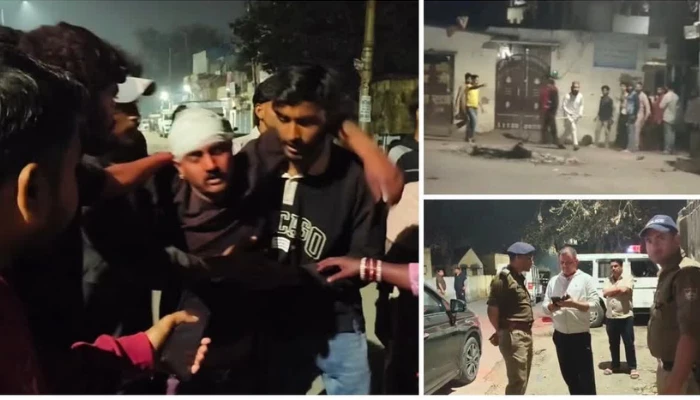
Case Summary
In the Bhootbangla area of Rudrapur in Udham Singh Nagar district of Uttarakhand, Hindus celebrating Holi were brutally attacked by a group of Muslim men with stones, sticks, and guns. This attack resulted in more than a dozen Hindus being injured. The incident occurred late Thursday night (5 March 2026) during Holi festivities in Rudrapur’s Bhootbangla locality. Hindu residents had organised a neighbourhood programme when a Muslim youth repeatedly drove his e-rickshaw through the religious gathering. Hindu locals asked him to stop, but he abused them and left. According to reports, the same youth returned after some time with several Muslim companions. They began assaulting the Hindus who were playing Holi and started stone pelting and stick fighting. During this time, even gunshots were fired at Hindus. Hindu families celebrating Holi were forced to run for safety as stones and bricks were thrown across the lanes. Injured Hindus were taken to the district hospital. One Hindu resident said, “We had gathered for Holi, but suddenly stones and sticks started flying across lanes. Women and children were crying in fear.” The police reached the spot promptly and used lathi charges to disperse the groups. Senior officers confirmed that FIRs were being registered against members of both communities. Patrolling was intensified in the area to prevent further escalation. Officials stated that strict action would follow once individuals were identified. Community representatives expressed concern that such violence had erupted during a Hindu festival meant for joy. Parents of injured Hindu youths voiced distress, saying the celebrations had turned into panic. The police presence continued, and enquiries were underway to ensure accountability.
Why it is Hate Crime ?
This case is being added to the tracker under the primary category- Attack not resulting in death. The subcategory selected is- Attacked for Hindu identity. In several cases, Hindus are attacked merely for their Hindu identity without any perceived provocation. A classic example of this category of religiously motivated hate crime is a murder in 2016. 7 ISIS terrorists were convicted for shooting a school principal in Kanpur because they got ‘triggered’ seeing the Kalava on his wrist and the tilak that he had put. In this, the Hindu victim had offered no provocation except for his Hindu religious identity. The motivation for the murder was purely religious, driven by religious supremacy. Such cases where Hindus are targeted merely for their religious identity would be documented as a hate crime under this category. The other subcategory selected is- Communal clash/attack. Communal clash is a form of collective violence that involves clashes between groups belonging to different religious identities. For a communal clash between Hindus and non-Hindus to qualify as a religiously motivated hate crime, the trigger of the violence itself would have to be anti-Hindu in essence. For example, if there is a Hindu religious procession that comes under attack from a non-Hindu mob and after the initial attack, Hindus retaliate in self-defence, leading to a communal clash between the two religious communities. While at a later stage, both communities are involved in the clash/violence, the initial trigger of the violence was by the non-Hindu mob against the Hindus, and therefore, it could safely be termed as an anti-Hindu violence. Further, the trigger would also have to be religiously motivated. In the cited example, the attack by the non-Hindu mob was against religious processions and therefore can be concluded to be religiously motivated. In some cases, the trigger may be non-religious; however, it develops into religious violence against Hindus at a later stage. In such cases, too, the foundational animosity towards Hindus becomes the motivating factor of the crime, and therefore, it would be classified as a religiously motivated hate crime against Hindus under this category. This case was added to the tracker because it demonstrated how a peaceful Hindu religious celebration was deliberately disrupted, followed by collective aggression that prevented Hindus from freely celebrating their festival and targeted them specifically because they were Hindus celebrating their religious festival, creating fear among the local Hindu community. The incident took place during Holi, one of the most joyous and widely celebrated Hindu festivals, when people traditionally gathered in public spaces to play with colours, music and laughter. During the celebrations in the Bhootbangla locality of Udham Singh Nagar, Hindu residents were peacefully playing Holi in their neighbourhood. At this point, an e-rickshaw driver from the Muslim community began intentionally disturbing the celebrations. The disruption was not accidental. Despite objections from the Hindus and requests to stop interfering, he continued to create a disturbance during the festivities. Instead of disengaging, he left the spot and returned with several other members of the Muslim community. What followed was a coordinated attempt to shut down the celebration itself. The group began confronting Hindus and actively prevented them from continuing to play Holi. The situation escalated further into stone pelting and firing, turning a joyful community gathering into a frightening and chaotic scene. The aggression was directed at the Hindu participants because they were Hindus celebrating their religious festival in public. The response was clearly disproportionate to the situation. Hindus had simply been celebrating a centuries-old festival in their own neighbourhood, something that was entirely normal during Holi. Yet the reaction they faced from Muslims was organised hostility aimed at stopping the celebration altogether. Such behaviour conveyed a message of religious animosity and dominance that Hindus could be challenged, intimidated and prevented from celebrating their own religious traditions in shared public spaces. Attacking Hindus immersed in these celebrations desecrated their faith at its heart, transforming a moment of celebration into terror. Such violence during Holi directly insulted the Hindu faith and traditions, confirming the religious nature of the crime. By targeting Hindus with violence, the Muslim group aimed to humiliate and suppress Hindu practices, making this unequivocally a hate crime fuelled by animosity towards Hinduism. Overall, the brutality of the violence clearly showcased communal motivations. The assault was brutal and deliberate, showcasing a clear example of communal violence. When Hindus are attacked solely for their religious identity during Holi festivities, it reveals an underlying hostility rooted in contempt for their faith, symbols of worship, and cultural practices such as Holi. The fact that the assault occurred during active Holi celebrations underscored that the intent was not only to inflict physical harm but also to provoke, humiliate, and terrorise Hindus during their sacred festival. The timing exposed a calculated effort to undermine and desecrate the spirit of Holi. This was therefore not an isolated dispute over colours but a targeted act of intimidation against Hindus, making it a clear and deliberate case of a religiously motivated hate crime. The psychological impact of such incidents cannot be ignored. Festivals like Holi are meant to bring communities together, especially families, children and neighbours. In this case, women and children present during the celebrations were left frightened as the situation turned violent. When a peaceful festival gathering suddenly became the site of stone pelting and gunfire, it sent a chilling signal to the local Hindu community about the risks associated with publicly celebrating their faith. Events like this slowly chipped away at the sense of cultural freedom that festivals were supposed to embody. When Hindus are stopped from celebrating Holi through intimidation and collective aggression, it creates a climate where people begin to think twice before participating in their own traditions. The fear generated by such confrontations discouraged open celebration and undermined the basic expectation that individuals should be able to practise their culture without intimidation. Given that the violence stemmed directly from the act of celebrating Holi, involved deliberate disruption followed by collective aggression, targeted individuals specifically because they were Hindus celebrating their religious festival, and resulted in Hindus being prevented from freely celebrating their festival, the incident met the criteria of a religiously motivated hate crime. Therefore, the case was recorded in the hate crime database of the Hinduphobia tracker. Disclaimer: The Hinduphobia tracker recorded the victim count as 12. Media reports in this case stated that more than a dozen Hindus were injured in the brutal attack, but did not specify the exact total. This conservative victim count of twelve is recorded for documentation purposes only. Similarly, the perpetrator count has not been specified. Reports mentioned only one specific perpetrator who drove his e-rickshaw repeatedly through the Holi venue, but did not state the total number. Henceforth, a conservative estimate of one perpetrator is recorded. This is for documentation purposes only.
Victim Details
Total Victim
12
Deceased
0
Gender
- Male 0
- Female 0
- Third Gender 0
- Unknown 12
Caste
- SC/ST 0
- OBC 0
- General 0
- Unknown 12
Age Group
- Minor 0
- Adult 0
- Senior Citizen 0
- Unknown 12


Case Status
Complaint registered


Perpetrators Details
Perpetrators
Muslim Extremists
Perpetrators Range
One Person
Perpetrators Gender
male
 Sources




