Hindu man assaulted for opposing defilement of sacred Hindu temple by Muslim man drinking alcohol near its premises
 Thiruvananthapuram, Kerala, India
  17 February, 2026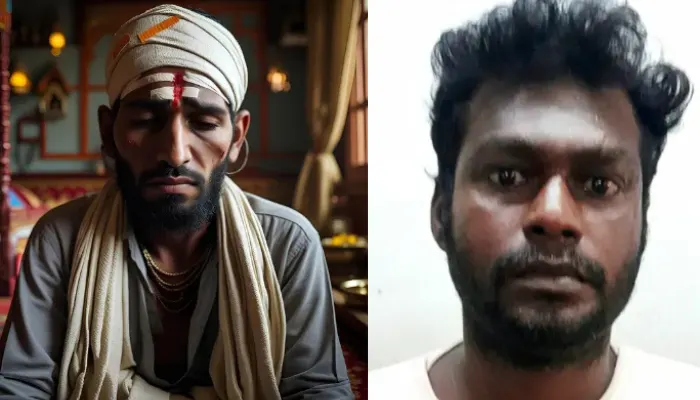
Case Summary
In Vizhinjam Township colony, Thiruvananthapuram, Kerala, a Hindu temple's sanctity was desecrated by Muslim youth Abdul Rahman, who was drinking alcohol near its premises. When a Hindu man opposed this, he was assaulted by the Muslim perpetrator. According to media reports, this occurred on 18 February 2026. The accused was standing in front of Puloorkonam Bhagavathy Temple with a liquor bottle and a glass and was drinking alcohol. During this time, a middle-aged Hindu man named Anil Kumar questioned Abdul Rahman regarding this act and opposed his drinking alcohol near temple premises. Following this, the accused brutally assaulted the Hindu man for questioning his actions. Following this, Vizhinjam police arrested Abdul Rahman. Media reports also revealed that Abdul Rahman had several prior cases of affray, violence, and robbery at Vizhinjam, Kovalam, and Balaramapuram police stations.
Why it is Hate Crime ?
This case has been added to the tracker under the primary category- Attack on Hindu religious representations. The subcategory selected is- Defiling religious customs. Sanatan Dharma is not a religion of one book, which is to say that while it has religious scriptures that form the central tenets of the faith, there are several traditions followed through thousands of years, mostly passed from generation to generation orally. There are several such customs and traditions that are followed by various Hindus and Hindu sects. Defiling of these traditions and customs is a breach of an individual or group’s religious practices. Such practices can range from dietary restrictions like not eating non-vegetarian food for a certain period of the year, not eating non-vegetarian food at all, not eating beef since the cow is considered holy in Hinduism, the sanctity of religious customs followed in the house (like many ISCKON devotees), etc. Any malicious action leading to the breach of such traditions or defilement of these traditions owing to animosity towards the faith or for the sake of activism stems not only from the lack of faith in the religion itself but also from disregard for the faith of the devotees who follow the customs/traditions and implicit bias against the faith, the tradition itself. Since these specific traditions are central to the faith of the devotees of that specific sect of Hindus, any non-compliance with these traditional rules would be considered a religiously motivated hate crime. The other subcategory selected is- Desecration of Hindu religious symbol. Icons and symbols or a religious representation of a spiritual ideal are widely revered in Hinduism. Iconography is of vital significance in the Hindu milieu. It helps connect people’s spiritual beliefs with the real world. Iconography within the Hindu faith takes several shapes and forms. Murtis are of most significance to Hindus, to which daily rituals, prayers and offerings are done. Besides the murtis, there are several other symbols which have deep significance in the Hindu faith – the Om and Swastika for example. Since these Hindu religious symbols hold paramount importance in Hinduism, any desecration of symbols, icons, murtis, religious representations and manifestations, is driven by animosity towards the faith itself which manifests itself through these murtis, icons and symbols. Therefore, any desecration of these Hindu religious symbols and representations is considered religiously motivated hate crimes under this category. Another primary category selected is- Attack not resulting in death. The subcategory selected is- Attacked for opposing radicals or trying to save victims. In several cases, Hindus are attacked for opposing religiously motivated crimes being committed against a fellow Hindu or simply for voicing an opinion opposing radical elements, who either have in the past or continue to persecute Hindus. In such cases, the initial attack against the victim, against which the Hindu was trying to defend the victim, would also need to be classified as a religiously motivated hate crime. Since the initial crime itself was religiously motivated and the subsequent crime of attempting to save the victim or speaking against the radical elements ends up inviting a violent attack, it would also be classified as a religiously motivated hate crime under this category. This case stands as a clear instance of a religiously motivated hate crime, as the Hindu man Anil Kumar faced brutal assault from Muslim youth Abdul Rahman simply because he opposed the defilement of a sacred Hindu temple. The attacker was drinking alcohol right near the Puloorkonam Bhagavathy Temple premises in Vizhinjam Township colony, Thiruvananthapuram, Kerala, an act that directly violated the sanctity of this holy site. To grasp the hate-driven nature of this crime, one must understand the profound significance of temples in Hinduism. Temples serve as the living abodes of deities, sacred hubs where devotees connect with the divine through worship, rituals, and religious prayers. They embody purity, spiritual power, and the eternal traditions of the Hindu faith, drawing millions who seek solace and blessings within their hallowed walls. Any act of defilement or desecration, such as drinking alcohol near the premises, strikes at the heart of this reverence. Alcohol holds a status of impurity in Hindu beliefs, and deliberately introducing it so close to the temple mocks these sacred principles. This was no accident; it was a calculated provocation, a blatant undermining of Hindu sentiments designed to insult the religious sentiments of the Hindu community. Such deliberate disrespect transforms the incident into a textbook example of a religiously motivated hate crime, where the violation targets the core of Hindu identity and devotion. Hindus uphold strict rituals and practices to maintain the revered sanctity of their temples, ensuring every element preserves the purity of these divine spaces, considered homes to gods and goddesses. The act of drinking alcohol near the premises shattered this sanctity, defiling the complete sacredness of the temple and turning a place of peace into one of provocation. This intrusion of impurity directly affronts the faith, as temples demand an atmosphere free from such pollutants to honour the deity residing within. The perpetrator's choice to consume alcohol in plain view crossed into desecration, a hostile challenge to Hindu values that no devotee could ignore. Such actions are rooted in hatred towards Hinduism and its adherents, making it a hate-driven crime. In this incident, Hindu victim Anil Kumar, a middle-aged man, spotted the desecration on 18 February 2026 and courageously intervened, urging Abdul Rahman to stop drinking alcohol and respect the temple's sanctity. For his stand in defence of his faith, he endured a brutal assault. Abdul Rahman, who has prior cases of affray, violence, and robbery at Vizhinjam, Kovalam, and Balaramapuram police stations, savagely attacked the Hindu man simply for protecting their holy site. Anil Kumar was no aggressor; he was an ordinary Hindu safeguarding his sacred shrine from deliberate insult. The ferocity of the attack underscores that the violence stemmed purely from religious animosity. This targeted assault on a Hindu for defending his religious heritage reveals the perpetrator's profound animosity towards Hinduism, marking it unmistakably as a hate crime driven by religious hatred. Given that this case meets the parameters of a hate crime, it is being recorded in the Hate Crime database of the Hinduphobia Tracker.
Victim Details
Total Victim
1
Deceased
0
Gender
- Male 1
- Female 0
- Third Gender 0
- Unknown 0
Caste
- SC/ST 0
- OBC 0
- General 0
- Unknown 1
Age Group
- Minor 0
- Adult 1
- Senior Citizen 0
- Unknown 0


Case Status
Arrested


Perpetrators Details
Perpetrators
Muslim Extremists
Perpetrators Range
One Person
Perpetrators Gender
male
 Sources




