Hindu minor girls trapped for trafficking, Muslim accused repeatedly assumed false Hindu identities to entrap the Hindu girls
 Vashi, Maharashtra, India
  18 February, 2026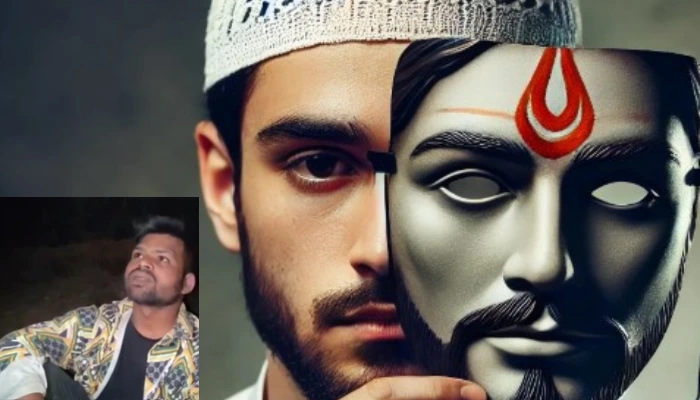
Case Summary
Minor Hindu girls were targeted through deception and trafficking in Maharashtra by a Muslim man identified as Shakeel Ahmed. He repeatedly assumed false Hindu identities to entrap minor Hindu girls. According to a report published on 19 February 2026, the Sakal Hindu Samaj in Vasai Virar apprehended Shakeel Ahmed, who had been trapping minor Hindu girls by posing under fabricated Hindu names. In a video that went viral, the accused confessed that he used Hindu names such as Sunny Yadav, Raju, Sunil, Deepak, and Bhola to gain the trust of minor Hindu girls. After establishing contact, he lured them into relationships and subsequently trafficked them near a mosque in Chhatrapati Sambhajinagar, formerly Aurangabad, in exchange for amounts ranging between ₹20,000 and ₹50,000. In the video circulating on social media, the accused is heard confessing that he had already trapped six Hindu girls using this method. He admitted that he had been engaged in such activities for about a year and had received substantial payments. The report further states that he claimed to have associates who could assist him if he was caught while attempting to target Hindu girls. Sakal Hindu Samaj shared details of the incident on the social media platform X, stating that Shakeel Ahmed had come to Nalasopara near Mumbai with the intent to abduct a Hindu girl and was caught red-handed. Upon questioning, he disclosed his real identity and details of his activities. At the time of documenting this incident, the video was widely circulated on social media, with users demanding strict legal action against the accused.
Why it is Hate Crime ?
This incident has been added to the tracker under the category- Crimes against women in relationships and other sexual crimes. The first subcategory selected within this is- Man pretends to be Hindu, and within this, the tertiary categories selected are- Name changed and Pattern of targeting Hindu women. When a non-Hindu man pretends to be a Hindu to deceive a Hindu woman into a relationship, the act is seen as triggered by malafide intentions. In some cases, the woman eventually accepts the man’s original religious identity and converts after the man’s identity is revealed. These cases could be argued as cases of religious brainwashing and a result of the pressure a woman feels after getting into a relationship with a man. The woman, it can be argued, also changed her religious identity because of the stigma she believes she might face if she chooses to walk out of a deceptive relationship. However, for the purpose of documenting hate crimes, the cases in this subcategory are limited to those where there is explicit violence aimed at religious conversion against the wishes of the victim (force-feeding beef, blackmailing with intimate videos, rape on refusal to convert, etc), or if the woman herself complains of the man’s religious deception. In such cases, it is established that the deception of the non-Hindu man had a specific aim of religious conversion or targeting of the victim due to her Hindu religious identity, therefore, making it a religiously motivated hate crime. The other subcategory selected is- Brainwashed and/or groomed. Within this, the tertiary category selected is- Pattern of targeting Hindu minors. In our database, we have not added incidents where women have converted to another religion of their free will and no allegations of forced/involuntary conversion have been made. However, there are certain cases of conversion where the consent itself is a result of the brainwashing or grooming of a minor by the non-Hindu perpetrator trying to victimise a woman for her Hindu religious identity. The phenomenon of grooming points to non-Hindu perpetrators identifying their Hindu victims’ vulnerabilities and exploiting them over months and sometimes years, to extract the supposed ‘consent’ in order to convert their religion. In most cases of grooming, the victims are minors or the grooming started when the victim was a minor. In other cases of grooming, the non-Hindu perpetrator brainwashes and grooms a minor victim to extract their trust and then proceeds to rape them repeatedly with the intent of converting them to their faith. It is pertinent to understand here that when the victim is a minor, the ‘consent’ to convert or enter into a romantic relationship with an adult itself is redundant – addressed by POCSO. While every case of conversion of a minor and incidents of establishing a physical relationship with a minor by an adult is a crime, for the purpose of this database, a case would be considered a hate crime only if there is a distinct religious angle to the grooming. For example, in the UK, if a Hindu minor is targeted by Pakistani grooming gangs, it would be considered a hate crime because the victims are specifically targeted owing to their non-Muslim religious identity with the perpetrators being Muslim. In other cases, if a Hindu minor is brainwashed into entering a physical relationship with the non-Hindu adult perpetrator and the family alleges grooming/brainwashing of the minor to convert her religion, it would form a part of this database. If the victim is a Hindu adult, the case would form a part of this database only if the victim herself says that she was brainwashed/groomed to convert her religion. However, if the victim is deceased (murdered or otherwise), the case would form a part of this database if her family/friends provided testimony that the victim was brainwashed/groomed to convert her religion. Since these crimes have a distinct religious angle where the victim is being targeted owing to her Hindu religious identity, these cases are considered a hate crime. This case qualifies as a hate crime because minor Hindu girls were deliberately targeted on the basis of their religious identity through a calculated pattern of deception and exploitation. The accused repeatedly assumed fabricated Hindu names to gain the trust of Hindu minor girls, specifically selecting victims from the Hindu community. The use of a false religious identity was not incidental but central to the method employed, indicating intentional targeting. The religious marker in this case lies in the deliberate impersonation of a Hindu identity to access and exploit Hindu minors. By posing under Hindu names, the accused sought to bypass religious and social safeguards within the community. This demonstrates that the victims were not randomly chosen but were selected precisely because they were Hindu girls, making their religious identity a determining factor in the crime. The vulnerability of the victims further heightens the gravity of the offence. As minors, they are not fully cognitively developed and are more susceptible to emotional manipulation, grooming, and coercion. Exploiting minor girls through identity-based deception reflects a calculated abuse of both age-related vulnerability and religious belonging. The reported trafficking of the girls for monetary gain compounds the severity of the targeting. The combination of religious impersonation, grooming, and the sale of minor Hindu girls transforms the incident from an isolated criminal act into one with clear communal markers. The deliberate selection of Hindu minors as victims establishes that the harm was directed at a specific religious group. When a perpetrator systematically targets girls from one religious community by assuming that community’s identity to entrap them, the crime carries clear elements of religious hostility and predation. The pattern described, including repeated targeting and admission of multiple victims, reflects sustained and identity-based victimisation. For these reasons, the incident meets the threshold of a religiously motivated hate crime. The targeting of minor Hindu girls through fabricated Hindu identities demonstrates that their religious identity was central to the offence, warranting its documentation in the tracker.


Case Status
Arrested


Perpetrators Details
Perpetrators
Muslim Extremists
Perpetrators Range
One Person
Perpetrators Gender
male
 Sources




