Hindu festival tarnished through misleading and edited videos by several social media influencers
 Mathura, Uttar Pradesh, India
  23 February, 2026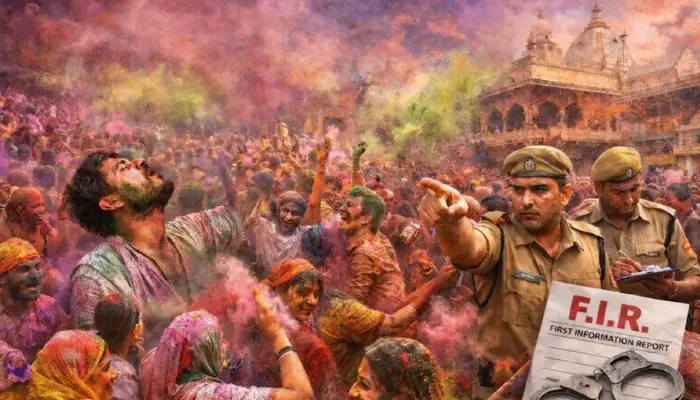
Case Summary
In Uttar Pradesh, a Hindu festival was subjected to a coordinated attempt aimed at tarnishing its reputation through misleading and edited videos by multiple social media influencers. The police registered a case against nine social media influencers for circulating edited and misleading videos aimed at tarnishing the reputation of the globally renowned Lathmar and Laddumar Holi celebrations held in Barsana and Nandgaon in the Mathura district. Acting on inputs received on 26 and 27 February 2026 from the Social Media Cell regarding the viral circulation of deceptive clips across WhatsApp, Facebook, Instagram and other platforms, the authorities initiated an investigation into the incident. The investigation revealed that old video footage from previous years, recorded at different times and locations, had been selectively edited and circulated as recent visuals from the 2026 festivities in Barsana and Nandgaon. The dissemination of these clips generated confusion, rumours and social discord in the Braj region, with police noting that the content fostered fear and insecurity among women and risked creating wider social tension during the festival period. According to the authorities, the manipulated clips were circulated with the intent to damage the image of the centuries-old cultural tradition, which attracts thousands of devotees and tourists from India and abroad each year. An FIR was lodged at Barsana Police Station against the identified accounts, including iMayankofficial, Piyush Rai, Vishal Jyoti Dev Agarwal, Extra2ab (@UdayRoy443477), Mamta Rajgarh, Kavish Aziz, Prayagraj.vibes, rnagarvlogs and kotafoodexplorerr. The accused were booked under Sections 196(2) and 353(2) of the Bharatiya Nyaya Sanhita, along with Sections 67 and 67A of the Information Technology Act, for promoting enmity between groups and transmitting objectionable electronic content. The police began tracing the locations of the accused. They affirmed that strict legal action would follow to prevent the spread of misinformation capable of disturbing communal harmony and undermining religious and cultural sentiments in the region. Police officials stated that the Holi celebrations in Braj had commenced on 24 February under heightened security arrangements, including the installation of more than 230 surveillance cameras and deployment of anti-Romeo squads, and that the events had proceeded peacefully without reports of harassment or disorder.
Why it is Hate Crime ?
This case is being added to the tracker under the primary category- Hate Speech against Hindus. The subcategory selected is- Anti-Hindu slurs, mocking faith. Anti-Hindu slurs and the deliberate mocking of the Hindu faith owing to religious animosity involve the usage of derogatory terms, stereotypes, or offensive references to religious practices, symbols, or figures. One of the common anti-Hindu slurs used against Hindus is “cow-worshipper” and “cow piss drinker”. The intention of using this term is to demean and mock Hindus as a group and their religious beliefs since Hindus consider the cow holy. Additionally, some symbols and the slurs attached to them have a historical context that exacerbates the insult, hate, stereotyping, dehumanisation and oppression against Hindus. Cow worship has been used for centuries to denigrate Hindus, insult their faith and oppress Hindus specifically as a religious group. There has been overwhelming documentation about how cow slaughter has been used to persecute Hindus with cow meat being thrown in temples and places of worship. There has also been overwhelming documentation where cow meat (beef) has been force-fed to Hindus to either forcefully convert them to Islam or denigrate their faith. Apart from cow worship, the Swastika – which holds deep religious significance for the Hindus – has also been misinterpreted and distorted to use as a slur against Hindus. Similarly, the worship of the Shivling has been used by supremacist ideologies and religions to denigrate Hindus owing to religious animosity. Such slurs and denigration stem out of inherent animosity and hate towards Hindus and their faith, therefore, it is categorised as hate speech targeted at Hindus specifically owing to their religious identity. This case has been added to the Hinduphobia Tracker because it represents a deliberate act of misinformation targeting a sacred Hindu festival aimed at maligning the Hindu religious identity and its practices. Several social media influencers circulated selectively edited and outdated video clips of the Holi festival, portraying disorder and impropriety during its celebrations. This was not a neutral or incidental act, but a conscious distortion that projected a false and damaging image of a revered Hindu observance. By presenting manipulated footage as recent visuals from the festivities in Barsana and Nandgaon, the accused spread confusion, fear, and social tension surrounding Hindu religious occasion of deep cultural and spiritual significance. Although the specific contents of the edited videos were not made public, the registration of an FIR under provisions relating to promoting enmity and transmission of objectionable electronic material reflects the seriousness of the content circulated. The nature of the police action itself indicates that the material was considered harmful enough to disturb communal harmony and negatively impact the dignity of the Hindu festival and its participants. Holi in the Braj region is not merely a public celebration, but a ritualistically rooted festival embedded in centuries of devotional tradition, attracting thousands of devotees and visitors from across India and abroad. Misrepresenting such an event through manipulated content has the effect of portraying Hindu religious gatherings as chaotic, unsafe, and morally suspect. This form of distortion undermines the dignity of the festival and the Hindu community that upholds it, creating a narrative that casts Hindu practices in a negative and inflammatory light. When misinformation is crafted and disseminated in a manner that amplifies rumours and fuels apprehension, particularly among women, it directly affects the sense of security and communal harmony associated with the observance. This was an intentional and deliberate act that targeted the Hindu community’s religious identity through vilification, defamation, and the deliberate spread of falsehoods designed to erode social trust. In this instance, the structured editing and timed circulation of old footage during the active celebration period magnified its disruptive potential. By seeking to discredit a prominent Hindu festival and provoke discord in a sensitive communal environment, the actions demonstrated a form of hostility directed at Hindu traditions and collective identity. Therefore, this case has been added to the Hinduphobia Tracker because it portrays how social media platforms can be weaponised to attack Hindu religious practices indirectly yet effectively. The attempt to tarnish the reputation of a longstanding Hindu festival through misinformation constitutes symbolic aggression against the faith and its adherents. Such conduct contributes to a climate in which Hindu customs are subjected to ridicule, suspicion, and reputational harm, thereby fitting within the broader pattern of anti-Hindu prejudice and targeted denigration. Disclaimer: The Hinduphobia Tracker records the date of an incident based on when the victim's ordeal began or when the incident occurred. In this case, the exact date on which the misleading videos were first uploaded or circulated has not been specified in available reports. Since the Holi celebrations in the Braj region commenced on 24 February 2026, and the manipulated content was linked to these festivities, 24 February 2026 has been selected as the indicative date of the incident for documentation purposes. Disclaimer: Multiple individuals were named as accused in this case. As the Hinduphobia Tracker categorises perpetrators under a single religious identity for database standardisation, and verified information regarding the religious affiliation of all accused persons is not publicly available, the perpetrators’ religious identity has been classified as “Unknown” for the purpose of documentation.


Case Status
Complaint registered


Perpetrators Details
Perpetrators
Unknown
Perpetrators Range
From 5 to 10
Perpetrators Gender
unknown
 Sources




