Hindu Dalit minor boy assaulted, filmed and subjected to caste-based slurs by two Christian men in Karnataka
 Mangalore, Karnataka, India
  22 February, 2026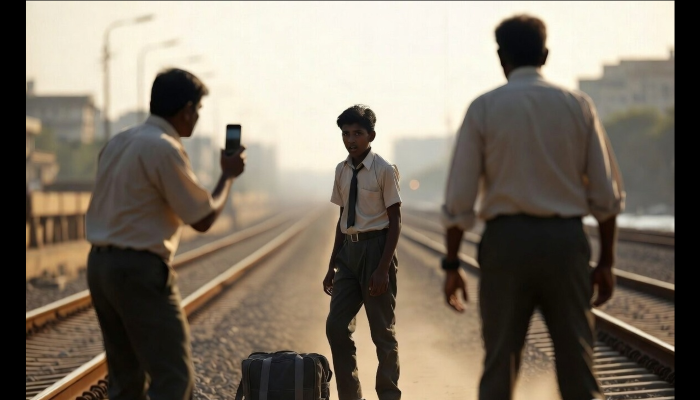
Case Summary
A 14-year-old Hindu Dalit minor boy from the Bakuda Scheduled Caste community was assaulted, subjected to moral policing, filmed without his consent, and targeted with derogatory caste-based slurs by two Christian men, Steven Monteiro and his son Avil, near a railway track at Babugudde within the jurisdiction of Mangaluru South Police Station. The footage of the assault was circulated on social media by the perpetrators. Both men were detained, and a case was registered against them under multiple provisions of the Bharatiya Nyaya Sanhita and the Scheduled Caste and Scheduled Tribe (Prevention of Atrocities) Act. On 23 February, at approximately 4.00 pm, the Hindu minor boy, a Class Nine student, was speaking with a Class Ten girl near the railway track at Babugudde after school hours. Steven Monteiro and his son Avil approached the two children and began filming them on a mobile telephone, accusing them of engaging in public displays of affection. They directed casteist slurs at the Hindu minor boy, explicitly referencing his Bakuda Scheduled Caste identity, and threatened both children. When the girl left the scene following the confrontation, the boy also attempted to leave. Avil physically prevented him from doing so, dragged him towards a nearby road, and demanded the girl’s home address. Avil then assaulted the boy while his father, Steven Monteiro, continued to record the incident. Steven Monteiro publicly intimidated and verbally abused the boy with caste-based insults tied to his Bakuda identity and warned him not to return to the location. He further threatened to upload the video and photographs to social media, which he subsequently did, causing the footage to circulate widely. Steven Monteiro, who operated a laundry business in the Shivanagar area, was known to the boy’s father. The father became aware of the incident after images and videos of it circulated on social media. He filed a formal complaint at Mangaluru South Police Station on 25 February. A case was registered against both Steven Monteiro and Avil under Sections 126(2), 115(2), 352, 351(1), and 79 of the Bharatiya Nyaya Sanhita, as well as Section 3(1)(r)(s) of the Scheduled Caste and Scheduled Tribe (Prevention of Atrocities) Act. Both perpetrators were detained after the case was registered.
Why it is Hate Crime ?
The primary category in this case is "Hate speech against Hindus". The sub-category here is "Anti-Hindi slurs mocking faith". Anti-Hindu slurs and the deliberate mocking of the Hindu faith owing to religious animosity involve the usage of derogatory terms, stereotypes, or offensive references to religious practices, symbols, or figures. One of the common anti-Hindu slurs used against Hindus is “cow-worshipper” and “cow piss drinker”. The intention of using this term is to demean and mock Hindus as a group and their religious beliefs since Hindus consider the cow holy. Additionally, some symbols and the slurs attached to them have a historical context that exacerbates the insult, hate, stereotyping, dehumanisation and oppression against Hindus. Cow worship has been used for centuries to denigrate Hindus, insult their faith and oppress Hindus specifically as a religious group. There has been overwhelming documentation about how cow slaughter has been used to persecute Hindus with cow meat being thrown in temples and places of worship. There has also been overwhelming documentation where cow meat (beef) has been force-fed to Hindus to either forcefully convert them to Islam or denigrate their faith. Apart from cow worship, the Swastika – which holds deep religious significance for the Hindus – has also been misinterpreted and distorted to use as a slur against Hindus. Similarly, the worship of the Shivling has been used by supremacist ideologies and religions to denigrate Hindus owing to religious animosity. Such slurs and denigration stem out of inherent animosity and hate towards Hindus and their faith, therefore, it is categorised as hate speech targeted at Hindus specifically owing to their religious identity. This incident qualified as a hate crime on the basis that a minor Hindu Dalit boy in Mangaluru, Karnataka, was subjected to derogatory caste-based slurs, publicly humiliated, and threatened by two Christian men, Steven Monteiro and his son Avil. The perpetrators specifically targeted the boy’s Dalit Hindu caste identity through the deliberate use of abusive slurs referencing his Bakuda Scheduled Caste background, and they subsequently shared footage of the assault on social media, causing it to circulate widely. The registration of a case under both the Bharatiya Nyaya Sanhita and the Scheduled Caste and Scheduled Tribe (Prevention of Atrocities) Act confirmed the caste-based and hate-driven dimensions of the perpetrators’ conduct. The perpetrators approached two children who were doing nothing more than speaking near a railway track after school and chose to escalate an entirely harmless interaction into moral policing, filming, caste-based abuse and physical violence. Their decision to approach, record, verbally abuse and assault a Hindu Dalit minor who was simply conversing with a classmate reflected a deliberate choice to target a vulnerable child. They did not limit themselves to instructing the children to leave but instead transformed the situation into a sustained episode of humiliation and aggression, marked by caste-based insults, physical assault, unauthorised filming and public shaming. This escalation demonstrated a conscious and targeted intention to degrade and harm a Hindu Dalit minor. The deliberate and repeated use of derogatory caste-based slurs referencing the boy’s Bakuda Scheduled Caste identity during both the confrontation and the assault constituted direct and targeted hate speech against his Dalit Hindu identity. The Bakuda community is recognised as a Scheduled Caste, and the invocation of this identity through demeaning language reflected a conscious expression of caste-based hostility. The use of such slurs was not incidental but formed a central component of the perpetrators’ conduct throughout the incident, underscoring an intention to humiliate the boy on the basis of his caste. It can be argued that a caste-specific slur is aimed at her micro identity of belonging to the Dalit section of the Hindu community and not her Hindu identity itself. However, as far as Abrahamic religions are concerned, the micro identities of caste, region, and language are secondary. It is the religious identity that drives the animosity of the perpetrator against the Hindu victim. In this case, while Steven Monteiro and his son Avil hurled caste abuses at the victim, the animosity was driven by their animosity towards Hinduism and Hindus. While the immediate trigger of the violence could be the "Hindu minor boy's public interaction with a girl" as mentioned in reports, the fact that caste slurs were hurled at the victim by the perpetrator makes it a religiously motivated hate crime against the victim. Moreover, the perpetrators filmed the boy without his consent during the confrontation and the assault, and they later disseminated the footage on social media, where it spread widely. The act of recording a caste-based assault on a minor and sharing it publicly constituted a deliberate act of public harassment directed at him because of his Dalit Hindu identity. Social media was used as a mechanism to amplify his humiliation, extending the harm beyond the physical assault and exposing him to widespread public scrutiny and distress. This calculated dissemination of the footage reflected a conscious intention to magnify the impact of the abuse. During the confrontation, the perpetrators issued explicit threats, warning the boy not to return to the location and threatening to upload the video and photographs. These threats were carried out when the footage was shared online. Their willingness to follow through demonstrated a sustained strategy of intimidation designed to heighten the boy’s fear and vulnerability. The combination of physical violence, caste-based verbal abuse, unauthorised filming and explicit threats constituted a multi-layered campaign of intimidation directed at a Hindu Dalit minor. The conduct displayed throughout the incident reflected entrenched caste-based prejudice directed at the Hindu Dalit community. The deliberate invocation of the boy’s Bakuda Scheduled Caste identity, combined with the assault, filming and public dissemination of the footage, demonstrated a view that treated him as a legitimate target for humiliation and violence because of his caste. The actions were not confined to a spontaneous disagreement but revealed a conscious expression of hostility rooted in caste identity. The application of the Scheduled Caste and Scheduled Tribe (Prevention of Atrocities) Act underscored the recognised caste-based nature of the offence. The wider impact on the boy and his family was profound. The circulation of the footage exposed a young Dalit child to widespread public humiliation and distress. His father became aware of the incident only after the video spread online, deepening the emotional harm caused to the family. The deliberate use of digital platforms to extend and intensify the humiliation of a minor reflected a calculated effort to maximise the damage inflicted through a caste-based hate crime. Given that this case met the parameters of a religiously and caste-motivated hate crime, it was entered into the hate crime database of the Hinduphobia tracker.
Victim Details
Total Victim
1
Deceased
0
Gender
- Male 1
- Female 0
- Third Gender 0
- Unknown 0
Caste
- SC/ST 1
- OBC 0
- General 0
- Unknown 0
Age Group
- Minor 1
- Adult 0
- Senior Citizen 0
- Unknown 0


Case Status
Arrested


Perpetrators Details
Perpetrators
Christian Extremists
Perpetrators Range
From 2 To 5
Perpetrators Gender
male
 Sources




