Hindu traditions denigrated through sexually explicit and obscene remarks by Indian politician
 Chennai, Tamil Nadu, India
  7 April, 2025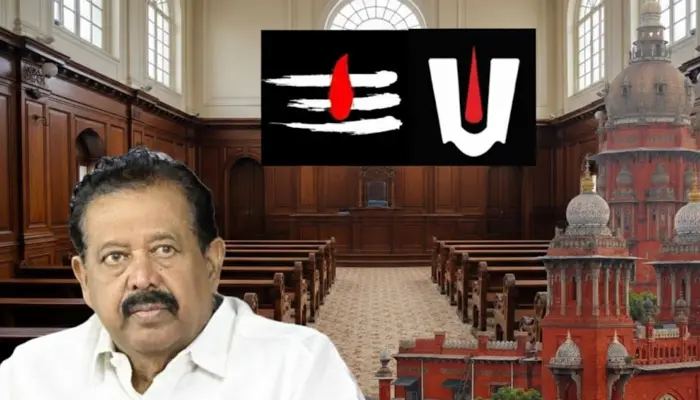
Case Summary
Hindu religious sentiments were insulted by Tamil Nadu politician K. Ponmudi, after he made derogatory and sexually explicit remarks targeting the Shaivite and Vaishnavite Hindu traditions. In April 2025, senior K. Ponmudi, forest minister in the Dravida Munnetra Kazhagam (DMK) government of Tamil Nadu, delivered a speech at a public event in Chennai. During the address, he recounted a crude anecdote equating the sacred tilaks worn by Shaivites and Vaishnavites with sexual positions, reducing deeply revered religious symbols to vulgar innuendo. In the video, Ponmudi recounted a supposed interaction between a man and a prostitute, where the woman asks the man if he is a Shaivite or a Vaishnavite. According to Ponmudi, the prostitute explains that Shaivite means “lying down position” (referencing the horizontal tilak worn by Shaivites) while a Vaishnavite means a “standing position” (referencing the vertical tilak worn by Vaishnavites). The video of the speech circulated widely on social media, triggering strong public outrage across political and religious circles. The remarks were viewed as an affront to the religious identity and dignity of Hindus, particularly adherents of Saivism and Vaishnavism, for whom sectarian symbols and practices carry profound spiritual significance. The matter reached the Madras High Court, where a suo motu proceeding was taken up after a video clip of the speech was placed on record in connection with earlier judicial proceedings involving Ponmudi. Justice P. Velmurugan criticised the conduct of elected representatives who, in his observation, appeared to treat the constitutional guarantee of free speech under Article 19 as boundless, reminding that India was a democracy meant for all communities and not the preserve of any individual or political office-bearer. The court underscored that public figures bore heightened responsibility in their speech, particularly in a religiously diverse society. Subsequently, a private complaint was filed by Chennai Corporation Councillor Uma Anandhan before the Saidapet Magistrate Court, seeking action under penal provisions relating to promotion of enmity between religious groups and deliberate acts intended to outrage religious feelings. The case was later transferred to the Special Court for cases against MPs and MLAs in George Town, Chennai. Upon examining the materials placed on record, the Special Court found prima facie grounds to proceed and issued summons directing Ponmudi to appear in person on 24 March 2026. In parallel political developments, the controversy drew condemnation from opposition leaders and even members within the DMK, and Ponmudi was stripped of his post as Deputy General Secretary of the party. The judicial proceedings continued as the matter stood adjourned to the specified date for further hearing.
Why it is Hate Crime ?
This case has been added to the tracker under the primary category- Hate Speech against Hindus. The subcategory selected is- Anti-Hindu slurs, mocking faith. Anti-Hindu slurs and the deliberate mocking of the Hindu faith owing to religious animosity involve the usage of derogatory terms, stereotypes, or offensive references to religious practices, symbols, or figures. One of the common anti-Hindu slurs used against Hindus is “cow-worshipper” and “cow piss drinker”. The intention of using this term is to demean and mock Hindus as a group and their religious beliefs since Hindus consider the cow holy. Additionally, some symbols and the slurs attached to them have a historical context that exacerbates the insult, hate, stereotyping, dehumanisation and oppression against Hindus. Cow worship has been used for centuries to denigrate Hindus, insult their faith and oppress Hindus specifically as a religious group. There has been overwhelming documentation about how cow slaughter has been used to persecute Hindus with cow meat being thrown in temples and places of worship. There has also been overwhelming documentation where cow meat (beef) has been force-fed to Hindus to either forcefully convert them to Islam or denigrate their faith. Apart from cow worship, the Swastika – which holds deep religious significance for the Hindus – has also been misinterpreted and distorted to use as a slur against Hindus. Similarly, the worship of the Shivling has been used by supremacist ideologies and religions to denigrate Hindus owing to religious animosity. Such slurs and denigration stem out of inherent animosity and hate towards Hindus and their faith, therefore, it is categorised as hate speech targeted at Hindus specifically owing to their religious identity. This case constituted a clear instance of religiously motivated hate speech by the DMK politician, K. Ponmudi who publicly mocked the sacred tilak and religious identities of Shaivite and Vaishnavite Hindus through sexually explicit and degrading commentary. Shaivism and Vaishnavism are two of the principal devotional traditions within Hinduism, centred on the worship of Lord Shiva and Lord Vishnu respectively. For adherents, sectarian symbols such as the horizontal vibhuti lines worn by Shaivites and the vertical namam worn by Vaishnavites are not cosmetic markers but sacred identifiers reflecting theology, lineage, spiritual discipline, and lifelong devotion. These tilaks signify surrender to the divine, scriptural tradition, and moral conduct rooted in dharma. By reducing these sacred symbols and comparing them to crude sexual metaphors, the accused did not merely engage in crass humour; he deeply disrespected and insulted symbols that millions regard as sacred. The accused narrated an anecdote involving a prostitute who purportedly asked a man whether he was a Shaivite or a Vaishnavite. He then equated the horizontal tilak of Shaivites with a “lying down position” and the vertical tilak of Vaishnavites with a “standing position”, converting revered religious emblems into vulgar sexual references. This analogy was deliberate and structured for ridicule. It trivialised centuries-old spiritual traditions and portrayed devotional identity as something obscene and laughable. Such language did not critique theology or engage in philosophical dissent; it weaponised sexuality to humiliate a faith community. When sacred identity markers are stripped of sanctity and recast as objects of mockery, the intent ceases to be commentary and becomes degradation. The religious animosity embedded in the remarks lay in their selective targeting of Hindu sects and their most visible religious symbols, the tilak. Shaivism and Vaishnavism have shaped temple culture, classical arts, literature, ritual practice, and social life across India for millennia. Devotees apply vibhuti and namam daily as acts of surrender and remembrance of the divine. These markings are worn in temples, festivals, pilgrimages, and household worship. By associating them with explicit sexual imagery in a public forum, the accused sought to provoke laughter at the expense of Hindu belief. This reflected not neutrality but contempt. The ridicule was aimed squarely at practices unique to Hindu worship, signalling hostility towards the faith’s outward expressions. The remarks also carried broader social consequences. When a serving minister publicly belittles Hindu religious symbols, it normalised derision of practising Hindus in public discourse. Mockery from a position of authority legitimised disrespect and encouraged the perception that Hindu devotion was backward or absurd. This normalises derision of sacred Hindu traditions, deities, and practices, drawing in opportunistic trolls who pile on without restraint. The resulting echo chamber entrenches prejudice, portraying Hindus as fair game for mockery and division. Such escalation transforms isolated barbs into widespread hostility, making it a clear case of anti-Hindu aggression designed to erode communal harmony. Given that the speech involved explicit sexualisation of sacred tilaks, deliberate humiliation of two major Hindu sects, and public ridicule of core religious practices, the incident met the criteria of religiously motivated hate speech. Therefore, this case has been added to the tracker. Disclaimer: The Hinduphobia Tracker records the date of the incident based on when the crime occurred. The media reports published this case on 8 July 2025. However, the media reports do not specify the exact date when the accused made those statements, though it is mentioned that the statements were made in April 2025. Considering these two pieces of information, we are using an indicative date of 8 April 2025 as the date of the incident.


Case Status
Case sub-judice


Perpetrators Details
Perpetrators
Others
Perpetrators Range
One Person
Perpetrators Gender
male
 Sources




