Hindu deities insulted during religious ceremony by Buddhist preacher; Hindu residents assaulted for protesting
 Rewa, Madhya Pradesh, India
  25 February, 2026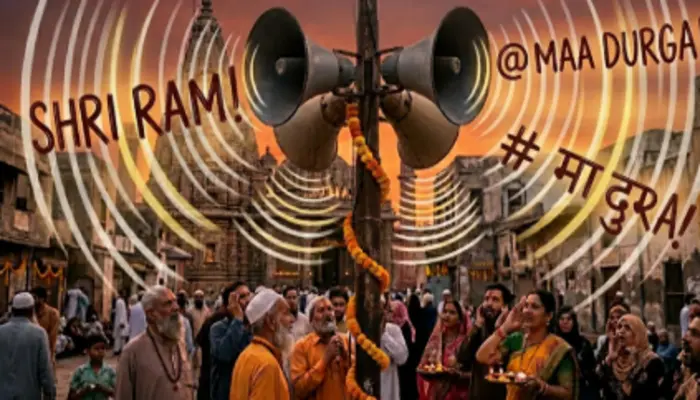
Case Summary
In the Kailashpuri area of Rewa, Madhya Pradesh, Hindu religious sentiments were insulted after objectionable remarks about Hindu deities were made over a loudspeaker during a housewarming ceremony by a Buddhist preacher. According to reports, local BJP leader Sitaram Saket had organised a housewarming ceremony at his home on 26 February 2026. During the ceremony at around 10 a.m., abusive language was used against Lord Shiva, Goddess Durga, Lord Krishna, and other Hindu gods and goddesses, through loudspeakers. The complainant also stated that Lord Shiva was called a stone and threatened to be thrown out of the house, and derogatory remarks were made about Goddess Kali. Hindu residents in the neighbourhood stated that the derogatory content continued for an extended period, causing anger and distress among local Hindu families, escalating communal tensions. Ragini Singh Baghel, a resident of the locality, stated that she initially expected the noise to subside but grew concerned as the offensive remarks persisted. When she and others approached the organisers to object to the content being broadcast, the situation escalated into a confrontation between two groups, resulting in a brief physical altercation. Police were immediately informed about the incident, following which officers reached the spot and engaged with members of both sides to assess the situation. More than six women from the locality submitted written complaints at the police station, seeking action over the public insult to Hindu deities. In response, Sitaram Saket stated that many people had gathered at his residence for the function and claimed that if inappropriate remarks had been made, he accepted responsibility and apologised. The local Station House Officer, Hitendranath Sharma, confirmed that a complaint had been received and that evidence was being collected, with legal action to follow based on the findings. Although the immediate situation was brought under control and normalcy was restored, tension continued to linger in the area following the incident. In the latest development, the preacher himself went to the police station and admitted his mistake. He told the police that he conducts Buddhist discourse and claimed that a mistake was made. He also claimed that he was not alone in the discourse, but that a large number of other people were also present at the event and that objectionable comments were made by them. He promised not to repeat such a mistake in the future and asked for another opportunity.
Why it is Hate Crime ?
This case is being added to the tracker under the primary category- Attack on Hindu religious representations. The subcategory selected is- Anti-Hindu slurs, mocking faith. Anti-Hindu slurs and the deliberate mocking of the Hindu faith owing to religious animosity involve the usage of derogatory terms, stereotypes, or offensive references to religious practices, symbols, or figures. One of the common anti-Hindu slurs used against Hindus is “cow-worshipper” and “cow piss drinker”. The intention of using this term is to demean and mock Hindus as a group and their religious beliefs since Hindus consider the cow holy. Additionally, some symbols and the slurs attached to them have a historical context that exacerbates the insult, hate, stereotyping, dehumanisation and oppression against Hindus. Cow worship has been used for centuries to denigrate Hindus, insult their faith and oppress Hindus specifically as a religious group. There has been overwhelming documentation about how cow slaughter has been used to persecute Hindus with cow meat being thrown in temples and places of worship. There has also been overwhelming documentation where cow meat (beef) has been force-fed to Hindus to either forcefully convert them to Islam or denigrate their faith. Apart from cow worship, the Swastika – which holds deep religious significance for the Hindus – has also been misinterpreted and distorted to use as a slur against Hindus. Similarly, the worship of the Shivling has been used by supremacist ideologies and religions to denigrate Hindus owing to religious animosity. Such slurs and denigration stem out of inherent animosity and hate towards Hindus and their faith, therefore, it is categorised as hate speech targeted at Hindus specifically owing to their religious identity. The other primary category selected here is - Attack on Hindu religious representations. Within it, the sub-category selected here is - Defiling religious customs. Sanatan Dharma is not a religion of one book, which is to say that while it has religious scriptures that form the central tenets of the faith, there are several traditions followed through thousands of years, mostly passed from generation to generation orally. There are several such customs and traditions that are followed by various Hindus and Hindu sects. Defiling of these traditions and customs is a breach of an individual or group’s religious practices. Such practices can range from dietary restrictions like not eating non-vegetarian food for a certain period of the year, not eating non-vegetarian food at all, not eating beef since the cow is considered holy in Hinduism, the sanctity of religious customs followed in the house (like many ISCKON devotees), etc. Any malicious action leading to the breach of such traditions or defilement of these traditions owing to animosity towards the faith or for the sake of activism stems not only from the lack of faith in the religion itself but also from disregard for the faith of the devotees who follow the customs/traditions and implicit bias against the faith, the tradition itself. Since these specific traditions are central to the faith of the devotees of that specific sect of Hindus, any non-compliance with these traditional rules would be considered a religiously motivated hate crime. The other primary category selected here is - Attacked not resulting in death. Within it, the sub-category selected here is - Attacked for opposing radicals or trying to save victim. In several cases, Hindus are attacked for opposing religiously motivated crimes being committed against a fellow Hindu or simply for voicing an opinion opposing radical elements, who either have in the past or continue to persecute Hindus. In such cases, the initial attack against the victim, against which the Hindu was trying to defend the victim, would also need to be classified as a religiously motivated hate crime. Since the initial crime itself was religiously motivated and the subsequent crime of attempting to save the victim or speaking against the radical elements ends up inviting a violent attack, it would also be classified as a religiously motivated hate crime under this category. This case constituted religiously motivated hate speech, as objectionable and abusive remarks targeting Hindu deities were broadcast publicly over a loudspeaker during the housewarming ceremony by a Buddhist preacher. The content referred disparagingly to Lord Shiva, Goddess Durga, Lord Krishna and other revered figures of the Hindu faith, thereby directly attacking the sacred foundations of Hindu religious belief. For Hindus, their deities stand central to the religion and command profound reverence. Any attempt to mock or abuse them reflects outright religious animosity towards Hinduism. In this case, the derogatory speech against Hindu deities mounted a direct assault on the sanctity of the Hindu faith. This stood not as a spontaneous or misguided act, but as a calculated and premeditated effort to denigrate Hinduism and the wider Hindu community. Such actions are not isolated instances; rather, they belong to a persistent pattern aimed at disrespecting the Hindu faith, propelled by entrenched hostility and contempt for Hindus and their beliefs. Acts of this nature qualify as hate speech because they extend far beyond legitimate criticism or debate, seeking instead to demean a religious group and its sacred symbols. The abuse and denigration of Hindu deities arose from deep-rooted religious animosity towards Hindus and their faith, making it a religiously motivated offence. The remarks included calling Lord Shiva a “stone” and stating that he would be thrown out of the house, along with derogatory comments directed at Goddess Kali. Such statements go beyond theological disagreement or critique and instead constitute direct verbal denigration of revered Hindu deities. Referring to a central deity in reductive or contemptuous terms and symbolically threatening removal from a sacred domestic ritual setting demonstrates not merely dissent, but an attempt to humiliate and delegitimise objects of worship held sacred by a religious community. A housewarming ceremony, commonly known as a Griha Pravesh Puja, holds deep religious and cultural significance in Hindu tradition. It is a sacred ritual performed when entering a new home, intended to purify the premises, invoke divine blessings, and ensure peace, prosperity, and spiritual well-being for the family. The ceremony typically involves the chanting of mantras, offerings to deities, and prayers conducted in a devotional atmosphere. Broadcasting abusive remarks against Hindu gods and goddesses during such a solemn ritual amounted to a direct defilement of religious customs and an insult to the sanctity of the puja itself. The juxtaposition of sacred ritual and derogatory speech magnified the gravity of the offence and deepened the injury to Hindu sentiments. When Hindu residents in the locality decided to oppose the actions of the organisers and object to the continued broadcast of abusive remarks against their deities, the situation escalated into physical violence between the two sides. This escalation was not spontaneous but stemmed from the persistence of the organisers in allowing content that deeply offended Hindu religious sentiments to be played publicly. Their refusal to immediately halt the objectionable material reflected a dismissive and hostile attitude towards Hindu beliefs. Furthermore, when Hindus attempted to defend the sanctity and deliberate denigration of their faith, the organisers resorted to violence. This resort to violence in response to objections underscored the religious hostility of the organisers. Instead of acknowledging the gravity of publicly insulting revered Hindu deities, the organisers’ stance revealed their animosity towards Hindu sentiments. Public denigration of Hindu gods and goddesses contributes to an atmosphere in which disrespect towards Hindu beliefs becomes normalised. This viral contagion normalises derision of sacred Hindu traditions, deities, and practices, drawing in opportunistic trolls who pile on without restraint. The resulting echo chamber entrenches prejudice, portraying Hindus as fair game for mockery and division. Such escalation transforms isolated barbs into widespread hostility, making it a clear case of anti-Hindu aggression designed to erode communal harmony. Given that the incident involved the deliberate public use of abusive language against Hindu deities by the Buddhist preacher, causing widespread distress and communal tension, it met the criteria of a religiously motivated offence. For these reasons, the case qualified for inclusion in the hate crime database of the Hinduphobia Tracker as an instance of anti-Hindu hate speech manifested in a public setting.


Case Status
Complaint filed


Perpetrators Details
Perpetrators
Others
Perpetrators Range
One Person
Perpetrators Gender
male
 Sources




