Hindu temple targeted, deity's idol desecrated by miscreants in Hyderabad, Telangana
 Hyderabad, Telangana, India
  23 February, 2026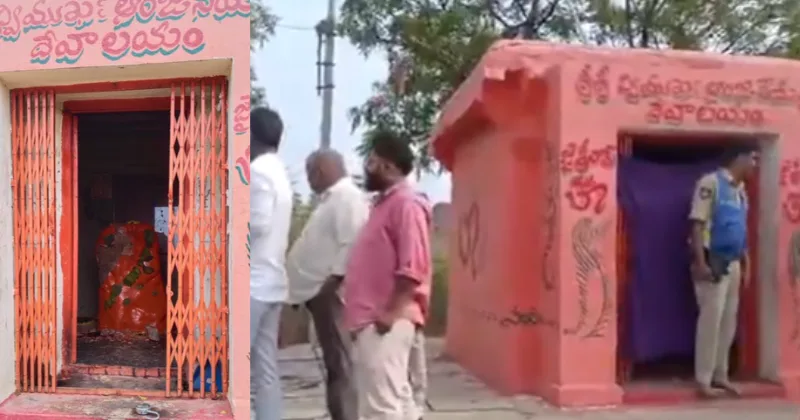
Case Summary
In Hanuman Banda, Barkas, under Chandrayangutta in Hyderabad, Telangana, a Hindu temple named Sri Dwimukhi Anjaneya Swamy Temple was targeted, and the sacred Hanuman idol in the temple was desecrated by a few unknown miscreants. This incident came to light when a complaint regarding this incident was filed at Chandrayangutta Police Station. The incident was reported on 24 February 2026. According to the written complaint filed by Naveen Kumar, a resident of Chandrayangutta, the temple, described as nearly 200 years old and of significant historical and religious importance, was found damaged when he visited for darshan at around 8 AM. The complaint stated that the grill lock of the temple was broken and the main murti (idol) of Lord Hanuman had been desecrated by unknown miscreants. The complaint further stated that the manner in which the lock was broken and the murti damaged indicated a deliberate act intended to hurt religious sentiments. After the news of the desecration spread, local devotees and Hindus gathered at the temple and demanded strict action against the culprits. Reports also revealed that the temple is situated in a relatively isolated area and mentions past instances of nuisance and unlawful activities around the premises, causing fear and concern among devotees. In his representation, the complainant has also sought adequate security for the temple as the areas surrounding the temple was Muslim dominated. Bharatiya Janata Party (BJP) Telangana President N Ramchander Rao, in a post on X, condemned the attack on the Sri Dwimukhi Hanuman temple in Chandrayangutta and the damage to the murti of Lord Hanuman, calling it an inhumane act and stating administrative failure by the Congress government. He said repeated attacks on temples and the government’s silence emboldened anti-social elements, and demanded that the Chief Minister, who holds the Home portfolio, ensure immediate identification and strict punishment of the culprits along with enhanced security for Hindu temples.
Why it is Hate Crime ?
The primary category in this case is- Attack on Hindu religious representations. The subcategory selected is- Attack on Temples. In Hinduism, a temple is the abode of the Deity. The Deity in the Temple is consecrated, thereby, making it a real, breathing entity. Hindus believe that not just the Deity but the temple premises itself are sacred to Hindus since Hindus hold the faith that the entire Temple space is an amalgamation of the divine energy of the deity. Given the central significance of Temples in Hindu Dharma, any attack against a Hindu Temple or its peripheral premises is an attack on the faith itself and is born out of animosity towards the faith, of which, the Temple is a central tenet. Any manner of attack against a Temple and/or its premises would therefore be considered a religiously motivated hate crime. The other subcategory selected is- Desecration of Hindu religious symbols. Icons and symbols or a religious representation of a spiritual ideal are widely revered in Hinduism. Iconography is of vital significance in the Hindu milieu. It helps connect people’s spiritual beliefs with the real world. Iconography within the Hindu faith takes several shapes and forms. Murtis are of most significance to Hindus, to which daily rituals, prayers and offerings are done. Besides the murtis, there are several other symbols which have deep significance in the Hindu faith – the Om and Swastika for example. Since these Hindu religious symbols hold paramount importance in Hinduism, any desecration of symbols, icons, murtis, religious representations and manifestations, is driven by animosity towards the faith itself which manifests itself through these murtis, icons and symbols. Therefore, any desecration of these Hindu religious symbols and representations is considered religiously motivated hate crimes under this category. This incident qualified as a hate crime because the perpetrators deliberately targeted a Hindu temple, an institution highly revered and considered the divine abode of Hindu deities. By desecrating the temple idol, the perpetrators also desecrated the Sri Dwimukhi Anjaneya Swamy Temple in Hanuman Banda, Barkas, under Chandrayangutta, Hyderabad; the act was clearly religiously motivated. Such actions inflicted physical damage and directly attacked the faith of the Hindu community, constituting a crime rooted in religious animosity against Hindus, their temples, and their beliefs. The incident caused deep emotional and spiritual harm to the Hindu community, as the nearly 200-year-old temple served as a collective site of devotion and identity. Also, temple idols form an inseparable part of the temple ecosystem; henceforth, desecrating them amounts to an attack on the temple itself, making it a religiously motivated hate crime. The perpetrators' act of desecrating the sacred murti of Bhagwan Hanuman by breaking the grill lock and damaging the main idol highlights the religious animosity even more clearly. This murti was not a mere decoration but a deeply revered manifestation of divinity in Hinduism, routinely worshipped through rituals and prayers. By desecrating it, the miscreants knowingly attacked the core of Hindu religious practice. Their actions were not random acts of destruction but deliberate attempts to wound the sentiments of the Hindu community, demonstrating targeted hate and hostility rooted in religious animosity. Such desecration constituted an immense affront to the faith and reverence Hindus place in Bhagwan Hanuman, qualifying the act as a hate crime against their religion and community. In this case, although the culprits remained unidentified, the crime itself clearly bore the marks of targeting Hinduism and its sacred symbols of worship. Therefore, this incident qualified as a hate crime, and it has been duly added to the hate crime database of the Hinduphobia Tracker. Disclaimer: The Hinduphobia Tracker records the date of an incident based on when it occurred rather than when it is reported by the media. In this case, media reports have not specified the date the temple was attacked. They only highlight one date, 24 February 2026, when the police complaint was filed. Therefore, this date is recorded as the indicative incident date for documentation purposes only.


Case Status
Complaint filed


Perpetrators Details
Perpetrators
Unknown
Perpetrators Range
Unknown
Perpetrators Gender
unknown
 Sources




