Hindu activist subjected to death threats by Muslim man because of his sustained opposition to religious hate crime against Hindu women
 Indore, Madhya Pradesh, India
  19 February, 2026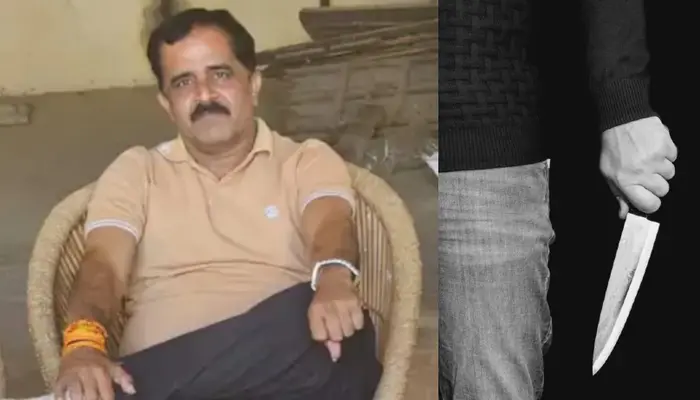
Case Summary
In Indore, Madhya Pradesh, a Hindu activist named Mansingh Rajawat was subjected to death threats by a Muslim man named Marhoof Qadri Mansuri because of his sustained opposition to what he described as “love jihad” and drug trafficking activities in Indore. On the night of 20 February 2026, Mansingh Rajawat, the state organisation minister of Karni Sena and a resident of Maruti Nagar under the jurisdiction of Hiranagar police station, received a threatening phone call from an unknown number. The caller first confirmed his identity and then proceeded to abuse him and issued explicit death threats, stating that he and his children would be killed if he entered the Khajrana area of Indore. The threat was framed in the context of his actions against Muslims and his activism relating to interfaith relationships, which he had been opposing for over fifteen years. Demonstrating presence of mind, Rajawat recorded the entire conversation on his mobile phone and subsequently shared the audio with senior members of his organisation and the police. Based on the recording and the mobile number used to place the call, the police registered a case against an unidentified individual and initiated an investigation. Initial technical inquiry revealed that the number was registered in the name of Marhoof Qadri Mansuri, a resident of Mandsaur, following which efforts were undertaken to trace and apprehend the individual concerned. Police officials examined mobile location data and call detail records as part of the probe. Rajawat stated in his police complaint that he had repeatedly received threats in the past and that his residence had previously been targeted by unidentified persons. He linked the latest threat to his long-standing campaign to prevent Hindu women from entering deceptive interfaith relationships, as well as to his recent activism against narcotics distribution in the Lasudia area, where he had facilitated police action against a drug peddler. He had also been involved in supporting police proceedings in a molestation case in Tilak Nagar. According to the station in-charge of Hiranagar police station, a non-cognisable report was registered and further investigation was underway, with authorities taking into account Rajawat’s stated concerns about reprisals connected to his activism.
Why it is Hate Crime ?
This case is documented under the selected primary category: Hate speech against Hindus. Under this, the selected secondary category is: Violent threats. Violent threats, explicit, implicit or implied, is the most dangerous form of hate speech since it goes beyond discriminatory and prejudicial language to express the intent of causing harm to an individual or a group of people based on their religious identity and faith. There could be several different kinds of threats that are issued to Hindus based on religious animosity. An explicit threat would mean the direct threat of violence towards an individual Hindu, a group of Hindus or Hindus at large. Physical violence, death threats, threats of destruction of property belonging to Hindus and threats of genocide would mean explicit threats against Hindus for their religious identity. Implicit threats may not be a direct threat but implied through the use of symbols of actions – for example – in the Nupur Sharma case, other than explicit threats, there were also implicit threats when Islamists took to the streets to burn and beat her effigies. It implies that they want to do the same to Nupur Sharma – thereby is considered an implicit threat. Violent threats can be delivered in person, through letters, phone calls, graffiti, or increasingly through social media and other online platforms. It would be important to understand that a threat – explicit or implicit, online or offline – to an individual who happens to be a Hindu does not qualify as a religiously motivated threat. Such a threat, while vile and dangerous, could be owing to non-religious reasons and/or personal animosity. To qualify as a religiously motivated threat, it would need to exhibit an indication that the individual is being targeted for religious reasons and/or owing to his/her religious identity as a Hindu. The other primary category selected here is- Attack not resulting in death. The subcategory selected is- Attacked for opposing radicals or trying to save victim. In several cases, Hindus are attacked for opposing religiously motivated crimes being committed against a fellow Hindu or simply for voicing an opinion opposing radical elements, who either have in the past or continue to persecute Hindus. In such cases, the initial attack against the victim, against which the Hindu was trying to defend the victim, would also need to be classified as a religiously motivated hate crime. Since the initial crime itself was religiously motivated and the subsequent crime of attempting to save the victim or speaking against the radical elements ends up inviting a violent attack, it would also be classified as a religiously motivated hate crime under this category. This incident constituted a clear case of a religiously motivated crime against a Hindu activist because of account of his sustained opposition to coercive and deceptive interfaith relationships targeting Hindu women and unlawful activities linked to sections of the Muslim community. Mansingh Rajawat, a state-level functionary of the Karni Sena in Indore, had for over fifteen years been involved in campaigns aimed at preventing Hindu women from entering relationships that are deceptive or exploitative. In addition, he had recently intensified efforts against narcotics distribution and had supported police action in local criminal matters. It was in this backdrop that he received a direct death threat over the phone, in which the Muslim accused warned that he and his children would be killed if he continued his activities and set foot in the Khajrana area. The threat explicitly referenced his actions “against Muslims,” thereby framing the intimidation in overtly communal terms. The language used by the caller, which included abuse and threats of violence against his family, demonstrated hostility not merely towards an individual but towards the ideological position he represented as a Hindu activist. Targeting him for his long-standing involvement in campaigns framed around the protection of Hindu women and social reform indicated that the motive was not random criminality or personal enmity. Instead, the threat emerged directly from his visible religious and community-based activism aimed at protecting the Hindu community and working for the Hindu cause. The attempt to silence him through fear, particularly by invoking harm to his children, underscored the gravity of the intimidation and reflected deep-seated animus towards the Hindu society and, by extension, the Hindu causes he espoused. Rajawat had previously reported receiving threats and facing attacks on his residence, suggesting a continuing pattern of intimidation linked to his activism. The present threat followed recent actions he had taken in assisting police efforts in drug-related cases and other local incidents, further reinforcing the perception that he was being targeted for his assertive public role. The communal framing of the threat, combined with the explicit warning tied to his activism concerning Muslims and interfaith matters, pointed to a religiously charged motive. Given the explicit direct death threats issued to the Hindu activist and his children, and the broader context of his long-standing Hindu activism, this case met the criteria of a religiously motivated offence. Therefore, this case has been added to the hate crime database of the Hinduphobia Tracker as an instance of targeted intimidation rooted in religious hostility.
Victim Details
Total Victim
1
Deceased
0
Gender
- Male 1
- Female 0
- Third Gender 0
- Unknown 0
Caste
- SC/ST 0
- OBC 0
- General 1
- Unknown 0
Age Group
- Minor 0
- Adult 1
- Senior Citizen 0
- Unknown 0


Case Status
Complaint registered


Perpetrators Details
Perpetrators
Muslim Extremists
Perpetrators Range
One Person
Perpetrators Gender
male
 Sources




