Hindu patients in hospital encouraged to attend Changhai sabha for religious conversion by two Christian women
 Gumla, Jharkhand, India
  18 February, 2026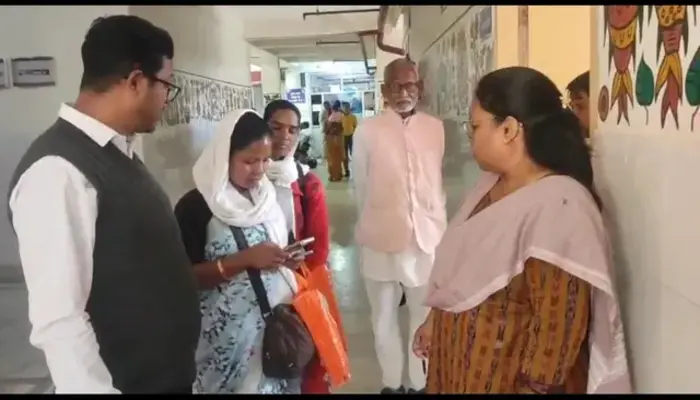
Case Summary
In Gumla, Jharkhand, Hindu patients and their relatives in a hospital were encouraged to attend a healing meeting/Changhai sabha for religious conversion by two Christian women. According to reports, two Christian women entered the patient ward of Gumla Sadar Hospital and attempted to persuade sick patients and their relatives to attend a so-called “Changhai sabha” (healing meeting), presenting prayer as a means to obtain complete relief from illness. The incident took place on the afternoon of 19 February 2026, when the two women moved from bed to bed inside the ward, encouraging those undergoing treatment to participate in the gathering. Several patients and family members objected strongly, stating that such activities violated hospital rules and were inappropriate within a medical facility. As protests intensified, hospital authorities were informed. Staff and officials reached the ward, questioned the two women, counselled them, and removed them from the premises. The hospital management made it clear that no religious or promotional activities were permitted within the hospital campus, emphasising that such conduct interfered with patient care and recovery. The Civil Surgeon, Dr Shambhu Choudhary, stated that no individual had been granted permission to conduct any form of religious activity inside the hospital and warned that strict action would follow if similar behaviour occurred again. Following the episode, the administration increased surveillance across wards and imposed tighter controls on the entry and movement of outsiders to prevent a recurrence.
Why it is Hate Crime ?
This case has been added to the tracker under the primary category- Predatory Proselytisation. Within it, the sub-category selected is- Proselytisation by grooming, brainwashing, manipulation or subtle indoctrination. Religious brainwashing essentially means the often subtle and forcible indoctrination to induce someone to give up their religious beliefs to accept contrasting, regimented ideas. Religious grooming or brainwashing also involves propaganda and manipulation. It involves the systematic effort, driven by religious malice and indoctrination, to persuade “non-believers’ to accept allegiance, command, or doctrine to and of a contrasting faith. Cases of such grooming or brainwashing are far more nuanced than direct threats, coercion, inducement and violence. In such cases, it is often seen that there is repeated, subtle and continual manipulation of the victim to induce disaffection towards their own faith and acceptance of the contrasting faith of the perpetrator. While subtle indoctrination is widely acknowledged as predatory, an element which is often understated in such conversions or the attempts of such conversion is the role of loyalty and trust which might develop between the perpetrator and the victim. Fiduciary relationships are often abused to affect such religious conversion. For example, an educator transmitting religious doctrine of a competing faith to a Hindu student. The Hindu student is likely to accept what the teacher is transmitting owing to the existence of the fiduciary relationship. The exploitation of the fiduciary relationship to religiously indoctrinate victims would also be included in this category. Since the underlying animosity towards the victim’s faith forms the basis of predatory proselytisation, such cases are considered religiously motivated hate crimes. The other sub-category selected is - Conversion/ attempts to convert by inducement. Predatory Proselytisation is not just limited to threat, harassment, force and violence, but it also has contours of stealth. In several cases, the Hindu victim is exploited to convert, with non-Hindus taking advantage of their poverty. In such cases, the Hindu victim who is suffering financially is offered monetary benefits, including lucrative offers for jobs, health treatment, education, etc, to induce the victim into changing his/her religion. In such cases, the religious identity of the victim and the aim to disenfranchise him from his faith form the heart of the crime. Also, taking advantage of and exploiting an individual’s economic vulnerabilities is widely acknowledged as exploitation, forms of which are often penalised by law. Such cases, therefore, are considered religiously motivated hate crimes since the victim’s religious identity forms the very heart of the crime itself. This case has been added to the tracker because Hindu patients and their relatives inside the ward of Gumla Sadar Hospital were approached and encouraged to attend a “Changai Sabha” (healing meeting) by two Christian women. The two women entered the patient ward and moved from bed to bed, urging those undergoing treatment and their family members to participate in the gathering, presenting prayer as a means to obtain complete relief from illness. The Changai Sabha format, often described publicly as a faith healing gathering, is a well-recognised tool in organised Christian proselytisation networks. These meetings usually employ songs, testimonies and emotionally charged prayer sessions to influence and induce vulnerable individuals without openly declaring the underlying objective. The absence of transparency is itself central to the method. People attend believing they are seeking comfort, healing or spiritual support, only to be gradually drawn into teachings that undermine their own religious identity and introduce them to the Christian framework presented as the only path to relief. The format of a Changai Sabha is widely understood in several parts of North India as a faith-healing style prayer meeting associated with evangelical outreach efforts. By presenting prayer as capable of curing disease and approaching patients during active medical treatment, the women introduced a religious intervention into a clinical setting where individuals were physically vulnerable and dependent on institutional care. Furthermore, by encouraging Hindu patients and their relatives to attend the Changhai Sabha in the hospital ward and presenting prayer as a means of complete relief from illness, the accused were offering inducement so as to groom them into converting to Christianity. This was malicious attempt at religious conversion as the setting was a hospital where individuals were physically and emotionally vulnerable. Offering inducements of promising healing, particularly when directed at those undergoing medical treatment, functioned as incentives rather than neutral expressions of faith. These were calculated moves to exploit vulnerable Hindus on the basis of religion. By promising healing so as to prepare them for conversion, the accused were effectively pressuring those who might have been desperate for assistance or hope. Often in such cases, faith-healing narratives are used as an entry point for broader religious outreach among socially and economically vulnerable communities. When claims of healing or spiritual relief are presented in a manner that encourages individuals to associate recovery with adherence to another faith, it is not spiritual counselling but a targeted proselytisation attempt. The Christian faith, by its theological foundations, places a strong emphasis on proselytisation. In pursuit of conversion objectives, Christian evangelists often employ unethical means, ranging from prayer meetings and misinformation to inducements such as money, jobs, or claims of healing illnesses. Such tactics to enforce Christianity on Hindus highlight the religiously motivated nature of the act. Therefore, this case is being added to the hate crime database of the tracker.


Case Status
Unknown


Perpetrators Details
Perpetrators
Christian Extremists
Perpetrators Range
From 2 To 5
Perpetrators Gender
female
 Sources




