Hindu family forcibly converted to Christianity through manipulation by missionaries in Odisha
 Kendujhar, Odisha, India
  16 February, 2026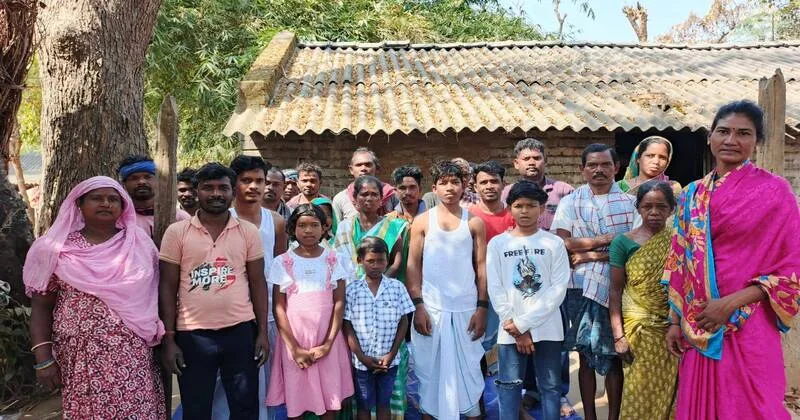
Case Summary
In Keonjhar district, Odisha, six Hindu members of a tribal family were manipulated and brainwashed into religious conversion under the influence of Christian missionaries. The missionaries exploited their vulnerability following a personal tragedy. All individuals later returned to Hinduism during a Ghar Wapsi ceremony, a Hindu reversion event where those coerced into conversion came back to their original faith. According to media reports, the Hindu family belonged to the Ho tribe and resided in Bargoth village under the Kathkatha panchayat in the Anandpur block of the district. They converted to Christianity a decade ago after suffering a personal loss. The husband of a village woman, Nitima Ho, passed away, leaving her deeply devastated. Christian pastors visited her home and told her that just as her husband had died, her children would die too if she continued to follow Hinduism. Missionaries, capitalising on their grief, presented conversion as a path to solace and healing. They pressured her to leave Hinduism and adopt Christianity, assuring her that she and her family would be safe under the refuge of Jesus. Believing these assurances, the family distanced themselves from their traditional faith, cultural practices and converted. After conversion, however, they experienced sustained social and cultural isolation. No longer able to participate in festivals, rituals, and collective community life, the family endured prolonged mental distress and a growing sense of dislocation from their ancestral customs. Over time, they recognised that the process had weakened their connection to their own people and traditions. Continuous engagement by Hindu activists of the Shaheed Birsa Munda Club helped the family understand that detaching from the roots was not a solution to emotional pain and personal tragedies. It required support and resilience, not religious conversion. Through discussions and outreach, the family realised that their dignity and identity were rooted in their native Hindu traditions. Following these interactions, they collectively decided to return to the Hindu fold. The Ghar Wapsi ceremony was organised in Keonjhar district and witnessed participation from residents and community leaders. The event was marked by traditional blessings and rituals, symbolising the family's reintegration into their ancestral religious and cultural framework. A family member who returned to Hinduism expressed feelings of disconnection from their customs, festivals, and social traditions after conversion. The individual stated that the decision to return was made voluntarily upon realising the importance of cultural belonging and community participation. The reversion was described by Hindus as a restoration of dignity, identity, and cultural belonging. For the family, the ceremony marked not only a spiritual return but also a reaffirmation of their place within the collective life of their community.
Why it is Hate Crime ?
This case has been added to the tracker under the primary category of Predatory Proselytisation. Within it, the subcategory selected is - Proselytisation by grooming, brainwashing, manipulation or subtle indoctrination. Under this, the tertiary category selected is: Victim says was brainwashed/groomed. Religious brainwashing essentially means the often subtle and forcible indoctrination to induce someone to give up their religious beliefs to accept contrasting, regimented ideas. Religious grooming or brainwashing also involves propaganda and manipulation. It involves the systematic effort, driven by religious malice and indoctrination, to persuade “non-believers’ to accept allegiance, command, or doctrine to and of a contrasting faith. Cases of such grooming or brainwashing are far more nuanced than direct threats, coercion, inducement and violence. In such cases, it is often seen that there is repeated, subtle and continual manipulation of the victim to induce disaffection towards their own faith and acceptance of the contrasting faith of the perpetrator. While subtle indoctrination is widely acknowledged as predatory, an element which is often understated in such conversions or the attempts of such conversion is the role of loyalty and trust which might develop between the perpetrator and the victim. Fiduciary relationships are often abused to affect such religious conversion. For example, an educator transmitting religious doctrine of a competing faith to a Hindu student. The Hindu student is likely to accept what the teacher is transmitting owing to the existence of the fiduciary relationship. The exploitation of the fiduciary relationship to religiously indoctrinate victims would also be included in this category. Since the underlying animosity towards the victim’s faith forms the basis of predatory proselytisation, such cases are considered religiously motivated hate crimes. The second sub-category selected here is- Attempting to convert/converting by denigrating Hinduism. In several cases, Hindus are converted, or an attempt is made to convert Hindus by denigrating their faith, Hinduism. In such cases, the Hindus associate with the non-Hindu perpetrators often by choice and then the attempt to convert them by insulting their faith, showing the faith down, etc., begins. An example of this would be a non-Hindu gathering where the Hindus are attending the gathering of their own free will. However, once they attend the gathering, there is an explicit attempt to convert them by abusing their faith and hailing the faith of the perpetrator. The denigration of the Hindu faith is often based on misrepresentation of the Hindu faith, its doctrine and scriptures and insult to espoused traditions, if not blatant lies about Hindu beliefs and ways. Such conversions or attempts at conversions are driven by animosity towards the Hindu faith and are therefore documented as religiously motivated hate crimes. This case has been added to the tracker because six Hindu members of a Ho tribal family in Keonjhar district, Odisha, were manipulated and brainwashed into religious conversion under the influence of Christian missionaries. The missionaries exploited the family’s vulnerability following a personal tragedy. After the death of Nitima Ho’s husband, pastors visited her home and instilled fear by declaring that only by abandoning Hinduism and adopting Christianity could she and her family be safe. By denigrating Hinduism and presenting it as a faith that would bring further death and suffering, while simultaneously declaring Christianity superior and the only refuge, the missionaries manipulated grief and fear to coerce conversion. This tactic also amounted to the denigration of the victims' Hindu faith, which they held dear since childhood. The act of using such denigration of the Hindu faith and manipulative strategies to coercively convert an entire Hindu family showcased the malicious, religiously motivated nature of the crime. This was not an act of compassion but a calculated strategy to exploit Hindus based on religion. By linking survival and safety to conversion, the accused effectively blackmailed the family during a period of emotional devastation. The conversion was not incidental or voluntary but facilitated through deliberate psychological pressure and fear-mongering. The missionaries specifically targeted Hindus, demonstrating a lack of respect for Hinduism and its followers. Such actions were carried out to strip Hindu victims of their faith, making this a religiously motivated crime. The Christian faith, by its theological foundations, places strong emphasis on proselytisation. In pursuit of conversion objectives, Christian evangelists often employ unethical means, including misinformation, psychological manipulation, and inducements. In this case, Christian pastors exploited bereavement and instilled fear of death to enforce conversion. This form of coercion stripped the family of their agency and dignity and imposed a forced conversion. These are not random or isolated incidents but premeditated efforts to undermine the Hindu faith, persuade Hindus to discard their own traditions, and convert to Christianity. Such acts are deeply rooted in religious animosity towards Hindu victims, and thus amount to a clear instance of a religiously motivated crime. Therefore, this case is being added to the hate crime database of the tracker. Disclaimer: Media reports stated that six members of the Ho family were converted to Christianity, but no gender-wise breakdown was provided. For documentation clarity, the Hinduphobia Tracker has applied a proportional demographic estimate based on India’s Census 2011 and NFHS‑5 (2019–21) rural population data. Accordingly, the six participants are estimated as 3 men (50%) and 3 women (50%), reflecting an equal gender distribution consistent with typical rural family demographics. The Hinduphobia Tracker records incidents based on when an event occurred or when the victim’s ordeal began. Media sources covering this case have not specified the exact date when the family was converted. Therefore, for documentation purposes, 17 February 2026, the media reporting date, has been selected as the indicative date of the incident. This is recorded for documentation purposes only.
Victim Details
Total Victim
6
Deceased
0
Gender
- Male 3
- Female 3
- Third Gender 0
- Unknown 0
Caste
- SC/ST 6
- OBC 0
- General 0
- Unknown 0
Age Group
- Minor 0
- Adult 1
- Senior Citizen 0
- Unknown 5


Case Status
Unknown


Perpetrators Details
Perpetrators
Christian Extremists
Perpetrators Range
Unknown
Perpetrators Gender
unknown
 Sources




