Hindu religious sentiments insulted as food festival stall sells books with derogatory content about Hindu deities
 Mandla, Madhya Pradesh, India
  14 February, 2026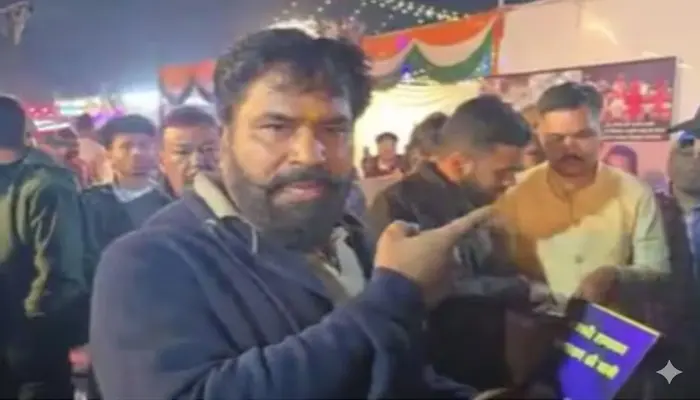
Case Summary
In Mandla, Madhya Pradesh, Hindu religious sentiments were insulted after a stall was found selling books containing derogatory content about Hindu deities. The incident that occurred on 15 February 2026, when communal tension broke out during a two-day Shri Anna (Millet) Food Festival held at the Police Line Ground in Mandla. Members of the Hindu organisations found that a stall was selling books titled Sachchi Ramayan and Ramayana Ki Chaabi, which included offensive and indecent remarks directed at Lord Ram, Mata Sita, King Dasharatha and other revered figures in Hinduism. They strongly objected to the presence of these books, describing their sale as a direct affront to religious sentiments and faith. They confronted the fair management and questioned the basis on which permission had been granted to the stall to display and sell such material at a public cultural event. As protests intensified and slogans were raised, the stall operator fled the venue. Subsequently, Hindu activists approached the local police station and lodged a First Information Report against the stall operator as well as the event organisers, demanding strict legal action. Police initiated an investigation into the matter. Tension persisted at the venue for some time following the incident, though the situation was later brought under control.
Why it is Hate Crime ?
This case has been to to primary category in this case is - Hate speech against Hindus. The subcategory under this is: Anti-Hindu slurs, mocking faith. Anti-Hindu slurs and the deliberate mocking of the Hindu faith owing to religious animosity involve the usage of derogatory terms, stereotypes, or offensive references to religious practices, symbols, or figures. One of the common anti-Hindu slurs used against Hindus is “cow-worshipper” and “cow piss drinker”. The intention of using this term is to demean and mock Hindus as a group and their religious beliefs since Hindus consider the cow holy. Additionally, some symbols and the slurs attached to them have a historical context that exacerbates the insult, hate, stereotyping, dehumanisation and oppression against Hindus. Cow worship has been used for centuries to denigrate Hindus, insult their faith and oppress Hindus specifically as a religious group. There has been overwhelming documentation about how cow slaughter has been used to persecute Hindus with cow meat being thrown in temples and places of worship. There has also been overwhelming documentation where cow meat (beef) has been force-fed to Hindus to either forcefully convert them to Islam or denigrate their faith. Apart from cow worship, the Swastika – which holds deep religious significance for the Hindus – has also been misinterpreted and distorted to use as a slur against Hindus. Similarly, the worship of the Shivling has been used by supremacist ideologies and religions to denigrate Hindus owing to religious animosity. Such slurs and denigration stem out of inherent animosity and hate towards Hindus and their faith, therefore, it is categorised as hate speech targeted at Hindus specifically owing to their religious identity. This case has been added to the tracker because it constituted a direct and public insult to Hindu religious sentiments after a stall at the Shri Anna (Millet) Food Festival was selling books containing derogatory material about revered Hindu deities. The books were titled Sachchi Ramayan and Ramayana Ki Chaabi, and included vulgar and demeaning commentary directed at Lord Ram, Mata Sita, King Dasharatha and other sacred figures central to the Hindu tradition. The titles themselves invoked the Ramayana, one of Hinduism’s most sacred epics, while presenting content that disparaged its principal characters, thereby intensifying the perceived gravity of the insult. Lord Ram and Mata Sita occupy a central position within Hindu belief and cultural life, symbolising dharma, virtue, sacrifice and moral order. Any attempt to mock or abuse them reflects outright religious animosity towards Hinduism. In this case, the circulation of literature containing such commentary at a public event amounted to a direct affront to the religious identity of Hindus. Such actions are rarely isolated; they form part of a persistent pattern aimed at disrespecting the Hindu faith, driven by entrenched hostility and contempt for Hindus and their beliefs, thereby wounding collective religious sentiment. By invoking the sacred narrative of the Ramayana in their titles while simultaneously presenting content that demeaned its protagonists, the books compounded the sense of religious injury. The combination of derogatory literature and abuse of Hindu deities constitutes hate speech directed against Hindus; thus, it has been added to the tracker.


Case Status
Complaint registered


Perpetrators Details
Perpetrators
Unknown
Perpetrators Range
Unknown
Perpetrators Gender
unknown
 Sources




