Hindus poisoned to death and robbed by Muslim occult practitioner posing as Hindu saint
 Delhi, India
  7 December, 2025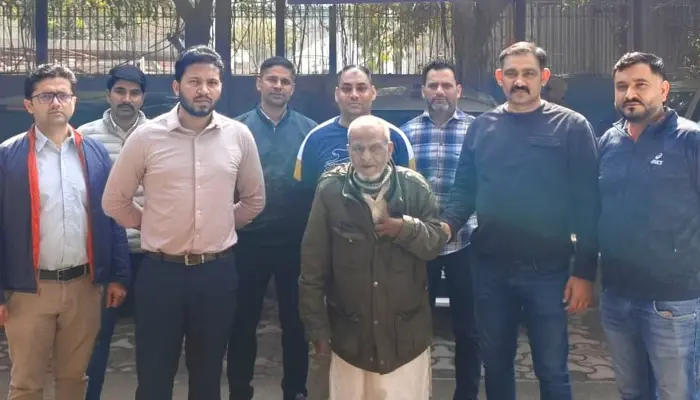
Case Summary
In Delhi, three Hindu individuals were poisoned and killed by a Muslim occult practitioner named Kamruddin, who posed as a Hindu Baba (saint). According to reports, on 8 February 2026, three Hindu individuals named Laxmi (40), Shiv Naresh (42), and Randhir (76) were found unconscious inside a white car stationed on the Peeragarhi flyover in Outer Delhi. They were subsequently declared brought dead at Sanjay Gandhi Memorial Hospital. The matter came to light after a PCR call was received at Paschim Vihar East Police Station. During the inspection of the vehicle, police recovered liquor bottles, cold drink bottles, empty glasses, mobile phones, cash, helmets, jackets, Aadhaar cards and other personal belongings. The absence of visible external injuries and the family’s insistence that the deaths were not self-inflicted prompted a high-priority investigation. During the investigation, it was established that the victims had been in contact with Kamruddin alias “Baba”, a Muslim occult practitioner operating from Loni in Ghaziabad and Firozabad in Uttar Pradesh. Evidence showed that he had joined the trio during their return journey to Delhi after meeting them in Loni. The investigation revealed that Kamruddin had been introduced to Laxmi in December 2025 through an associate named Salim. He subsequently lured the group by projecting himself as a Hindu spiritual practitioner to gain trust. He promised to perform a pooja (associated with Hindu rituals) known as “dhanvarsha”, purported to bring them sudden financial gain. He instructed them to arrange ₹2 lakh in cash along with cold drinks and alcohol for the pooja. During the journey, he prepared laddoos mixed with poison and persuaded the victims to consume them along with liquor and soft drinks. After eating laddoos, they began to feel unwell and lost consciousness. Subsequently, Kamruddin took the cash and abandoned the vehicle at the flyover before fleeing. After the investigation, the police promptly arrested the accused, and a case was registered at Paschim Vihar East Police Station. Police records indicated that Kamruddin had a prior criminal history, having been booked in 2014 under Sections 143, 363 and 302 of the Indian Penal Code at Raja Khera Police Station in Dholpur, Rajasthan, and named in another FIR in 2025 under Sections 103(1) and 123 of the Bharatiya Nyaya Sanhita at Makhkhanpur Police Station in Firozabad, Uttar Pradesh.
Why it is Hate Crime ?
This case has been added to the tracker under the primary category of - Attack on Hindu religious representations. Within it, the sub-category selected is - Defiling religious customs. Sanatan Dharma is not a religion of one book, which is to say that while it has religious scriptures that form the central tenets of the faith, there are several traditions followed through thousands of years, mostly passed from generation to generation orally. There are several such customs and traditions that are followed by various Hindus and Hindu sects. Defiling of these traditions and customs is a breach of an individual or group’s religious practices. Such practices can range from dietary restrictions like not eating non-vegetarian food for a certain period of the year, not eating non-vegetarian food at all, not eating beef since the cow is considered holy in Hinduism, the sanctity of religious customs followed in the house (like many ISCKON devotees), etc. Any malicious action leading to the breach of such traditions or defilement of these traditions owing to animosity towards the faith or for the sake of activism stems not only from the lack of faith in the religion itself but also from disregard for the faith of the devotees who follow the customs/traditions and implicit bias against the faith, the tradition itself. Since these specific traditions are central to the faith of the devotees of that specific sect of Hindus, any non-compliance with these traditional rules would be considered a religiously motivated hate crime. The other primary category selected here is - Attack resulting in death. Within it, the sub-category selected is - Attacked for Hindu identity. In several cases, Hindus are attacked merely for their Hindu identity without any perceived provocation. A classic example of this category of religiously motivated hate crime is a murder in 2016. 7 ISIS terrorists were convicted for shooting a school principal in Kanpur because they got ‘triggered’ seeing the Kalava on his wrist and tilak that he had put. In this, the Hindu victim had offered no provocation except for his Hindu religious identity. The motivation for the murder was purely religious, driven by religious supremacy. Such cases where Hindus are targeted merely for their religious identity would be documented as a hate crime. Under this category, cases where the attack led to the death of the Hindu victim/s would be documented. This case has been added to the tracker because three Hindu individuals were deceived and killed after being lured through the misuse of Hindu religious identity and ritual symbolism by a Muslim occult practitioner named Kamruddin. The accused deliberately projected himself as a Hindu spiritual figure, presenting himself as a “Baba” capable of performing a pooja known as “dhanvarsha”, which he claimed it would bring the victims sudden financial gain. The accused positioned himself as a Hindu religious practitioner and convinced the victims to arrange ₹2 lakh in cash along with ritual-related items, including sweets and beverages, under the pretext of conducting a pooja. The ritual setting was not incidental but central to the deception: the promise of divine intervention and prosperity under the guise of Hindu religious rituals. By appropriating Hindu religious terminology and ritual frameworks, he secured the trust of the victims and embedded himself within their circle under the guise of spiritual guidance. Such conduct reduced Hindu religious practices and sacred terminology to instruments of manipulation and deception. The invocation of pooja, the framing of the act as a spiritually sanctioned ceremony, and the exploitation of devotional belief for monetary gain constituted not only criminal fraud but also a calculated misuse of Hindu religious identity. The victims were targeted in a context shaped by faith and ritual expectation, and their trust in what they believed to be a Hindu spiritual authority directly enabled the crime. The deliberate appropriation of Hindu spiritual symbolism to deceive and eliminate devotees reflects a pattern of religious misrepresentation that goes beyond ordinary criminality and enters the domain of religious subversion. Furthermore, while the immediate motive seems financial gain, the method chosen by the accused reflected more than mere economic opportunism. He did not approach the victims through a neutral financial pretext; instead, he embedded the deception within explicitly Hindu religious frameworks, invoking pooja, ritual prosperity, and divine blessing as the basis for participation. The deliberate selection of Hindu ritual vocabulary and the performance of a ceremony rooted in Hindu belief systems indicate that the victims were targeted because of their religious identity. The killings of the three Hindu victims by the perpetrator clearly demonstrated that the murders arose from religious animosity and prejudice, as the accused placed no value on Hindu lives. His false claim to spiritual authority within the Hindu faith, a tradition to which he did not belong, revealed a deliberate contempt for its sacred traditions. Although financial gain was a key motive, the calculated misuse of Hindu religious rites exposed underlying religious hatred and targeted subversion of Hinduism itself. Thus, these killings went beyond economic fraud, blending greed with religiously motivated deception. Given that this case involves the exploitation of Hindu religious belief, the deliberate impersonation of a Hindu spiritual authority, and the use of sacred ritual frameworks as a vehicle for fraud and murder, it has been included in the hate crime database of the Hinduphobia Tracker. Disclaimer: It is important to clarify that none of the media sources covering this case has specified the exact date when the victims first came into contact with the accused, although reports indicate that Laxmi was introduced to him in December 2025. In the absence of a precise date, an indicative date of 8 December 2025 has been used for documentation purposes, as it reasonably represents the approximate beginning of the victims’ ordeal prior to their deaths on 8 February 2026. While media coverage of the incident emerged later, the Hinduphobia Tracker records cases based on when the victims’ ordeal began, not when its reported.
Victim Details
Total Victim
3
Deceased
3
Gender
- Male 2
- Female 1
- Third Gender 0
- Unknown 0
Caste
- SC/ST 0
- OBC 0
- General 0
- Unknown 3
Age Group
- Minor 0
- Adult 2
- Senior Citizen 1
- Unknown 0


Case Status
Arrested


Perpetrators Details
Perpetrators
Muslim Extremists
Perpetrators Range
One Person
Perpetrators Gender
male
 Sources




