Sacred Shivalinga and temple idols vandalised by miscreants during Mahashivratri festival in Karnataka
 Gadag, Karnataka, India
  14 February, 2026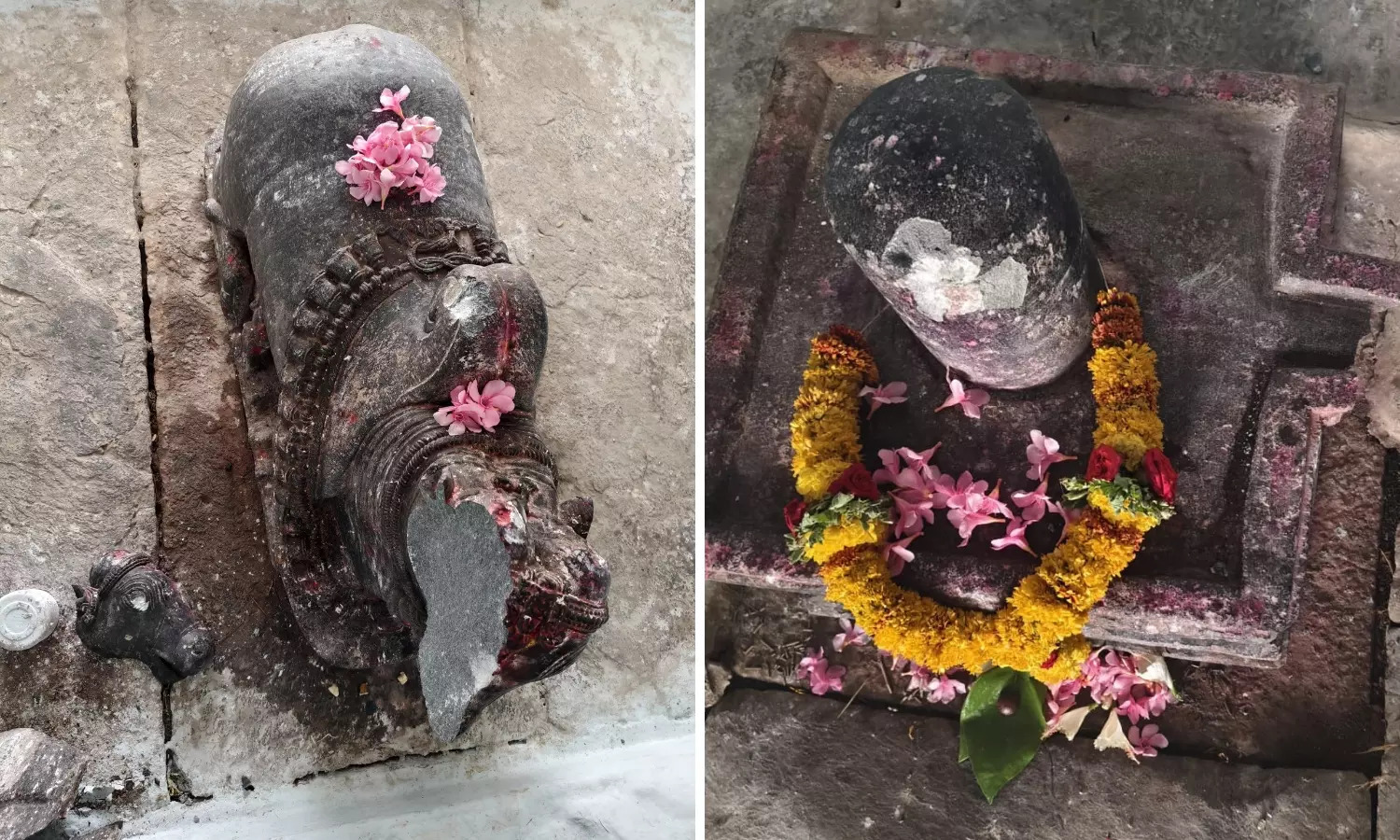
Case Summary
In Shingatalur village of Mundaragi taluk in Gadag district of Karnataka, on Sunday (15 February 2026), a Shivalinga and sacred idols at the historic Ramalingeswara Temple were vandalised by unidentified miscreants during the occasion of Mahashivratri, a revered Hindu festival dedicated to Lord Shiva. According to media reports, the incident came to light early Sunday morning when devotees arrived at the temple for special prayers and rituals marking the festival. Police initiated an investigation and examined CCTV footage to identify the culprits, while villagers staged a protest demanding immediate arrests. Notably, the Ramalingeswara Temple, situated on the banks of the Tungabhadra River, is a historic place of worship with significant religious importance for the local community. The temple had been decorated and cleaned on Saturday (14 February 2026) night in preparation for Mahashivratri celebrations. Devotees were expected to gather for special prayers and rituals to mark the festival. According to police, the incident came to light early Sunday morning when devotees arrived at the temple for the Mahashivratri prayers. Upon entering the temple premises, they discovered that the Shivalinga had been damaged. Additionally, idols of Nandi, Basavanna, Nagappa and Honnathamanna on the temple premises had also been vandalised. Villagers stated that the vandalism took place late at night after the temple was cleaned and decorated. The timing of the attack, occurring just hours before devotees were to arrive for Mahashivratri celebrations, added to the shock and anger among the community. News of the desecration spread quickly throughout the village, triggering anger among residents. A large number of villagers gathered at the temple premises and staged a protest, condemning the act and demanding immediate arrest of those responsible. The protesters expressed outrage that such an incident occurred on the sacred occasion of Mahashivratri. Police teams rushed to the spot upon receiving information about the vandalism and initiated an investigation. Officials stated that evidence was collected from the temple complex and nearby areas. CCTV footage from cameras installed in the vicinity was examined to identify the culprits. Authorities worked to determine who was responsible for the desecration. Some villagers stated there was a delay in police action, while authorities appealed to the public to maintain peace and communal harmony. Recognising the sensitivity of the situation and the potential for unrest, additional security was deployed in the area as a precautionary measure. Police maintained vigilance to prevent any further incidents and to ensure public safety during the ongoing investigation.
Why it is Hate Crime ?
The primary category for this case is- Attack on Hindu religious representations. The sub-category this case qualifies for is- Desecration of Hindu religious symbols. Icons and symbols or a religious representation of a spiritual ideal are widely revered in Hinduism. Iconography is of vital significance in the Hindu milieu. It helps connect people’s spiritual beliefs with the real world. Iconography within the Hindu faith takes several shapes and forms. Murtis are of most significance to Hindus, to which daily rituals, prayers and offerings are done. Besides the murtis, there are several other symbols which have deep significance in the Hindu faith – the Om and Swastika for example. Since these Hindu religious symbols hold paramount importance in Hinduism, any desecration of symbols, icons, murtis, religious representations and manifestations, is driven by animosity towards the faith itself which manifests itself through these murtis, icons and symbols. Therefore, any desecration of these Hindu religious symbols and representations is considered religiously motivated hate crimes under this category. Another sub-category this case falls under is- Attack on Temples. In Hinduism, a temple is the abode of the Deity. The Deity in the Temple is consecrated, thereby, making it a real, breathing entity. Hindus believe that not just the Deity but the temple premises itself are sacred to Hindus since Hindus hold the faith that the entire Temple space is an amalgamation of the divine energy of the deity. Given the central significance of Temples in Hindu Dharma, any attack against a Hindu Temple or its peripheral premises is an attack on the faith itself and is born out of animosity towards the faith, of which, the Temple is a central tenet. Any manner of attack against a Temple and/or its premises would therefore be considered a religiously motivated hate crime. This incident involved the deliberate vandalism of sacred Hindu religious symbols at a historic temple on the auspicious occasion of Mahashivratri. The case exhibited clear characteristics of a targeted attack on Hindu religious representations, where the Shivalinga and other sacred idols were desecrated in an act designed to hurt Hindu religious sentiments and violate the sanctity of worship, amounting to a religiously motivated hate crime. The perpetrators specifically targeted the Shivalinga, one of the most sacred symbols in Hinduism representing Lord Shiva. The Shivalinga holds profound spiritual significance for Hindu devotees and is considered a direct manifestation of the divine. By damaging this sacred symbol, the perpetrators demonstrated deliberate intent to desecrate Hindu religious representations and show contempt for Hindu worship practices. The act of physically destroying a Shivalinga went beyond mere property damage; it represented a direct assault on the Hindu faith and the devotion of millions who revere this symbol, making it a hate crime. In addition to the Shivalinga, the perpetrators also vandalised idols of Nandi, Basavanna, Nagappa and Honnathamanna located on the temple premises. Nandi, the sacred bull and vehicle of Lord Shiva, is deeply venerated in Hindu tradition and is an integral part of Shiva temples. Basavanna, Nagappa and Honnathamanna are revered figures in the regional Shaiva Hindu traditions of Karnataka. By targeting multiple sacred symbols and idols, the perpetrators demonstrated a systematic approach to desecrating Hindu religious representations rather than random damage. The desecration occurred at the temple premises, a sacred space meant for worship and spiritual practice. Temples in Hinduism are considered the dwelling places of deities, and their sanctity is paramount to Hindu religious practice. By violating this sacred space and destroying symbols within it, the perpetrators demonstrated complete disregard for Hindu religious beliefs and the sanctity of places of worship. This violation of temple sanctity represented an attack on the temple itself as a centre of Hindu religious life. Furthermore, the timing of this attack was particularly significant and revealed the calculated nature of the desecration. The vandalism occurred on Mahashivratri, one of the most important festivals in Hinduism dedicated to Lord Shiva. Devotees observe this day with fasting, night-long vigils, and special prayers at Shiva temples. By choosing to desecrate the Shivalinga and temple idols specifically on this sacred occasion, the perpetrators demonstrated deliberate intent to inflict maximum hurt on Hindu religious sentiments. The attack was timed to coincide with when the temple would be most significant to devotees, amplifying the emotional and spiritual impact of the desecration. The temple had been specially decorated and cleaned on Saturday (14 February 2026) night in preparation for Mahashivratri celebrations. The fact that the vandalism occurred after these preparations were completed, late at night, suggested the perpetrators were aware of the festival and deliberately chose to strike at a moment that would cause the greatest shock and hurt. Devotees arriving for dawn prayers on this most sacred day were confronted with the desecration of their beloved deity's symbol, turning what should have been a day of spiritual celebration into one of trauma and anger. The choice to commit this desecration specifically on Mahashivratri provided critical evidence that this was a religiously motivated hate crime rather than random vandalism. If the perpetrators' intent was merely property damage or theft, they would not have chosen the most sacred day dedicated to Lord Shiva. The deliberate timing of this holy festival proved the attack was motivated by religious hatred and specifically designed to hurt Hindu devotees on their most important day of worship. The Ramalingeswara Temple is a historic temple situated on the banks of the Tungabhadra River, indicating its long-standing importance to the Hindu community. By targeting such a historically and religiously significant site, the perpetrators attacked not just physical symbols but generations of faith, tradition, and cultural heritage. Historic temples represent continuity of Hindu worship across centuries, and their desecration strikes at the heart of Hindu religious identity and community bonds. The immediate and strong reaction from the local community validated the serious nature of this attack on Hindu religious representations. A large number of villagers gathered at the temple premises to protest, demonstrating collective outrage at the desecration. Their demand for immediate arrests reflected an understanding that this was not merely property damage but a deliberate attack on their faith and religious symbols that demanded urgent justice. Overall, this case represented a direct attack on Hindu religious representations through the physical destruction of sacred symbols that are central to Hindu worship. The desecration of the Shivalinga, Nandi, and other idols on Mahashivratri at a historic temple demonstrated systematic targeting of Hindu religious symbols designed to hurt devotees and violate the sanctity of their faith. Such attacks undermine the fundamental right of Hindus to practise their religion with dignity and security, and represent serious hate crimes that strike at the core of religious freedom and communal harmony. In this case, even though the perpetrators' identities remain unknown, the act demonstrates deep-seated hatred for Hindus and their faith. Therefore, this case has been added to the Hinduphobia tracker's hate crime database.


Case Status
Complaint registered


Perpetrators Details
Perpetrators
Unknown
Perpetrators Range
Unknown
Perpetrators Gender
unknown
 Sources




