Mahashivratri celebrations targeted, Hindu devotees attacked and deities abused by Muslim mob in Amroha
 Amroha, Uttar Pradesh, India
  13 February, 2026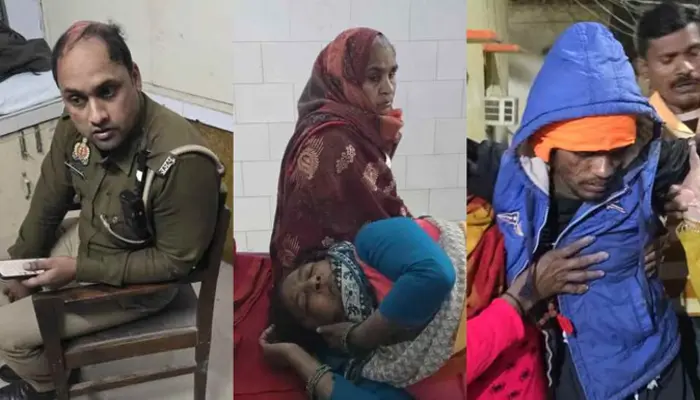
Case Summary
In Amroha, Uttar Pradesh, on the eve of Mahashivratri, Kanwariyas (Hindu devotees), who organised a bhandara and were enjoying devotional music, were brutally attacked and stoned by a Muslim mob. The Muslim attackers also abused Hindus and their revered deities. The incident occurred on 14 February 2026, near the Shiva temple on the Chhebda Bypass, when Kanwariyas (Hindu devotees) had organised a bhandara (religious feast) in the neighbourhood. During the bhandara, they were dancing to devotional songs dedicated to Lord Shiva on a DJ. The Kanwariyas had returned from Haridwar with Gangajal (sacred water from the River Ganga) and had gathered near the temple for the bhandara. Simultaneously, at a distance of about 50 metres from the temple premises, a group of Muslim youths were celebrating a birthday party. The situation deteriorated when 25-30 Muslim men approached the bhandara and began abusing Hindu devotees and Hindu deities, making inappropriate remarks. When the Kanwariyas protested against it and asked them to leave, an argument broke out between the two groups. The arguments quickly turned violent as the Muslim men began stone pelting, even throwing away the utensils from the bhandara. A Muslim mob gathered and began hurling stones at the Kanwariyas, disrupting the religious gathering and creating panic. Several of the Hindu devotees sustained serious injuries. Vidya Devi, a Hindu woman, suffered a serious head injury after being struck by a stone, while other devotees, including Chandrashekhar and Shikhar, were also hurt. Meanwhile, the police were informed about the incident, and they promptly arrived. However, the police personnel responding to the calls were themselves targeted during the violence. Constable Shoaib Raza Khan sustained a head injury after being hit by a stone while attempting to intervene. Station House Officer Pankaj Tomar and additional forces reached the location to bring the situation under control. Amidst the chaos, the attackers abandoned a scooter and motorcycles at the spot and fled. In the aftermath, angry devotees damaged the vehicles left behind. Five people, including the injured constable, were admitted to the hospital and later discharged after treatment. Subsequently, a complaint was filed by a Hindu man named Abhishek Saini, son of the injured Vidya Devi, based on which police registered a case against 29 Muslims, including four named Muslim men, Imran, Mukeem, Younis Ali and Mohammad Zahid. Three named accused were arrested while efforts continued to identify and apprehend others through video footage and other evidence. Superintendent of Police Amit Kumar Anand and CO City Abhishek Yadav stated that the matter was being investigated seriously and that adequate police deployment had been ensured in the locality to prevent further escalation. Following the incident, members of Hindu organisations gathered at the police station demanding swift action, and additional surveillance was imposed in the area to maintain public order.
Why it is Hate Crime ?
This case has been added to the tracker under the primary category- Attack not resulting in death. The sub-category selected is - Attack against Hindu devotees. Hindu devotees are a few of the easiest targets of religiously motivated hate crimes because during the festival/procession/puja etc, for non-Hindus it is easy to profile their victims on the basis of religion. Hindu devotees come under attack on several occasions by individual non-Hindus or mobs of non-Hindus owing to their animosity against Hinduism, its symbols and tradition/practices. There are several instances of Hindu devotees being attacked while they worship in temples or temporary religious structures, during religious processions, doing bhajan/kirtan/puja in their own homes, in the residential society etc. These attacks are perpetrated by non-Hindus primarily because of their animosity towards Hindus and their faith. In some cases, the trigger for the violence may be non-religious, however, there are two elements that make these hate crimes. First, the Hindus who come under attack are attacked violently while indulging in religious activity. Whether they are in a place of worship or not is immaterial to the crime. When individuals are attacked while indulging in religious practices, the attack in itself is a hindrance to their freedom to practice religion and therefore constitutes a hate crime. Secondly, religious supremacist doctrines and ideologies deem religious practices of Hindus to be offensive ab initio since they are considered “sinful” by these ideologies, worthy to be annihilated by force or coercion. Driven by these religious supremacist ideologies and doctrines, the attacks against Hindu devotees stem from intrinsic animosity towards Hinduism. In some cases, the trigger for the violence may be non-religious, however, it develops into a religiously motivated crime during the course of the violence. Since these attacks stem from animosity towards Hindus and Hinduism, they are considered religiously motivated hate crimes under this category. The other sub-category selected is - Attacked for Hindu identity. In several cases, Hindus are attacked merely for their Hindu identity without any perceived provocation. A classic example of this category of religiously motivated hate crime is a murder in 2016. 7 ISIS terrorists were convicted for shooting a school principal in Kanpur because they got ‘triggered’ seeing the Kalava on his wrist and tilak that he had put. In this, the Hindu victim had offered no provocation except for his Hindu religious identity. The motivation for the murder was purely religious, driven by religious supremacy. Such cases where Hindus are targeted merely for their religious identity would be documented as a hate crime under this category. The other sub-category selected is - Attacked for opposing radicals or trying to save victim. In several cases, Hindus are attacked for opposing religiously motivated crimes being committed against a fellow Hindu or simply for voicing an opinion opposing radical elements, who either have in the past or continue to persecute Hindus. In such cases, the initial attack against the victim, against which the Hindu was trying to defend the victim, would also need to be classified as a religiously motivated hate crime. Since the initial crime itself was religiously motivated and the subsequent crime of attempting to save the victim or speaking against the radical elements ends up inviting a violent attack, it would also be classified as a religiously motivated hate crime under this category. The other sub-category selected is - Communal clash/attack. Communal clash is a form of collective violence that involves clashes between groups belonging to different religious identities. For a communal clash between Hindus and non-Hindus to qualify as a religiously motivated hate crime, the trigger of the violence itself would have to be anti-Hindu in essence. For example, if there is a Hindu religious procession that comes under attack from a non-Hindu mob and after the initial attack, Hindus retaliate in self-defence, leading to a communal clash between the two religious communities. While at a later stage, both communities are involved in the clash/violence, the initial trigger of the violence was by the non-Hindu mob against the Hindus and therefore, it could safely be termed as an anti-Hindu violence. Further, the trigger would also have to be religiously motivated. In the cited example, the attack by the non-Hindu mob was against religious processions and therefore, can be concluded to be religiously motivated. In some cases, the trigger may be non-religious, however, it develops into religious violence against Hindus at a later stage. In such cases too, the foundational animosity towards Hindus becomes the motivating factor of the crime and therefore, it would be classified as a religiously motivated hate crime against Hindus under this category. The second primary category selected here is: Hate speech against Hindus. Within it, the sub-category selected is: - Anti-Hindu slurs, mocking faith. Anti-Hindu slurs and the deliberate mocking of the Hindu faith owing to religious animosity involve the usage of derogatory terms, stereotypes, or offensive references to religious practices, symbols, or figures. One of the common anti-Hindu slurs used against Hindus is “cow-worshipper” and “cow piss drinker”. The intention of using this term is to demean and mock Hindus as a group and their religious beliefs since Hindus consider the cow holy. Additionally, some symbols and the slurs attached to them have a historical context that exacerbates the insult, hate, stereotyping, dehumanisation and oppression against Hindus. Cow worship has been used for centuries to denigrate Hindus, insult their faith and oppress Hindus specifically as a religious group. There has been overwhelming documentation about how cow slaughter has been used to persecute Hindus with cow meat being thrown in temples and places of worship. There has also been overwhelming documentation where cow meat (beef) has been force-fed to Hindus to either forcefully convert them to Islam or denigrate their faith. Apart from cow worship, the Swastika – which holds deep religious significance for the Hindus – has also been misinterpreted and distorted to use as a slur against Hindus. Similarly, the worship of the Shivling has been used by supremacist ideologies and religions to denigrate Hindus owing to religious animosity. Such slurs and denigration stem out of inherent animosity and hate towards Hindus and their faith, therefore, it is categorised as hate speech targeted at Hindus specifically owing to their religious identity. This case has been added to the tracker because it demonstrates clear indicators of religiously motivated hostility directed at Hindu devotees during the public expression of their faith. The gathering was explicitly religious in nature: devotees were playing bhajans on a DJ system, organising a bhandara as part of a sacred observance, and preparing for Mahashivratri rituals. The immediate trigger of the violence seems to be the playing of bhajans on the DJ and organising a bhandara, a Hindu religious feast. The deliberate targeting and attack on the Bhandara by members of the Muslim community demonstrated the intent to disrupt and desecrate Hindu worship and intimidate devotees for publicly expressing their faith. Notably, Mahashivratri holds profound significance in Hinduism as the night dedicated to Lord Shiva, marked by intense fasting, all-night vigils, prayers, and offerings of Gangajal to symbolise spiritual purification and devotion, making any violent disruption a direct assault on core Hindu practices. Attacking this holiest observance through stone-pelting, deity abuse, and ritual sabotage reveals utter contempt for Hinduism, escalating a religious gathering into an act of targeted religious hatred. The Hindu victims were not ordinary devotees but Kanwariyas, pilgrims who endure arduous treks from Haridwar bearing sacred Gangajal specifically for Mahashivratri offerings, embodying penance and unwavering faith in the revered Kanwar tradition. Subjecting them to such brutality, including overturning utensils, demonstrates the perpetrators' complete disregard for Hindu sentiments and rituals. This violence desecrated not only the Mahashivratri celebration but also the sanctity of the Kanwar pilgrimage, underscoring the attack's deliberate religious motivation. The violence by the Muslim mob was religiously motivated because it was the Muslim men who first confronted the Hindu devotees. The fact that the Muslim men abused Hindus and Hindu deities demonstrates clear religious animosity. In Hinduism, deities are not symbolic figures but are sacred, living realities for devotees. Abuse of deities is therefore not just offensive speech, but a direct attack on the religious identity, dignity, and emotional core of the believer. Therefore, abuse of Hindu deities in this incident is a hate crime because it is motivated by animosity towards Hindus as a group, is intended to humiliate and coerce, and is an act of psychological violence that violates the community’s religious freedom and dignity. The targeting of individuals who were demonstrably engaged in Hindu religious practice establishes a direct connection between the violence and the victims’ religious identity. If the Muslims had any issues, they could have informed the administration, but instead they chose to abuse Hindus and Hindu deities. When Hindus confronted them, the Muslim mob responded with violence. Furthermore, this was not a random altercation; it occurred near a Hindu temple, during a bhandara, during devotional singing and on the eve of Mahashivratri. The symbolic elements of the Hindu faith were central to the context in which the violence unfolded. When violence erupts specifically in response to outward expressions of Hindu identity, it demonstrates religious animosity. This brutal targeting of Hindu devotees engaged in worship exposes the perpetrators' intent to physically harm and psychologically terrorise people based solely on religious participation. It inflicts lasting physical wounds and emotional trauma, aiming to deter Hindus from future gatherings through instilled fear, a hallmark of religiously fuelled hostility. This reflects a mindset of religious supremacy and communal entitlement amongst the members of the Muslim community. This sense of entitlement and superiority not only reflects deep-seated prejudice but also highlights an attempt to assert religious dominance over public spaces. The attack on the religious gathering was motivated by this Islamic supremacist ideology, wherein Muslims tend to look down upon Hindus and their religious practices, and believe that they have the right to dictate to Hindus on how to conduct their celebrations. The act of violently attacking the Hindus for simply organising a bhandara and playing devotional songs illustrates a dangerous mindset rooted in exclusion, intolerance, and religious animosity, making this case a clear example of a religiously motivated offence. This incident represented an overall communal attack against Hindus, their religious gathering, and their faith, driven by unmistakable religious animosity. Such actions were intended to shatter Hindu traditions and impose Islamic dominance. Far from a random clash, it systematically struck at Hindu religious life, showcasing perpetrators' intent to marginalise and intimidate the entire Hindu community through targeted violence. Taken together, the organised nature of the Muslim mob, the targeting of a Hindu religious ritual, the use of weapons and threats, and the effort to impose restrictions on Hindu worship establish this incident as a clear case of communal hostility against Hindus. On these grounds, the case qualifies as a religiously motivated incident and merits inclusion in the hate crime database of the Hinduphobia Tracker Disclaimer: This tracker acknowledges that there were multiple individuals affected in this incident. However, since only four victims have been explicitly identified by name in available reports, Vidya Devi, Chandrashekhar, Shikhar and Abhishek Saini, the victim count has been recorded as four. This is a conservative estimate recorded for documentation purposes only.
Victim Details
Total Victim
4
Deceased
0
Gender
- Male 3
- Female 1
- Third Gender 0
- Unknown 0
Caste
- SC/ST 0
- OBC 0
- General 0
- Unknown 4
Age Group
- Minor 0
- Adult 1
- Senior Citizen 0
- Unknown 3


Case Status
Case sub-judice


Perpetrators Details
Perpetrators
Muslim Extremists
Perpetrators Range
From 10 to 100
Perpetrators Gender
male
 Sources




