Hindu man faces false legal charges from Muslim girlfriend's family over interfaith relationship
 Sambhal, Uttar Pradesh, India
  26 January, 2026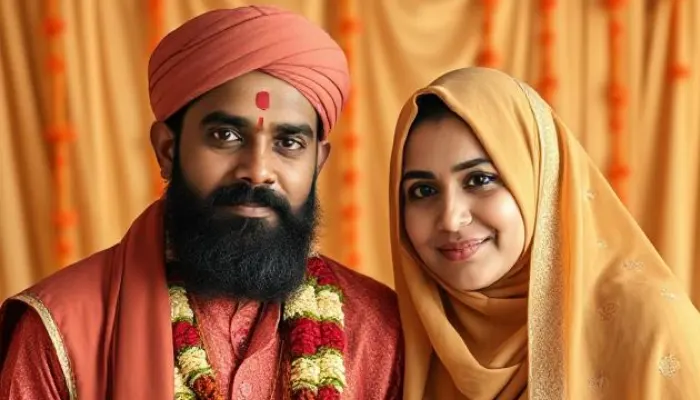
Case Summary
In Sambhal district, Uttar Pradesh, a Hindu man named Ankit faced charges from a fake complaint by his Muslim girlfriend's family over their interfaith relationship. The victim encountered legal trouble and serious criminal charges when his Muslim girlfriend, Samreen's family, filed a complaint with the police that led to Child Welfare Committee (CWC) involvement. The girlfriend’s family made false claims that she was a minor despite her being an adult. Such false allegations could have resulted in charges against Ankit under the Protection of Children from Sexual Offences Act, which carries severe punishment, including imprisonment. According to reports, Ankit and Samreen, both residents of Nawada village in Hazratnagar Garhi police station area, had been in a romantic relationship for about four years after meeting in school. Because of their different religious backgrounds and fear of family and social opposition, Ankit was initially hesitant about marriage. On 27 January 2026, Samreen left her home and went to Ankit's house, clearly stating her desire to live with him and marry according to Hindu rituals. Given that the matter involved two different communities, concerns arose about possible tension in the village. Because of this, Ankit's family temporarily sent her to stay with relatives. When Samreen did not return home, her mother Mahajan filed a fake complaint at the police station. Police detained both Samreen and Ankit for questioning and presented them before the court. In court, both stated they were adults and Samreen expressed her desire to marry Ankit. Police then presented Samreen before the Child Welfare Committee in Bahraich. Since the Child Welfare Committee only handles cases involving minors, its involvement showed that the family's complaint claimed that Samreen was a minor. At the Child Welfare Committee, Samreen voluntarily stated she had been in a relationship with Ankit for four years, went to his house of her own free will, was under no pressure, and wanted to marry him according to Hindu rituals. She also warned that her family would be responsible if any harm came to her, Ankit, or his family. Station In-charge Sudhir Panwar confirmed that on 2 February 2026, after recording her statements, the Child Welfare Committee handed Samreen over to Ankit. Assistant Superintendent of Police North Kuldeep Singh stated that the investigation confirmed the woman was an adult who voluntarily chose to be with Ankit. After the Child Welfare Committee's decision, Samreen and Ankit married according to Hindu rituals. After marriage, Samreen converted to Hinduism and changed her name to Roohi. Ankit's family accepted her, with his mother stating the girl came voluntarily and wanted to marry according to Hindu customs. For security reasons, both left the village and moved to a safe location. Police remained alert as both families continued to live in the same village.
Why it is Hate Crime ?
The primary category selected here is- Men attacked for being associated with non-Hindu women. The sub-category this case qualifies for is- Attacked/killed for being associated or suspicion of being associated with Muslim woman. There have been several cases documented of Hindu men/boys being attacked specifically by Muslim groups/mobs for merely being associated or suspicion of being associated or being seen with a Muslim woman in public. In most of such cases, the Hindu man is not in a relationship with the Muslim woman, however, the mob proceeds to threaten and/or assault the Hindu man for merely being associated with the Muslim woman in any capacity. The rise of such crimes stems from a particularly sinister campaign run by several Muslim ideologues and activists. The campaign claims that Hindu men are attempting to ‘lure’ Muslim women into relationships to ensure that Muslim women leave their faith and follow Hinduism. The propaganda has been spearheaded with the help of WhatsApp groups and the extensive use of social media, sans evidence of the same. In many cases, pamphlets were fabricated to lend credence to this campaign. The root of this campaign lies in the fact that several cases of sectarian crimes against Hindu women in relationships with Muslim men have been documented. In such cases, Hindu women have often been forced/pressured to convert to Islam, assaulted, threatened and even murdered owing specifically to their religious identity and their refusal to give up that religious identity to adopt Islam. To delegitimize the suffering of Hindu women when such sectarian crimes are committed against them, the theory of ‘Bhagwa Love Trap’ was floated by sections of the Muslim community. As this theory gained traction, Muslim mobs started targeting Hindu men who were seen with Muslim women. In several such cases, the Hindu man was assaulted merely for offering to drop a Muslim woman in his vehicle or being friends. The differentiating factor between such cases and legitimate cases of Hindu women being targeted while in a relationship with Muslim men is that there is no sectarian violence, and force/pressure to convert. The nature of sectarian violence against Hindu women is not about two adults in a consensual relationship, working together, studying together, or even marrying each other where religious considerations are declared. In this category of crimes, it is pertinent to remember that in none of the cases, there is an element of the Hindu man masking his identity or forced religious conversion. Such cases are driven by specific religious motivations and against the religious identity of the victim and are therefore qualified as hate crimes. The other subcategory selected is- Attacked by non-Hindu partner or/and her family. When Hindu men are in a relationship with non-Hindu women, there are cases where the man is forced to convert his religion and upon his refusal to do so, the partner or/and her family attacks the victim. Such relationships may be consensual with the religious identity of the non-Hindu woman known to the victim. Somewhere along the relationship, the non-Hindu woman or her family starts forcing/pressurizing the Hindu man to convert. In some of these cases, the association could be non-consensual as well or, the religious identity of the non-Hindu woman could be previously unknown to the Hindu victim. In such cases, the Hindu man is first forced/pressurized to change his religion by the non-Hindu woman or her family. The force/pressure could involve threats. The trigger for directing violence against the Hindu man is in these cases his refusal to comply and change his religion under threat and/or force. In other cases that have been documented, it is also seen that the Hindu partner is assaulted by the non-Hindu woman or her family simply for his relationship with the non-Hindu woman and by virtue of him following the Hindu faith and not the religion of the non-Hindu woman. In such cases, the relationship is consensual in most cases and the religion of both partners is known to the other. Often, in such cases, there is no direct force/pressure to convert either, however, the attack is a result of the Hindu man being in a relationship with the non-Hindu partner and not following her religion/following Hinduism specifically. Such cases are driven by specific religious motivations and against the religious identity of the victim and are therefore qualified as hate crimes. This case stood as a clear instance of a religiously motivated hate crime against Hindus, where the victim, a Hindu man named Ankit, faced false criminal charges solely because of his interfaith relationship with a Muslim woman. The incident stemmed not from any misconduct by Ankit but exclusively from the religious identities involved. Both Ankit and Samreen were consenting adults free to choose their path; she joined him willingly and later embraced Hindu rituals in marriage after converting. The legal harassment inflicted on Ankit by Samreen's Muslim family exemplified a crime driven by religious animosity rooted in his Hindu identity. False claims of her minor status triggered Child Welfare Committee involvement and loomed charges under the Protection of Children from Sexual Offences Act, carrying years of imprisonment. Their reaction rejected her adult choice, viewing Ankit's Hindu faith as an unacceptable barrier to her remaining within Islam. The critical element in this case was the involvement of the Child Welfare Committee. The Child Welfare Committee is a statutory body that exclusively handles matters concerning children and minors. The fact that police presented Samreen before the Child Welfare Committee rather than simply verifying her age through standard documentation indicated that her family's complaint claimed she was a minor. This common tactic criminalises Hindu men in interfaith relationships, as claiming the woman was a minor transformed a consensual adult relationship into a serious criminal offence. Had the false minor claim been accepted, Ankit would have faced prosecution under the Protection of Children from Sexual Offences Act. The Protection of Children from Sexual Offences Act carries severe penalties, including mandatory minimum imprisonment, and charges under this law carry immense social stigma. Even an accusation under the Protection of Children from Sexual Offences Act can destroy a person's reputation, employment prospects, and social standing. The threat of such serious consequences demonstrated how false allegations served as a weapon to punish Hindu men for associating with Muslim women. According to Islamic doctrine, relationships between Muslim women and non-Muslim men are invalid unless the man converts to Islam. This tenet of religious supremacy often sparks coercion, false accusations, and legal traps against the Hindu partner, as seen in countless cases. Ankit neither converted nor bowed to pressure, persisting in the relationship on his terms. Samreen's family saw this refusal as defiance of their faith's boundaries, weaponising courts to punish him due to his Hindu identity. The hostility targeted Ankit precisely for his Hindu identity. Fabricated complaints sought to destroy his life through imprisonment, exposing the depth of religious intolerance. Families like his endured terror not from personal grudges but from enforced supremacy, where a Hindu man's love crossed sacred lines without submission. This stood as no family spat but a calculated bid to crush Hindu autonomy in matters of heart and faith. Such attacks on Hindu men through false complaints over interfaith ties with Muslim women often hid behind false narratives like the "Bhagwa Love Trap" myth. Pushed within Muslim extremist circles, this claim that Hindu men lure Muslim women for exploitation tied to faith, yet lacked proof with no verified traps or disguises. Instead, it excused legal violence against Hindu partners. The root remained the man's Hindu identity, rendering these religiously motivated crimes. The false charges against Ankit in this case, triggered by his Hindu faith and consensual relationship, laid bare the anti-Hindu animosity as the true force behind the assault. Therefore, this case was added to the hate crime database of the Hinduphobia Tracker.
Victim Details
Total Victim
1
Deceased
0
Gender
- Male 1
- Female 0
- Third Gender 0
- Unknown 0
Caste
- SC/ST 0
- OBC 0
- General 0
- Unknown 1
Age Group
- Minor 0
- Adult 1
- Senior Citizen 0
- Unknown 0


Case Status
Unknown


Perpetrators Details
Perpetrators
Muslim Extremists
Perpetrators Range
One Person
Perpetrators Gender
female
 Sources




