Hindu religious gathering violently attacked, bhajans halted, and devotees subjected to threats by armed Muslim mob
 Budaun, Uttar Pradesh, India
  6 February, 2026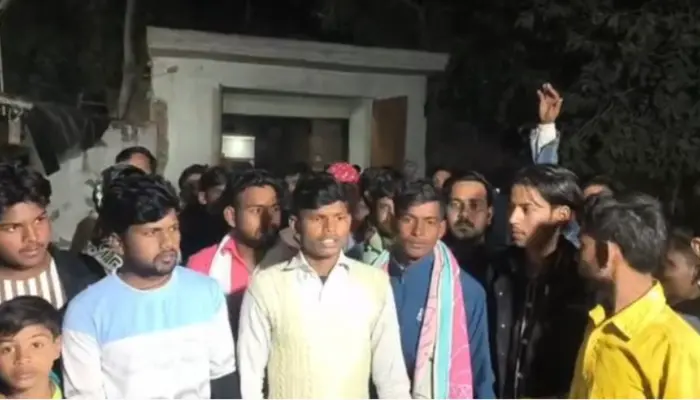
Case Summary
In Mudia village, under Gram Panchayat Usaita in Budaun district, Uttar Pradesh, a Hindu religious gathering where bhajans (sacred hymns) were being played was violently attacked by an armed Muslim mob. The perpetrators also threatened the Hindu devotees not to organise a bhandara, a Hindu religious feast. The incident occurred on 7 February 2026, when Hindu devotees organised a bhandara following the completion of an Akhand Ramayana Path at the Devi temple complex. The bhandara had been arranged at the house of a villager named Ashok due to space constraints near the temple and the presence of a nearby Muslim settlement. During this time, bhajans (Hindu religious hymns) were also being played on a DJ as part of the religious gathering. During the feast, around 20–25 individuals from the Muslim community entered the venue armed with sticks and guns, and began creating a disturbance over the DJ music, forcing the bhajans to be stopped. They damaged the DJ system, chairs and other items, while threatening the Hindu devotees not to organise a bhandara. This triggered widespread panic among attendees, creating a stampede-like situation as people who had gathered for the feast fled in fear. While preparations had been made for nearly 5,000 people from surrounding villages, over 200 were present at the time of the incident. On receiving information, Binawar police reached the spot, after which the attackers fled the scene. Subsequently, based on the complaint filed by a Hindu man named Omprakash, police detained around half a dozen individuals, brought the situation under control and restored order. Station House Officer Rajendra Singh stated that five people have been jailed under sections of breach of peace. A police force remained deployed in the village as a precautionary measure, and authorities stated that the matter was under investigation and that legal action would follow.
Why it is Hate Crime ?
This case has been added to the tracker under the primary category of - Attack not resulting in death. Within it, the sub-category selected is - Communal clash/attack. Communal clash is a form of collective violence that involves clashes between groups belonging to different religious identities. For a communal clash between Hindus and non-Hindus to qualify as a religiously motivated hate crime, the trigger of the violence itself would have to be anti-Hindu in essence. For example, if there is a Hindu religious procession that comes under attack from a non-Hindu mob and after the initial attack, Hindus retaliate in self-defence, leading to a communal clash between the two religious communities. While at a later stage, both communities are involved in the clash/violence, the initial trigger of the violence was by the non-Hindu mob against the Hindus and therefore, it could safely be termed as an anti-Hindu violence. Further, the trigger would also have to be religiously motivated. In the cited example, the attack by the non-Hindu mob was against religious processions and therefore, can be concluded to be religiously motivated. In some cases, the trigger may be non-religious, however, it develops into religious violence against Hindus at a later stage. In such cases too, the foundational animosity towards Hindus becomes the motivating factor of the crime and therefore, it would be classified as a religiously motivated hate crime against Hindus under this category. The other sub-category selected is - Attack against Hindu devotees. Hindu devotees are a few of the easiest targets of religiously motivated hate crimes because during the festival/procession/puja etc, for non-Hindus it is easy to profile their victims on the basis of religion. Hindu devotees come under attack on several occasions by individual non-Hindus or mobs of non-Hindus owing to their animosity against Hinduism, its symbols and tradition/practices. There are several instances of Hindu devotees being attacked while they worship in temples or temporary religious structures, during religious processions, doing bhajan/kirtan/puja in their own homes, in the residential society etc. These attacks are perpetrated by non-Hindus primarily because of their animosity towards Hindus and their faith. In some cases, the trigger for the violence may be non-religious, however, there are two elements that make these hate crimes. First, the Hindus who come under attack are attacked violently while indulging in religious activity. Whether they are in a place of worship or not is immaterial to the crime. When individuals are attacked while indulging in religious practices, the attack in itself is a hindrance to their freedom to practice religion and therefore constitutes a hate crime. Secondly, religious supremacist doctrines and ideologies deem religious practices of Hindus to be offensive ab initio since they are considered “sinful” by these ideologies, worthy to be annihilated by force or coercion. Driven by these religious supremacist ideologies and doctrines, the attacks against Hindu devotees stem from intrinsic animosity towards Hinduism. In some cases, the trigger for the violence may be non-religious, however, it develops into a religiously motivated crime during the course of the violence. Since these attacks stem from animosity towards Hindus and Hinduism, they are considered religiously motivated hate crimes under this category. The other sub-category selected here is - Attacked for Hindu identity. In several cases, Hindus are attacked merely for their Hindu identity without any perceived provocation. A classic example of this category of religiously motivated hate crime is a murder in 2016. 7 ISIS terrorists were convicted for shooting a school principal in Kanpur because they got ‘triggered’ seeing the Kalava on his wrist and tilak that he had put. In this, the Hindu victim had offered no provocation except for his Hindu religious identity. The motivation for the murder was purely religious, driven by religious supremacy. Such cases where Hindus are targeted merely for their religious identity would be documented as a hate crime under this category. Another primary category selected here is - Attack on Hindu religious representation. Within it, the sub-category selected - Defiling religious customs. Sanatan Dharma is not a religion of one book, which is to say that while it has religious scriptures that form the central tenets of the faith, there are several traditions followed through thousands of years, mostly passed from generation to generation orally. There are several such customs and traditions that are followed by various Hindus and Hindu sects. Defiling of these traditions and customs is a breach of an individual or group’s religious practices. Such practices can range from dietary restrictions like not eating non-vegetarian food for a certain period of the year, not eating non-vegetarian food at all, not eating beef since the cow is considered holy in Hinduism, the sanctity of religious customs followed in the house (like many ISCKON devotees), etc. Any malicious action leading to the breach of such traditions or defilement of these traditions owing to animosity towards the faith or for the sake of activism stems not only from the lack of faith in the religion itself but also from disregard for the faith of the devotees who follow the customs/traditions and implicit bias against the faith, the tradition itself. Since these specific traditions are central to the faith of the devotees of that specific sect of Hindus, any non-compliance with these traditional rules would be considered a religiously motivated hate crime. This case has been added to the tracker because it bears clear indicators of a religiously motivated act of hostility against Hindus. The immediate trigger of the violence revolved around the playing of bhajans on the DJ and organising a bhandara, a Hindu religious feast. The deliberate targeting and attack on the bhandara by members of the Muslim community demonstrated the intent to disrupt Hindu worship and intimidate devotees for publicly expressing their faith. It is important to note here that the Muslim mob was fully prepared, armed with weapons. This preparedness points to a premeditated act directed specifically at Hindu devotees and their religious gathering rather than an isolated, random instance of violence. The attackers physically intimidated devotees, vandalised the event and warned them against organising bhandaras in the future. Such threats were aimed at curbing the outward expression of Hindu identity and faith through coercion and violence, reflecting an attempt to impose fear-based restrictions on Hindu religious life. Furthermore, Bhandara was not an ordinary social feast but was organised as a part of the Akhand Ramayana Path, a sacred and continuous Hindu religious observance. By storming the venue, forcibly stopping the devotional bhajans, and vandalising the arrangements, the Muslim attackers disrupted and defiled a religious continuation of the ritual itself. Their actions, therefore, amounted not merely to disturbance but to an insult and desecration of a Hindu religious observance, further reinforcing the religiously motivated nature of the attack. Additionally, the destruction of the DJ system playing bhajans, explicit Hindu religious hymns, underscores the religious animosity driving the attack. The vandalism of equipment used solely for devotional purposes reveals a clear hostility towards visible expressions of Hindu faith. This reaction demonstrated not just opposition but contempt for the sanctity of the religious gathering. By threatening devotees solely for engaging in religious worship, the attackers exposed deep-seated prejudice and animosity directed at Hindu religious practices themselves. This reflects a mindset of religious supremacy and communal entitlement amongst the members of the Muslim community. This sense of entitlement and superiority not only reflects deep-seated prejudice but also highlights an attempt to assert religious dominance over public spaces. The attack on the religious gathering was motivated by this Islamic supremacist ideology, wherein Muslims tend to look down upon Hindus and their religious practices, and believe that they have the right to dictate to Hindus on how to conduct their celebrations. The act of violently attacking the Hindus for simply organising a bhandara and playing a DJ illustrates a dangerous mindset rooted in exclusion, intolerance, and religious animosity, making this case a clear example of a religiously motivated offence. This incident represented an overall communal attack against Hindus, their religious gathering, and their faith, driven by unmistakable religious animosity. Such actions were intended to shatter Hindu traditions and impose Islamic dominance. Far from a random clash, it systematically struck at Hindu religious life, showcasing perpetrators' intent to marginalise and intimidate the entire Hindu community through targeted violence. Taken together, the organised nature of the mob, the targeting of a Hindu religious ritual, the use of weapons and threats, and the effort to impose restrictions on Hindu worship establish this incident as a clear case of communal hostility against Hindus. On these grounds, the case qualifies as a religiously motivated incident and merits inclusion in the hate crime database of the Hinduphobia Tracker. Disclaimer: At the time of the incident, approximately 200 people were present at the bhandara. Accordingly, the victim count for this case has been recorded as 200. Similarly, as reports indicate that around 25 individuals participated in the attack on the religious gathering, the perpetrator count has been recorded as 25.
Victim Details
Total Victim
200
Deceased
0
Gender
- Male 0
- Female 0
- Third Gender 0
- Unknown 200
Caste
- SC/ST 0
- OBC 0
- General 0
- Unknown 200
Age Group
- Minor 0
- Adult 0
- Senior Citizen 0
- Unknown 200


Case Status
Case sub-judice


Perpetrators Details
Perpetrators
Muslim Extremists
Perpetrators Range
From 10 to 100
Perpetrators Gender
unknown
 Sources




