Hindu sentiments outraged as Muslim man glorifies Islamic invader and denigrates Brahmins with false historical claims
 Bihar, India
  4 February, 2026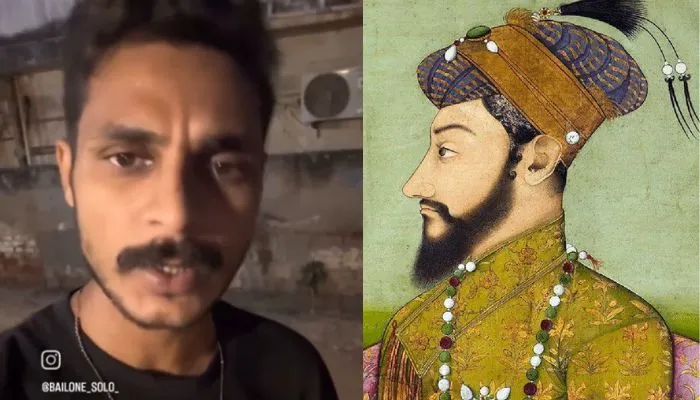
Case Summary
An anti-Hindu video circulated widely on social media in Bihar in which a Muslim man, identified as Mohammad Tajuddin, made false and derogatory statements against Hindu Brahmins. He also glorified the Islamic tyrant Aurangzeb, king of the Mughal Empire, who murdered several thousand Hindus, forcibly converted many to Islam, and destroyed several Hindu temples, all out of religious hatred for Hindus and Hinduism. In the video, the Muslim man Tajuddin claimed that, "Aurangzeb destroyed temples because Brahmins raped women inside temples". His remarks provoked outrage among Hindu communities and drew sharp criticism for spreading false, misleading and inflammatory narratives. Tajuddin referred to the Jat rebellion in Mathura, claiming that Abdul Nabi was killed in 1669 and that Aurangzeb attacked Mathura in 1670. He claimed that the Keshavdev temple was demolished following an incident in which a woman who had gone to pray did not return home. According to the accused's statements, the woman's husband approached Aurangzeb's court, and she was later found dead behind the temple. Tajuddin blamed Brahmin priests for the crime and claimed that they had raped her. He further claimed that Aurangzeb ordered the execution of a priest and that this incident was the reason for Aurangzeb's temple demolitions. Tajuddin repeatedly urged viewers to consult books on the Mughal Empire, asserting that he had shown references on screen. The video also included statements about the Gyanvapi Mosque, where Tajuddin claimed that Aurangzeb ordered its demolition to prevent future conflict between Hindus and Muslims because a temple and mosque stood close to each other. He presented this as a historical fact and said this marked the beginning of long-term religious hostility. Towards the end of the video, Tajuddin directly addressed the police in Bihar. He stated he was not afraid of arrest or jail and stated that governments change over time. At the time of writing this report, the authorities had not yet issued an official statement on the matter.
Why it is Hate Crime ?
This case has been added to the tracker under the primary category of - Hate Speech against Hindus. Within it, the subcategory selected is- Anti-Hindu slurs, mocking faith. Anti-Hindu slurs and the deliberate mocking of the Hindu faith owing to religious animosity involve the usage of derogatory terms, stereotypes, or offensive references to religious practices, symbols, or figures. One of the common anti-Hindu slurs used against Hindus is “cow-worshipper” and “cow piss drinker”. The intention of using this term is to demean and mock Hindus as a group and their religious beliefs since Hindus consider the cow holy. Additionally, some symbols and the slurs attached to them have a historical context that exacerbates the insult, hate, stereotyping, dehumanisation and oppression against Hindus. Cow worship has been used for centuries to denigrate Hindus, insult their faith and oppress Hindus specifically as a religious group. There has been overwhelming documentation about how cow slaughter has been used to persecute Hindus, with cow meat being thrown in temples and places of worship. There has also been overwhelming documentation where cow meat (beef) has been force-fed to Hindus to either forcefully convert them to Islam or denigrate their faith. Apart from cow worship, the Swastika – which holds deep religious significance for the Hindus – has also been misinterpreted and distorted to use as a slur against Hindus. Similarly, the worship of the Shivling has been used by supremacist ideologies and religions to denigrate Hindus owing to religious animosity. Such slurs and denigration stem from inherent animosity and hate towards Hindus and their faith; therefore, it is categorised as hate speech targeted at Hindus specifically owing to their religious identity. The other sub-category selected is- Anti-Hindu subversion and prejudice. Hate speech is defined as any speech, gesture, conduct, writing, or display that is prejudicial against a specific individual and/or group of people, which leads to or may lead to violence, prejudicial action or hate against that individual and/or group. Media plays a specific and overarching role in perpetuating prejudicial attitudes towards a community owing to unfair, untrue coverage and/or misrepresentation/misinterpretation, selective coverage and/or omission of facts of/about issues affecting a specific religious group. This type of bias can dehumanise the victim group, making it easier for others to justify harmful actions against them, which aligns with the objectives of hate speech laws aimed at preventing such harm. It is often observed that the media takes a prejudicial stand against the Hindu community, driven by their need to shield the aggressor community, which happens to be a numeric minority; however, that is the one perpetrating violence against Hindus. For example, the media is often quick to contextualise religiously motivated crimes against Hindus, omit or misrepresent facts that point towards religiously motivated hate crimes, justify and/or downplay religiously motivated hate crimes, or simply present fake news to stereotype Hindus. Such media bias leads to the denial of persecution and is often used to dehumanise Hindus, leading to justification for violence against them. For example, the media covered several fake allegations of Hindus targeting Muslims and forcing them to chant Jai Shree Ram. Most of these cases were proved false and fabricated after police investigation. These fake news reports were subsequently never retracted or clarified. Such fake news led to the justification of violence and dehumanisation of Hindus based on the argument that since Hindus targeted Muslims and forced them to chant Jai Shree Ram, the dehumanisation of Hindus and violence against them was par for the course and merely a retaliation. Such media bias leads to prejudicial portrayals of Hindus and offers a justification for violence against them and, therefore, is considered hate speech under this category. The other subcategory selected is- Denial or mocking of genocide/large-scale persecution of Hindus. Denial or mocking of genocide/large-scale persecution/ethnic cleansing refers to the act of denying or minimizing the fact of the ethnic cleansing and/or genocide and/or religious persecution of Hindus. This often involves denying the scale, mechanisms, religious intent, or even the occurrence of the ethnic cleansing and/or genocide and/or religious persecution of Hindus. Hate speech of this kind involves the dissemination of falsehoods that deny or distort established historical facts or mock the suffering of Hindus by saying that they deserved the persecution, motivated by Hinduphobia. Denying such atrocities is not only about the denial of facts or rewriting/revising history, but it also delegitimises the religiously motivated persecution of Hindus, the religious hate/motivation/animosity that led to the persecution, and dehumanises Hindus as a religious group. Such denial of ethnic cleansing and/or genocide and/or religious persecution of Hindus not only denies the suffering but also paves the way for future/present atrocities and hate speech, inciting prejudice and violence against Hindus. It also provides a justification for violence by delinking religious animosity from religiously motivated crimes committed against Hindus. Since such denial and/or mocking of genocide/ethnic cleansing/atrocities motivated by religious animosity leads to present and future ramifications of creating more hate speech, violence, dehumanisation and delegitimisation, it would be considered hate speech under this category. The case was included in the tracker because it normalised and legitimised hostility towards Hindu Brahmins by explicitly equating a religious identifier with criminality. It further aggravated Hindu sentiments by attempting to glorify Aurangzeb, an anti-Hindu Islamic tyrant, as a just ruler while spreading false historical claims that vilified Brahmins and desecrated the sanctity and history of revered Hindu temples. Primarily, the remarks made by Mohammad Tajuddin were not only derogatory but also deliberately framed to provoke outrage and sow division. Such content, when directed against a religious community, falls within the scope of hate speech and hate crime documentation. Tajuddin deliberately presented distorted and fabricated historical claims, alleging that Brahmins committed heinous sexual acts inside temples. By linking these false accusations to temple demolitions under Aurangzeb, he attempted to legitimise his narrative and malign the Hindu Brahmin community. The deliberate misrepresentation of history and the projection of Brahmins as perpetrators of sexual crimes constituted a direct attack on their dignity and reputation. Traditionally, Brahmins held a pious and dutiful role within Hindu society. Their responsibilities centred on worship, rituals, and the upkeep of temples. They served as custodians of spiritual practices and were respected for their devotion and service to the divine. By accusing Brahmins of crimes such as rape within temples, Tajuddin not only insulted their sacred role but also undermined centuries of cultural and religious reverence associated with temples. Such false and malicious claims against Brahmins constituted not just an attack on a caste but a targeted assault on the entire Hindu community and faith, making it religiously motivated hate speech. The video went beyond maligning Brahmins; it extended venom towards temples themselves. By claiming that rapes took place inside temples, Tajuddin desecrated the sanctity of these sacred spaces and attempted to portray them as sites of crime rather than worship. This narrative displayed deep-seated hatred towards Hindu temples and sought to erode the faith of devotees by associating places of worship with violence and immorality. Consequently, Tajuddin deliberately attempted to portray Aurangzeb as a just and great ruler who made no distinction between Hindus and Muslims in his empire, presenting his actions as fair and protective of society. However, historical records clearly document Aurangzeb's persecution of Hindus, including the destruction of numerous temples, the imposition of discriminatory taxes such as jizya, and the execution of Hindu leaders and saints, all due to religious animosity. By glorifying this Islamic tyrant known for his religious hatred towards Hindus and Hinduism, Tajuddin sought to rewrite history, legitimise his false claims against Brahmins, and whitewash anti-Hindu atrocities. This deliberate glorification amounted to hate speech motivated by religious animosity, as it minimised documented Hindu suffering, rehabilitated a figure synonymous with Hindu oppression, and provoked outrage by insulting the collective memory and pain of the Hindu community. After making false claims that Brahmins raped women inside temples, Mohammad Tajuddin glorified Aurangzeb as a just ruler and used both elements to justify and mock the tyrant's persecution of Hindus, particularly the desecration and demolition of temples, including Kashi Vishwanath. He falsely portrayed temple destructions as righteous responses to alleged Brahmin crimes, thereby legitimising Aurangzeb's religiously motivated atrocities, such as mass killings, forced conversions, and targeted attacks on Hindu sacred sites, as necessary justice rather than hatred-driven violence. This deliberate distortion of history not only excused the systematic persecution of Hindus under Aurangzeb's rule but also mocked Hindu suffering by inverting Hindu victims as villains, showcasing the perpetrator's clear animosity towards Hindus and Hinduism, and marking the video as religiously motivated hate speech. Given that this case meets the parameters of a religiously motivated hate speech, it is being added to the hate crime database of the Hinduphobia Tracker. Disclaimer: The Hinduphobia Tracker records the dates of incidents based on when the crime occurred, rather than when it was reported by the media. In this case, the media report did not state the exact date when the accused made these derogatory remarks or posted the video on social media. Therefore, the date when the video went viral on social media, 5 February 2026, is selected as the indicative incident date for documentation purposes only.


Case Status
Unknown


Perpetrators Details
Perpetrators
Muslim Extremists
Perpetrators Range
One Person
Perpetrators Gender
male
 Sources




