Hindu faith targeted; Hindu temples branded 'illegal' house of worship by Islamic preacher, in Malaysia
 Kuala Lumpur, Malaysia
  6 February, 2026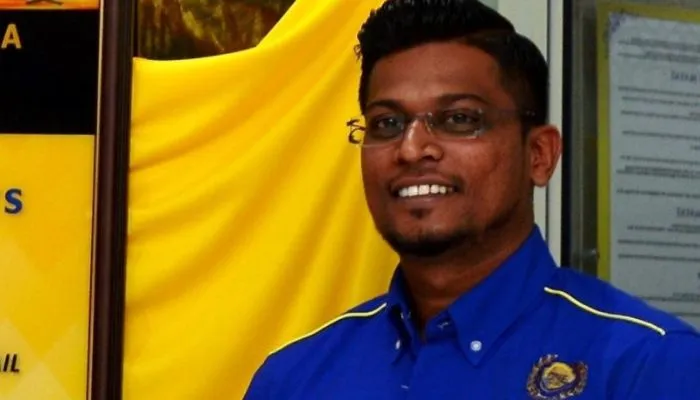
Case Summary
Hindu minority targeted by Islamic preacher Zamri Vinoth in Malaysia. He had scheduled a rally against the construction of Hindu temples, calling them ‘illegal’, and had made derogatory posts about Hindu deities on Facebook, ahead of the Indian Prime Minister’s visit to Malaysia. The Islamic preacher Zamri Vinoth was arrested by Malaysian police on Saturday evening (7th February 2026) when a scheduled rally in Kuala Lumpur did not materialise. The protest had been scheduled outside the Sogo department store in the city centre. The protest, staged by Zamri Vinoth, termed Hindu temples as “illegal houses of worship”. It had been strategically placed ahead of Indian Prime Minister Narendra Modi’s arrival in Malaysia to sabotage his two-day state visit on 7th and 8th February 2026. Ahead of the visit, Zamri had announced on Facebook that he would organise a rally against “illegal” Hindu temples. In his post, he had urged supporters to gather to fight, targeting members of the Hindu community. In a Facebook post on Friday (7th February 2026), he had stated, “Don’t be fooled by their propaganda and tactics. We would fight (against) intruders. Tomorrow’s rally was on at 8 pm in front of Sogo KL.” Along with Zamri, several others were also arrested, including lawyer Haniff Khatri Abdulla, Bersatu’s Hulu Langat division information chief Shafiq Abdul Halim, Hishamuddin Abu Bakar from the Ummah NGO, Iskandar Khoo of Bersatu, Gulab Jan from PPIM and the website owner Tamim Dahari Abd Razak. Notably, the 41-year-old, who was of Malaysian Tamil descent and was previously known as Vinoth Kalimuthu, a Hindu who later converted to Islam, had been making vitriolic remarks about Hinduism and dehumanising the Hindu minority community in the country ever since converting to Islam. Mohammed Zamri had been a repeat offender with past antecedents of engaging in mocking Hinduism and casting bad rebukes on Hinduism. Earlier, in April 2019, the Malaysian government had arrested Mohammed Zamri Vinoth on charges of derogatory remarks on Hinduism. He had been booked for spreading disunity and hatred among people. According to reports, the Islamic preacher also had a criminal past. He was a staunch follower of the Indian fugitive and hate preacher Zakir Naik, to whom the Malaysian government had given asylum.
Why it is Hate Crime ?
This case is being added to the tracker under the primary category- Hate Speech against Hindus. The subcategory selected is- Anti-Hindu slurs, mocking faith. Anti-Hindu slurs and the deliberate mocking of the Hindu faith owing to religious animosity involve the usage of derogatory terms, stereotypes, or offensive references to religious practices, symbols, or figures. One of the common anti-Hindu slurs used against Hindus is “cow-worshipper” and “cow piss drinker”. The intention of using this term is to demean and mock Hindus as a group and their religious beliefs since Hindus consider the cow holy. Additionally, some symbols and the slurs attached to them have a historical context that exacerbates the insult, hate, stereotyping, dehumanisation and oppression against Hindus. Cow worship has been used for centuries to denigrate Hindus, insult their faith and oppress Hindus specifically as a religious group. There has been overwhelming documentation about how cow slaughter has been used to persecute Hindus, with cow meat being thrown in temples and places of worship. There has also been overwhelming documentation where cow meat (beef) has been force-fed to Hindus to either forcefully convert them to Islam or denigrate their faith. Apart from cow worship, the Swastika – which holds deep religious significance for the Hindus – has also been misinterpreted and distorted to use as a slur against Hindus. Similarly, the worship of the Shivling has been used by supremacist ideologies and religions to denigrate Hindus owing to religious animosity. Such slurs and denigration stem from inherent animosity and hate towards Hindus and their faith; therefore, it is categorised as hate speech targeted at Hindus specifically owing to their religious identity. The other sub-category selected is: Mocking/denigrating Hindu leaders. Hate speech is defined as any speech, gesture, conduct, writing, or display that is prejudicial against a specific individual and/or group of people, which leads to or may lead to violence, prejudicial action or hate against that individual and/or group. Religious leaders are often seen as representatives of the community, especially the community’s religious faith and beliefs. Mocking or denigrating a religious leader specifically owing to his religious identity and/or the religious rituals he observes can be considered hate speech because the motivating factor of the speech is animosity and/or dislike for what he represents – the religious beliefs and faith of the community. It is important to note that mere insulting words against an individual do not constitute hate speech. Insulting words may be used for an individual; however, the specific speech is not the result of religious hate and/or animosity towards the professed faith of the religious leader, but the individual himself. For the speech to be considered hate speech, the speech itself or the motivating factor behind the speech has to be religious in nature. Such speech, which denigrates Hindu religious leaders specifically owing to animosity towards the faith they profess and the community faith they represent, will be treated as hate speech under this category. This case was added to the tracker because Mohammed Zamri Vinoth’s actions had clearly amounted to hate speech against Hindus. He had deliberately targeted the Hindu minority community in Malaysia and had sought to delegitimise their faith. By branding Hindu temples as “illegal houses of worship,” he had denied the legitimacy of Hindu religious practice and had portrayed Hindus as outsiders or intruders in the country. For Hindus, temples had served as sacred spaces of worship where deities were manifested through murtis, receiving deep reverence from devotees. These institutions had anchored spiritual life, hosting rituals such as puja, festivals, and community gatherings that had fostered devotion and cultural continuity. Deliberately branding Hindu temples as illegal houses of worship had directly targeted the sentiments of Hindus and provoked them. This act had reflected profound disregard for Hindu faith and practices, rooted in animosity towards Hinduism. The incident had exemplified intentional insult to religious sentiments, warranting recognition as a serious hate-motivated offence. This had wounded religious sentiments deeply, asserted Islamic dominance in explicitly sacred sites, and had sought to intimidate the Hindu community. Far from insensitivity, the behaviour had constituted a conscious affront embodying religious supremacism and communal intimidation. Furthermore, his derogatory remarks had been a direct affront to the sacred beliefs of Hindus, designed to humiliate and provoke the community. The scheduled rally, promoted through Facebook posts urging supporters to “fight intruders,” had been an act of incitement that had encouraged hostility and collective aggression against the Hindu minority community in the country. In addition, the timing of the rally, deliberately placed ahead of the Indian Prime Minister’s visit, had demonstrated intent to magnify the impact of his hate speech and to sabotage diplomatic goodwill by vilifying Hindus at a politically sensitive moment. Moreover, Zamri had been a continuous offender, making defaming remarks about Hinduism. For instance, in 2019, he had been arrested for derogatory remarks against Hinduism, and in March 2024, he had made a TikTok video insulting Hindu deities, particularly Lord Shiva. However, no action had been taken against him at that time. All such cases had shown a sustained campaign of hate speech rather than an isolated incident. Furthermore, his association with Zakir Naik, a fugitive preacher accused of spreading religious hatred, had situated his rhetoric within a broader ideological framework of anti-Hindu propaganda. Taken together, these actions constituted hate speech because they had combined derogatory language, incitement, and repeated targeting of a vulnerable minority community. Disclaimer: The Hinduphobia Tracker records incidents based on when an event occurred or when the victim's ordeal began. The Facebook post calling for a rally against Hindus was posted on 7th February 2026. Therefore, for documentation purposes, the date of the incident has been selected as such.


Case Status
Arrested


Perpetrators Details
Perpetrators
Muslim Extremists
Perpetrators Range
From 5 to 10
Perpetrators Gender
male
 Sources




