Hindu villagers targeted for conversion through prayer meeting organised under the cover of a godbharai; Hinduism denigrated, inducements offered
 Balod, Chhattisgarh, India
  4 February, 2026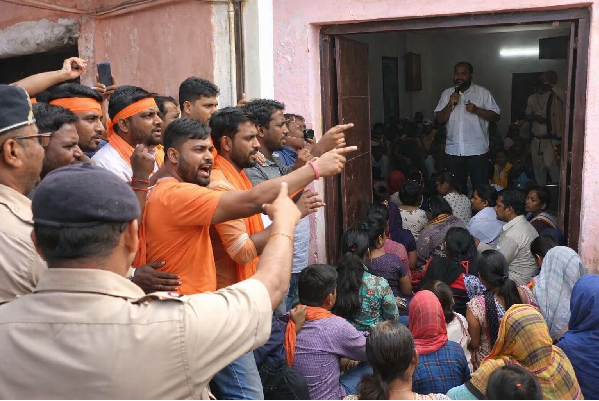
Case Summary
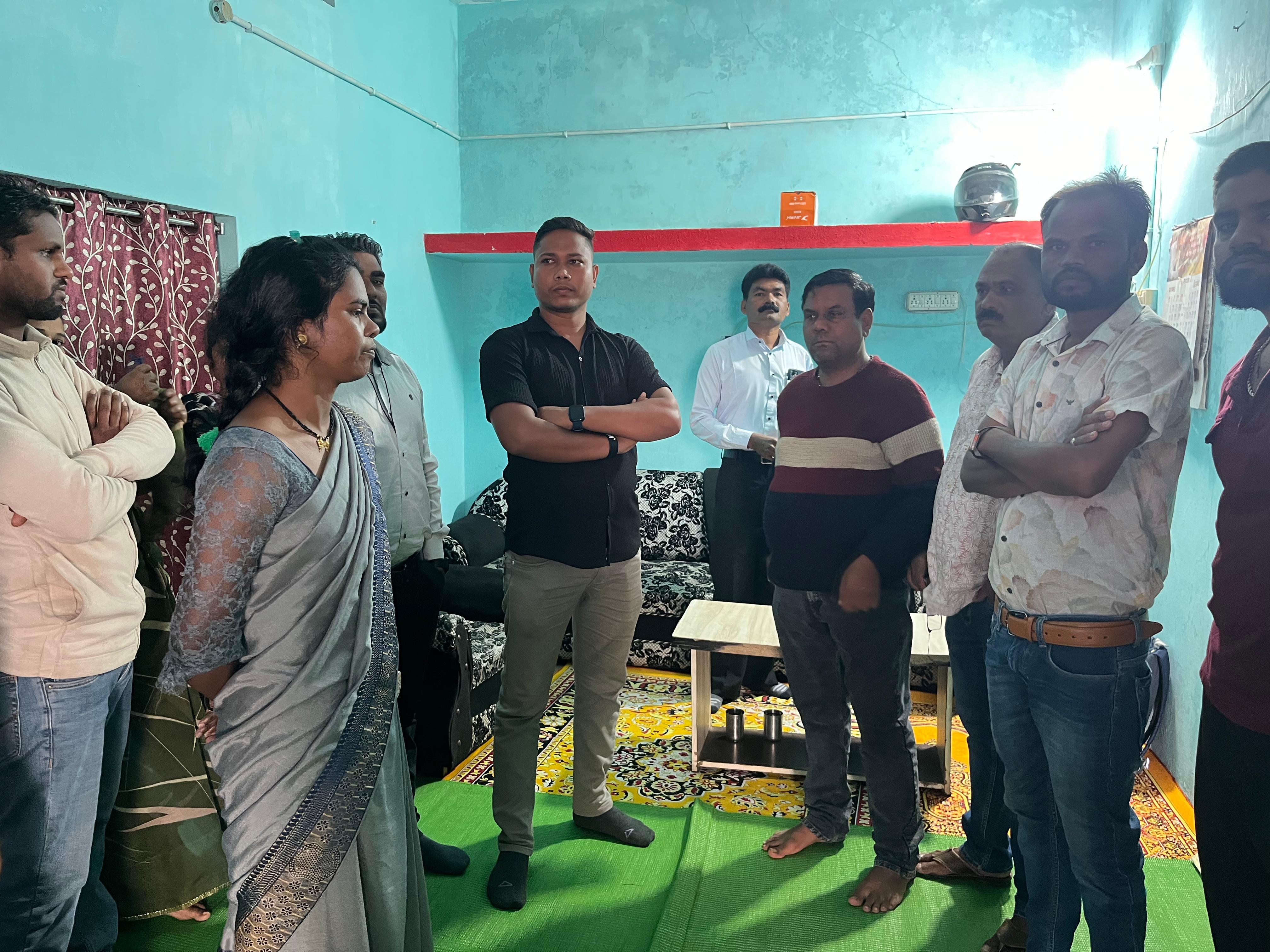
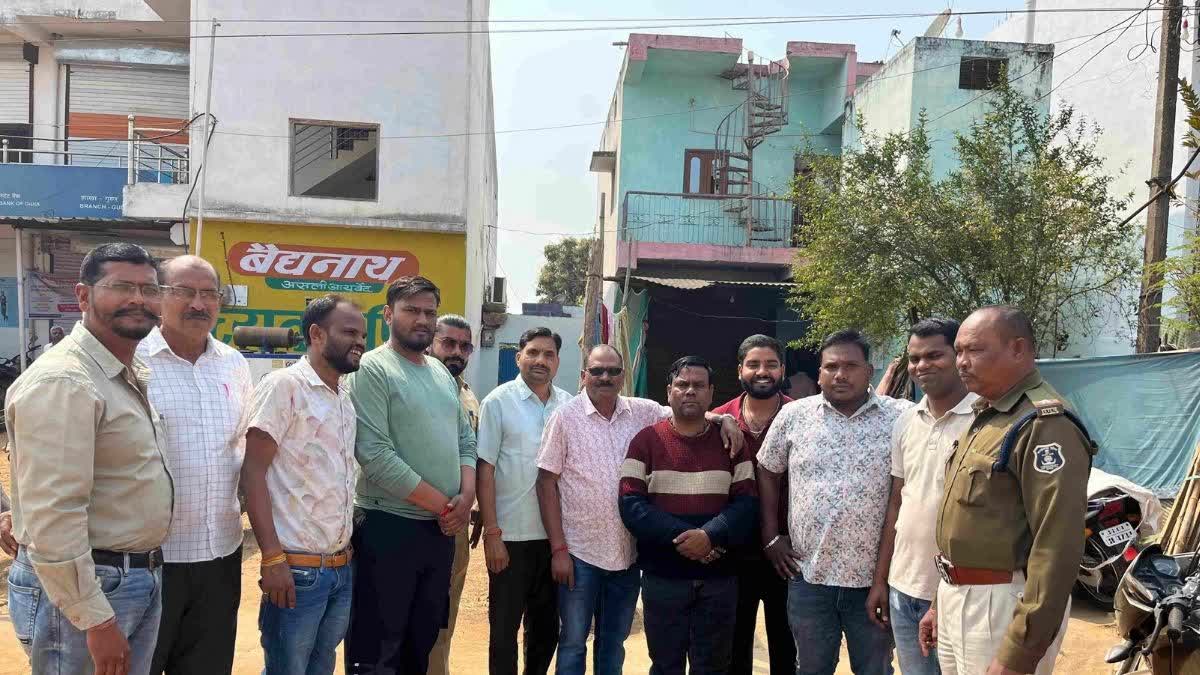
Hindu families in Ward Number 2 of Gurur Nagar Panchayat, Balod district, Chhattisgarh, were targeted by Christian missionaries who organised a prayer meeting under the cover of a godbharai [a traditional Hindu baby shower ceremony] to draw poor Hindu families into a conversion programme through inducements and deliberate misinformation about Hindu deities. The prayer meeting was shut down after Nagar Panchayat president Pradeep Sahu, Hindu organisations, and elected representatives arrived at the scene. Police also reached the location upon being informed. Christian missionaries had identified poor Hindu families in the ward as targets and were using the pretext of a godbharai ceremony to gather them at a prayer meeting without disclosing its true purpose. At the gathering, deliberate misinformation about Hindu gods and goddesses was being spread to create confusion and doubt about the Hindu faith among the assembled families. Inducements of multiple kinds were being offered in exchange for accepting Christianity, and the participants were being psychologically prepared for conversion through the prayer session. Nagar Panchayat president Pradeep Sahu stated that Christian missionaries had been targeting local poor families and that the prayer meeting had been organised specifically to manipulate their faith and draw them toward conversion through false promises and deliberate confusion about their own religion. As soon as information about the gathering reached him and the Hindu organisations, they proceeded immediately to the location. Upon arrival, Pradeep Sahu and Hindu organisation workers halted the ongoing prayer meeting and confronted those conducting it directly. Sahu described the activity as a threat to social peace and immediately informed administrative officials. He stated that the faith of simple and innocent people in his area would not be allowed to be exploited and that conversion through inducement was not only illegal but contrary to the social fabric of the community. Hindu organisations demanded that the administration take strict legal action against the accused. They called for a thorough investigation and punitive action against those conducting inducement-based conversion activities. A tense calm prevailed in the area following the intervention. Bajrang Dal workers, including Chaulesh Deshmukh, Rakesh Sahu, Jayant Sahu, Akash Sahu, Nilambhar Sahu, Ravi Deshmukh, Anmol Ojha, Yaman Nareti, and Ayush Dewan, were present throughout the intervention.
Case Images
Why it is Hate Crime ?
This case has been listed under the primary category "Predatory Proselytisation". The sub-category that this case falls under is "Proselytisation by grooming, brainwashing, manipulation or subtle indoctrination". The tertiary category for this case is "Pattern of targeting Hindus". Religious brainwashing essentially means the often subtle and forcible indoctrination to induce someone to give up their religious beliefs to accept contrasting regimented ideas. Religious grooming or brainwashing also involves propaganda and manipulation. It involves the systematic effort, driven by religious malice and indoctrination, to persuade “non-believers’ to accept allegiance, command, or doctrine to and of a contrasting faith. Cases of such grooming or brainwashing are far more nuanced than direct threats, coercion, inducement and violence. In such cases, it is often seen that there is repeated, subtle and continual manipulation of the victim to induce disaffection towards their own faith and acceptance of the contrasting faith of the perpetrator. While subtle indoctrination is widely acknowledged as predatory, an element which is often understated in such conversions or the attempts of such conversion is the role of loyalty and trust which might develop between the perpetrator and the victim. Fiduciary relationships are often abused to affect such religious conversion. For example, an educator transmitting religious doctrine of a competing faith to a Hindu student. The Hindu student is likely to accept what the teacher is transmitting owing to existence of the fiduciary relationship. The exploitation of the fiduciary relationship to religiously indoctrinate victims would also be included in this category. Since the underlying animosity towards the victim’s faith forms the basis of predatory proselytization, such cases are considered religiously motivated hate crimes. Another sub-category for this case is "Conversion/attempts to convert by inducement". Predatory Proselytisation is not just limited to threat, harassment, force and violence, but it also has contours of stealth. In several cases, the Hindu victim is exploited to convert, with non-Hindus taking advantage of their poverty. In such cases, the Hindu victim who is suffering financially is offered monetary benefits, including lucrative offers for jobs, health treatment, education, etc, to induce the victim into changing his/her religion. In such cases, the religious identity of the victim and the aim to disenfranchise him from his faith form the heart of the crime. Also, taking advantage of and exploiting an individual’s economic vulnerabilities is widely acknowledged as exploitation, forms of which are often penalised by law. Such cases therefore are considered religiously motivated hate crimes since the victim’s religious identity forms the very heart of the crime itself. One other sub-category for this case is "Attempting to convert/converting by denigrating Hinduism". In several cases, Hindus are converted or an attempt is made to convert Hindus by denigrating their faith, Hinduism. In such cases, the Hindus associate with the non-Hindu perpetrators often by choice and then, the attempt to convert them by insulting their faith, showing the faith down etc begins. An example of this would be a non-Hindu gathering where the Hindus are attending the gathering of their own free will. However, once they attend the gathering, there is an explicit attempt to convert them by abusing their faith and hailing the faith of the perpetrator. The denigration of the Hindu faith is often based on misrepresentation of the Hindu faith, its doctrine and scriptures and insult to espoused traditions if not blatant lies about Hindu beliefs and ways. Such conversions or attempts at conversions are driven by animosity towards the Hindu faith and are therefore documented as religiously motivated hate crimes. Hindu families in Ward Number 2 of Gurur Nagar Panchayat, Balod district, Chhattisgarh were targeted by Christian missionaries who organised a prayer meeting under the cover of a godbharai [a traditional Hindu baby shower ceremony] to draw poor Hindu families into a conversion programme through inducements and deliberate misinformation about Hindu deities. The prayer meeting was shut down after Nagar Panchayat president Pradeep Sahu, Hindu organisations, and elected representatives arrived at the scene. Police also reached the location upon being informed. Christian missionaries had identified poor Hindu families in the ward as targets and were using the pretext of a godbharai ceremony to gather them at a prayer meeting without disclosing its true purpose. At the gathering, deliberate misinformation about Hindu gods and goddesses was being spread to create confusion and doubt about the Hindu faith among the assembled families. Inducements of multiple kinds were being offered in exchange for accepting Christianity, and the participants were being psychologically prepared for conversion through the prayer session. Nagar Panchayat president Pradeep Sahu stated that Christian missionaries had been targeting local poor families and that the prayer meeting had been organised specifically to manipulate their faith and draw them toward conversion through false promises and deliberate confusion about their own religion. As soon as information about the gathering reached him and the Hindu organisations, they proceeded immediately to the location. Upon arrival, Pradeep Sahu and Hindu organisation workers halted the ongoing prayer meeting and confronted those conducting it directly. Sahu described the activity as a threat to social peace and immediately informed administrative officials. He stated that the faith of simple and innocent people in his area would not be allowed to be exploited and that conversion through inducement was not only illegal but contrary to the social fabric of the community. Hindu organisations demanded strict legal action against the accused from the administration. They called for a thorough investigation and punitive action against those conducting inducement-based conversion activities. A tense calm prevailed in the area following the intervention. Bajrang Dal workers including Chaulesh Deshmukh, Rakesh Sahu, Jayant Sahu, Akash Sahu, Nilambhar Sahu, Ravi Deshmukh, Anmol Ojha, Yaman Nareti, and Ayush Dewan were present throughout the intervention. This case qualifies as a religiously motivated hate crime in which Christian missionaries in Gurur Nagar Panchayat, Balod district, Chhattisgarh conducted a covert and organised campaign of predatory proselytisation targeting poor Hindu families, using a traditional Hindu ceremony as cover for a conversion programme and spreading deliberate misinformation about Hindu gods and goddesses to undermine the faith of vulnerable Hindu community members. The operation was calculated, deceptive, and directed specifically at Hindus as a religious community. The use of a godbharai ceremony as cover for a conversion programme is the primary religious marker of this case. A godbharai is a traditional Hindu baby shower ceremony, a deeply familiar and culturally significant event within Hindu community life. The deliberate appropriation of this Hindu ceremonial format as the pretext for a Christian prayer meeting and conversion programme was not a coincidence. It was a calculated strategy designed to draw Hindu families into a gathering under false pretences, using the cultural familiarity and social obligation associated with a Hindu ceremony to lower their resistance and bring them into an environment where conversion pressure could be applied without their informed awareness. The hijacking of a Hindu cultural institution as a vehicle for its own subversion is itself an act of religious aggression. The deliberate denigration of Hindu gods and goddesses as a conversion mechanism is the second religious marker. At the prayer meeting, missionaries spread misinformation about Hindu deities with the explicit purpose of creating confusion and doubt in the minds of the assembled Hindu families about the validity of their own faith. This tactic is a recognised form of predatory proselytisation in which the target community's existing religious identity is actively destabilised before the alternative faith is presented. The attack was not merely on the decision of the families to convert. It was on the legitimacy of Hinduism itself, conducted within a gathering that the families had attended, believing it to be a Hindu ceremonial event. The deliberate targeting of poor Hindu families is the third religious marker. The missionaries did not approach the Hindu community randomly. They specifically identified and targeted economically vulnerable Hindu families, offering them material inducements in exchange for accepting Christianity. The targeting of poverty as a point of religious vulnerability is a form of predatory proselytisation that exploits the socioeconomic conditions of the target community to manufacture a conversion that would not occur under conditions of genuine free choice. Hindu families who are struggling economically are in no position to freely evaluate a religious proposition that is accompanied by material benefit, and the missionaries understood and exploited this asymmetry. The pattern of targeting Hindus as a community is the fourth religious marker. The operation in Ward Number 2 of Gurur Nagar Panchayat was not directed at individuals. It was directed at the Hindu community of the ward as a collective, with the evident objective of drawing in as many poor Hindu families as possible simultaneously. This community-level approach reflects an institutional strategy of mass religious transformation in which the social bonds and collective vulnerability of a poor Hindu community are used as the mechanism of conversion. The scale and organisation of the prayer meeting, conducted under the cover of a communal ceremony and supported by multiple missionaries, confirms that this was a planned institutional operation rather than an individual act of religious persuasion. The broader context of organised missionary activity targeting Hindu communities in Chhattisgarh reinforces the religious significance of this case. The existence of an organised network capable of planning and executing a covert conversion programme under the cover of a traditional Hindu ceremony in a specific ward of a specific town reflects an institutional infrastructure of predatory proselytisation that extends far beyond the individual incident. Nagar Panchayat president Pradeep Sahu's statement that the faith of simple and innocent people in his area would not be allowed to be exploited reflects the recognition by elected representatives that what was occurring was not a spontaneous religious encounter but a systematic and organised campaign directed at a vulnerable Hindu community. Given that this case met the parameters of a religiously motivated hate crime, it was added to the hate crime database of the tracker.


Case Status
Complaint not filed


Perpetrators Details
Perpetrators
Christian Extremists
Perpetrators Range
Unknown
Perpetrators Gender
unknown
 Sources




