Hindu temple's sanctity desecrated as Muslim man turns it into a gambling centre
 Barpeta, Assam, India
  30 January, 2026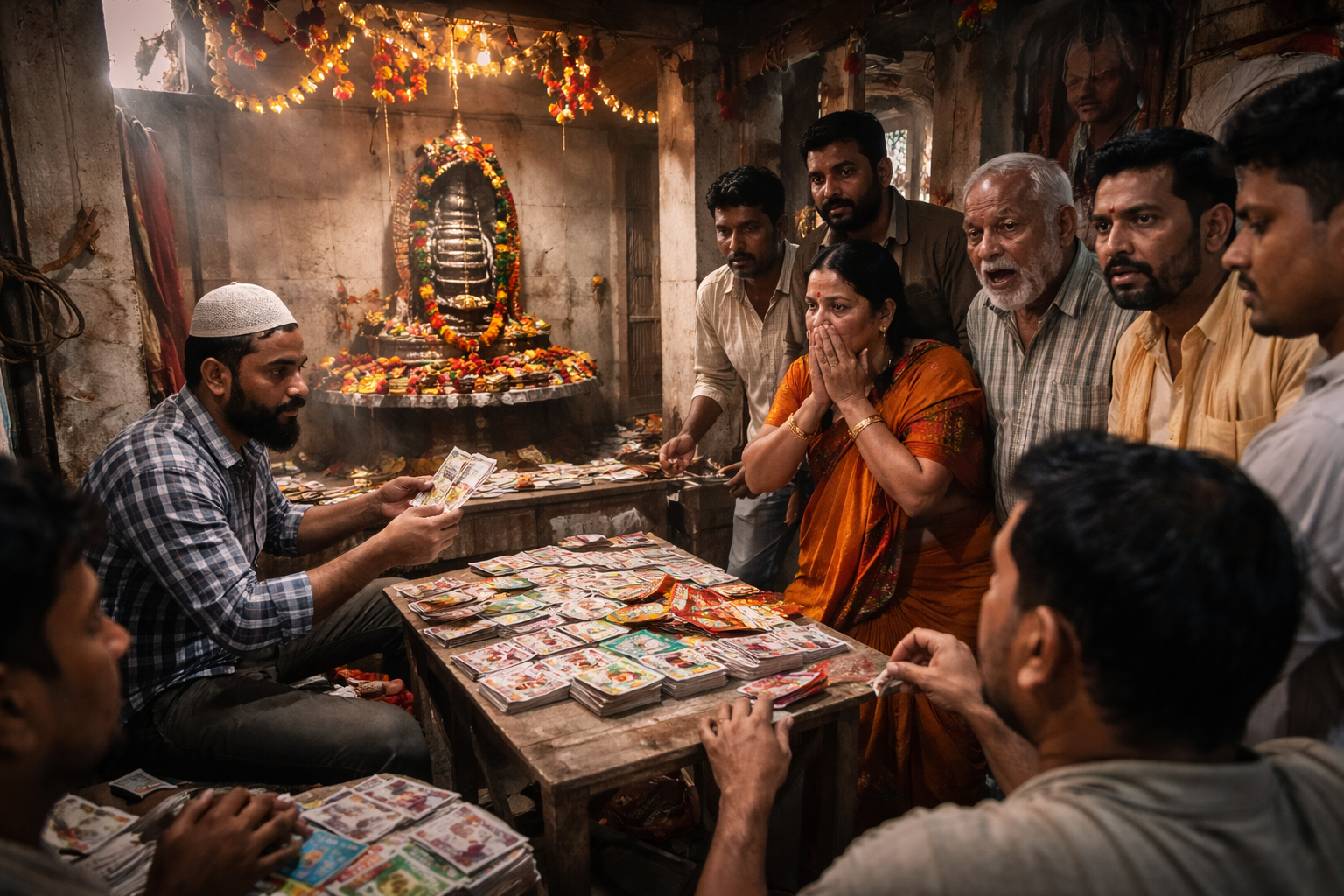
Case Summary
In Barpeta Road town of Assam, the sanctity of a century-old Hindu Shiva temple was desecrated, and it was turned into a gambling centre by a Muslim man named Imdadul Hussain and his associates. According to media reports, over several months, they exploited the sacred space by running an illegal lottery and gambling syndicate within the temple premises, disregarding its cultural and spiritual significance to the local Hindu community. The misuse of this historic place of worship came to light when members of the Bajrang Dal, a Hindu organisation, discovered the illegal activities on 31 January 2026 and reported them to local authorities. During their intervention, a large stock of lottery tickets was recovered, exposing the scale of the operation. The group expressed deep anger and dismay that a temple cherished by generations had been converted into a venue for gambling, calling it a matter of shame and demanding strict action from the administration. Local Hindu residents shared this outrage, emphasising that their sacred heritage had been violated and disrespected, sparking community calls for accountability and protection of religious sites from misuse and exploitation.
Case Images

Why it is Hate Crime ?
The primary category in this case is: Attack on Hindu religious representations. The subcategory selected under this is: Breaking rules of place of worship. Sanatan Dharma is not a religion of one book, which is to say that while it has religious scriptures that form the central tenets of the faith, there are several traditions followed through thousands of years, mostly passed from generation to generation orally. One of these oral traditions or written traditions is the rules of specific temples. Certain temples have rules which are traditional rules, dependent on the worship of the presiding deities. These rules and traditions have been followed for thousands of years whether they find scriptural mention or not. Such traditions are based on the nature and rules of worship of the presiding deity of that temple. Any non-compliance of these traditions owing to animosity towards the faith or for the sake of activism stems not only from the lack of faith in the presiding deity but also disregard for the faith of the devotees of that deity/temple and implicit bias against the faith, the tradition and the deity itself. Since these specific traditions are central to the faith of the devotees of that specific temple and presiding deity, any non-compliance with these traditional rules would be considered a religiously motivated hate crime. The other subcategory selected is- Defiling religious customs. Sanatan Dharma is not a religion of one book, which is to say that while it has religious scriptures that form the central tenets of the faith, there are several traditions followed through thousands of years, mostly passed from generation to generation orally. There are several such customs and traditions that are followed by various Hindus and Hindu sects. Defiling of these traditions and customs is a breach of an individual or group’s religious practices. Such practices can range from dietary restrictions like not eating non-vegetarian food for a certain period of the year, not eating non-vegetarian food at all, not eating beef since the cow is considered holy in Hinduism, the sanctity of religious customs followed in the house (like many ISCKON devotees), etc. Any malicious action leading to the breach of such traditions or defilement of these traditions owing to animosity towards the faith or for the sake of activism stems not only from the lack of faith in the religion itself but also from disregard for the faith of the devotees who follow the customs/traditions and implicit bias against the faith, the tradition itself. Since these specific traditions are central to the faith of the devotees of that specific sect of Hindus, any non-compliance with these traditional rules would be considered a religiously motivated hate crime. This case was a clear instance of a religiously motivated hate crime as the Muslim perpetrator deliberately desecrated the sanctity of a sacred Hindu temple by turning it into a den for gambling activities. To understand the gravity of this violation, one must recognise that for Hindus, a temple is not merely a building or a social hall; it is the Devalaya, the literal abode of the Divine. Every inch of a consecrated temple, especially one with a century of history and devotion, is considered infused with spiritual energy and governed by strict codes of purity. Hindus revere these spaces as the physical manifestation of the deity on Earth, approaching them with immense devotion, ritual cleanliness, and a profound sense of awe. The temple is the soul of the community, a sanctuary for meditation and prayer where the mundane world is left behind to seek the transcendental. The decision by the Muslim perpetrator to run a gambling centre specifically inside a Hindu temple was a calculated act of religious animosity. In Hinduism, gambling is considered a vice, yet by choosing to host such activities within a Hindu shrine, the perpetrator displayed a deliberate intent to undermine and mock the faith of the Hindu community. This was not a crime of convenience; it was a targeted desecration. Establishing a syndicate of vice in a space reserved for the holy demonstrates a profound lack of respect and a clear desire to humiliate the Hindu community by polluting their most sacred ground with activities that are diametrically opposed to its spiritual purpose. Hindu temples have a strict code of conduct and rules that disallow gambling activities inside temples. The act of conducting gambling despite knowing that it was not allowed showcased the undermining of the Hindu faith and the deliberate attempt to violate sacred rules of temples and hurt the sentiments of the Hindu community. Ultimately, the act of converting a place of worship into a gambling den defiled its sanctity in the most offensive manner possible. By treating a revered Shiva temple as a venue for greed and illicit gain, the perpetrators committed an act that transcended mere trespassing or illegal gambling. This was a clear instance of a religiously motivated hate crime, as the target was chosen specifically for its religious identity to cause maximum psychological and spiritual distress to the Hindu community. Such actions were designed to assert dominance and show contempt for the religious heritage of Hindus, making it an undeniable assault on the fundamental right to religious dignity and the protection of sacred spaces. Since this case showcased that it was a crime motivated by religious hostility, it was added to the hate crime database of the Hinduphobia Tracker. Disclaimer: The Hinduphobia Tracker records the dates of incidents based on when a crime occurred or when the crime began rather than when it is reported by the media. However, in this current case, media reports did not state the exact date when the crime began. The incident came to light on 31 January 2026, when members of Bajrang Dal discovered it. Therefore, this date is being selected as the indicative incident date and is being recorded for documentation purposes only. In this case, although the Muslim perpetrator, Imdadul Hussain, ran this gambling business with other accomplices, the exact number of perpetrators was not specified. The perpetrator count has therefore been recorded as one, referring to the Muslim perpetrator alone. This is a conservative estimate.


Case Status
Unknown


Perpetrators Details
Perpetrators
Muslim Extremists
Perpetrators Range
One Person
Perpetrators Gender
male
 Sources




