Hindu man and his friends tricked into eating beef by Muslim waiter at a restaurant in Kolkata
 Kolkata, West Bengal, India
  30 January, 2026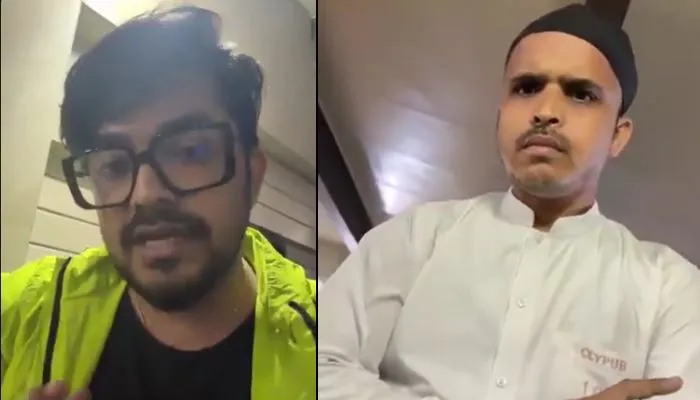
Case Summary
In Kolkata, West Bengal, a Hindu Brahmin actor named Sayak Chakraborty and his two friends were tricked into eating beef (cow meat) by a Muslim waiter at an upscale restaurant in the Park Street area. According to media reports, this came to light after the victim, Sayak, shared a video of this incident on Facebook. In the video, he narrated, “Right now, we are at a big restaurant in Park Street, where we ordered mutton steak. They served us beef steak. We didn’t know what it was. We thought it was mutton steak. We ate it.” After discovering the beef steak, Sayak was furious and said to the Muslim waiter, “Do you know that I am a Brahmin?" The actor thereafter inquired about the religion of the accused waiter. “What is your religion? Are you Hindu or Muslim? Muslim. Will you eat if I serve your pork now? You just fed us our gaumata,” he pointed out. After being confronted by the actor and his friends, the Muslim waiter tendered a token apology. Sayak Chakraborty angrily asked, “Is this a joke?” In the meantime, the manager of the upscale restaurant was seen smiling after being quizzed. “This is not a matter to laugh at,” Sayak's friend Ananya Guha stated. Sayak Chakraborty pointed out, “You, as a Muslim, have fed me beef. How did you do it? Intentionally?” The video shared by Sayak went viral on various social media platforms, prompting outrage among Hindu users who called this a deliberate attack on the faith of the victims.
Why it is Hate Crime ?
This case is being added to the tracker under the primary category- Attack on Hindu religious representations. The subcategory selected is- Defiling religious customs. Sanatan Dharma is not a religion of one book, which is to say that while it has religious scriptures that form the central tenets of the faith, there are several traditions followed through thousands of years, mostly passed from generation to generation orally. There are several such customs and traditions that are followed by various Hindus and Hindu sects. Defiling of these traditions and customs is a breach of an individual or group’s religious practices. Such practices can range from dietary restrictions like not eating non-vegetarian food for a certain period of the year, not eating non-vegetarian food at all, not eating beef since the cow is considered holy in Hinduism, the sanctity of religious customs followed in the house (like many ISCKON devotees), etc. Any malicious action leading to the breach of such traditions or defilement of these traditions owing to animosity towards the faith or for the sake of activism stems not only from the lack of faith in the religion itself but also from disregard for the faith of the devotees who follow the customs/traditions and implicit bias against the faith, the tradition itself. Since these specific traditions are central to the faith of the devotees of that specific sect of Hindus, any non-compliance with these traditional rules would be considered a religiously motivated hate crime. Another primary category selected in this case is- Attack not resulting in death. The subcategory selected is- Attacked for Hindu identity. In several cases, Hindus are attacked merely for their Hindu identity without any perceived provocation. A classic example of this category of religiously motivated hate crime is a murder in 2016. 7 ISIS terrorists were convicted for shooting a school principal in Kanpur because they got ‘triggered’ seeing the Kalava on his wrist and tilak that he had put. In this, the Hindu victim had offered no provocation except for his Hindu religious identity. The motivation for the murder was purely religious, driven by religious supremacy. Such cases where Hindus are targeted merely for their religious identity would be documented as a hate crime under this category. This case was a clear instance of a religiously motivated hate crime, as a Muslim waiter tricked a Hindu Brahmin actor, Sayak Chakraborty, and his two friends into eating cow meat (beef). The cow holds profound sacred significance in Hinduism, revered as a gentle mother figure symbolising non-violence (ahimsa), motherhood, and divine sustenance that provides milk and embodies all gods. Consuming beef is ranked as one of the gravest sins in Hinduism, viewed as ultimate desecration that severs spiritual purity, pollutes the soul, and mocks the faith's core tenets of reverence for life. The Muslim waiter's deliberate act of deception of feeding beef by saying it was mutton steak showcased malicious intent to target and desecrate Sayak Chakraborty's deeply revered Hindu beliefs, going far beyond any random mischief or accident to inflict calculated religious humiliation. The waiter targeted Sayak Chakraborty specifically because of his Hindu identity, selecting him for this profane act to attack his faith directly and humiliate him among peers after public disclosure. This deliberate assault on a person's religious sentiments, exploiting sacred taboos to cause emotional and spiritual harm, amounted to a textbook religiously motivated hate crime aimed at wounding the broader Hindu community's dignity and defiling its inviolable traditions. The act of tricking the Hindu actor into eating cow meat by the Muslim perpetrator showcased a pattern of targeted hostility observed in past incidents, where Muslim extremists often force-feed or deceive Hindus into consuming beef purposefully to desecrate their faith and pressure conversion to Islam. This coercive and deceptive beef force-feeding demonstrated deep-seated animosity, and the Muslim waiter's identical tactic of tricking Sayak Chakraborty and his friends matched that same pattern of religiously motivated aggression against Hindus, cementing it as a hate crime. Since this case was a clear instance of a religiously motivated crime, it was added to the hate crime database of the Hinduphobia Tracker. Disclaimer: The Hinduphobia Tracker records the dates of incidents based on when a crime occurs rather than when it is reported by the media. In this case, media reports did not specify the exact date when the crime occurred. Henceforth, for documentation purposes, the date when this incident was reported by the media, that is, 31 January 2026, is selected as the indicative incident date. In this case, the video that went viral on social media showed the victim, Sayak Chakraborty, along with his two friends, one male and one female. Henceforth, the victim count was selected as three (3) victims, with the gender breakdown being two males and one female. This is recorded for documentation purposes only.
Victim Details
Total Victim
3
Deceased
0
Gender
- Male 2
- Female 1
- Third Gender 0
- Unknown 0
Caste
- SC/ST 0
- OBC 0
- General 2
- Unknown 1
Age Group
- Minor 0
- Adult 3
- Senior Citizen 0
- Unknown 0


Case Status
Unknown


Perpetrators Details
Perpetrators
Muslim Extremists
Perpetrators Range
One Person
Perpetrators Gender
male
 Sources




