Attack on Hindu sentiments: Muslim man shares derogatory and obscene images of Hindu deities on social media
 Dakshina Kannada, Karnataka, India
  30 January, 2021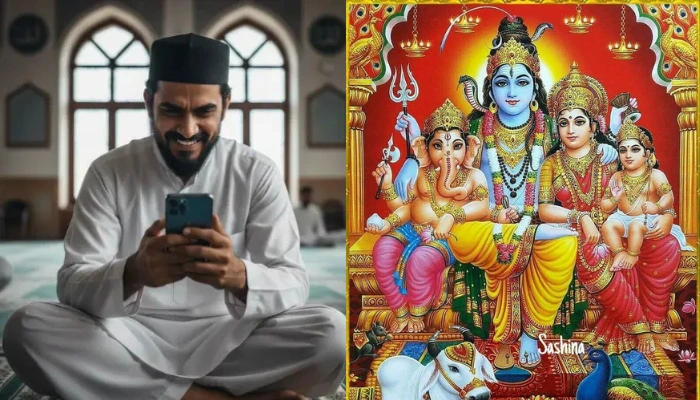
Case Summary
An incident of attack on Hindu sentiments arose from Dakshina Kannada, Karnataka, as a Muslim man named Sirajuddin shared obscene and derogatory images of Hindu deities on WhatsApp groups. According to reports, the case arose from a complaint filed in 2021 by a man named K Jayaraj Salian. In the complaint, Salian said that after he joined a WhatsApp group through a link sent to him, he realised that obscene, vulgar, and highly objectionable pictures of Hindu gods were being circulated in the group by the accused Sirajuddin. He also said that some political personalities were being targeted through such content. Salian added that the WhatsApp group had six administrators and close to 250 members. He said that the content was circulated with the intention of insulting the Hindu religious beliefs. This matter went to the Karnataka High Court and was heard by a single-judge bench of Justice M Nagaprasanna. After examining the investigation records and the images circulated in the group, the High Court observed that the material was clearly offensive. The bench said the content was so objectionable that reproducing it in a judicial order would itself be inappropriate. “The material on its face tends to outrage religious feelings and disturb communal harmony,” the court noted. Justice Nagaprasanna, the High Court judge, also rejected the argument that the content was protected under free speech. He observed that even if an act does not immediately lead to disorder, content that has the potential to disrupt public order can still be restricted. “In the garb of free speech, anything and everything cannot be countenanced,” the judge said. The High Court refused to intervene in the ongoing investigation and held that if the investigation was halted at this point, it would amount to suppressing a lawful investigation into serious allegations. By stating this on 30 January 2026, the Karnataka High Court rejected a plea to quash the criminal case filed against Sirajuddin.
Why it is Hate Crime ?
This case is being added to the tracker under the primary category- Attack on Hindu religious representations. The subcategory selected is- Iconoclastic representation of Hindu gods/goddesses. An icon is a symbol of someone or something that is revered, or a religious representation of a spiritual ideal. Iconography is of vital significance in the Hindu milieu. It helps connect people’s spiritual beliefs with the real world. Iconography within the Hindu faith takes several shapes and forms. Murtis are of most significance to Hindus, to which daily rituals, prayers and offerings are done. Besides the murtis, there are several other symbols which have deep significance in the Hindu faith – the Om and Swastika for example. Any iconoclastic representation of these symbols, images and murtis is an affront to the religious beliefs and faith of the Hindu community itself since the symbols and icons are deeply religious in nature. In this sub-category of crime, we would record hate crimes and iconoclastic representations, in words, art, or any other form of representations of symbols that hold religious significance for the Hindu community. Since these symbols, icons and murtis are central to the Hindu faith, any iconoclastic representation of these symbols is born out of animosity towards the faith itself, manifesting itself through these symbols and therefore, these representations would be considered religiously motivated hated crimes. This case exemplifies a religiously motivated offence, as Sirajuddin, the Muslim perpetrator, deliberately circulated obscene and derogatory images of Hindu deities in WhatsApp groups with nearly 250 members. Such targeted denigration of sacred figures central to Hinduism reveals an intent rooted in religious animosity rather than mere personal expression. Hindu deities, including gods like Shiva, Vishnu, Ganesha, and Devi, embody profound spiritual, cultural, and philosophical significance for Hindus, serving as manifestations of the divine that guide devotion, rituals, and ethical living across millennia. They represent cosmic principles such as creation, preservation, and destruction, with each deity inspiring temples, festivals, and daily worship that unify the Hindu community in shared reverence and identity. The significance of these deities extends beyond symbolism to form the bedrock of Hindu cosmology and practice, where they are invoked through intricate iconography, mantras, and narratives from ancient texts like the Vedas, Puranas, and epics such as the Ramayana and Mahabharata. For millions of Hindus, visual depictions of deities are not mere art but living conduits to the divine, treated with utmost sanctity in homes, temples, and public processions. By creating and sharing vulgar images that mock or desecrate these figures, the perpetrator directly assaulted this sacred core, showcasing a deep-seated animosity towards Hindus that seeks to humiliate their faith at its most intimate level. This act dismisses the lived reality of Hindu devotion, reducing eternal symbols of grace and power to objects of ridicule. Circulating such content on social media platforms like WhatsApp amplified the offence, demonstrating the perpetrator's calculated desire to reach multiple people and maximise the injury to Hindu sentiments. Unlike private exchanges, sharing in large groups ensured widespread dissemination among diverse members, including six administrators who could further propagate the material, thereby escalating its potential to provoke outrage across communities. This public broadcast transformed a personal grievance into a communal provocation, intensifying the severity of the hurt by exposing countless Hindus to repeated insults against their deities, fostering collective trauma that lingers beyond the initial viewing. Such acts profoundly hurt Hindu sentiments by violating the principle of reverence that underpins their religious life, eroding trust in shared digital spaces and instilling fear of unchecked hate-driven offences. By normalising derogatory portrayals, the perpetrator not only wounded immediate viewers but also encouraged others to replicate these offences, potentially inspiring similar behaviour that further poisons interfaith relations and denigrates the Hindu community and their beliefs. The Karnataka High Court rightly recognised this as material that outrages religious feelings and disturbs communal harmony, underscoring how such religiously motivated actions threaten social cohesion and embolden a cycle of animosity against Hindus and Hinduism. Given that this case meets the parameters of a religiously motivated offence, it is being added to the hate crime database of the Hinduphobia Tracker. Disclaimer: The Hinduphobia Tracker records the date of an incident based on when a crime occurs, rather than when it is reported by the media. In this case, the incident was reported by the media on 31 January 2026. However, the reports did not specify the exact date when the crime was committed and only stated the year, that is, 2021. Henceforth, based on this information, an indicative incident date of 31 January 2021 has been selected as the date of the incident. This is recorded for documentation purposes only.


Case Status
Case sub-judice


Perpetrators Details
Perpetrators
Muslim Extremists
Perpetrators Range
One Person
Perpetrators Gender
male
 Sources




