Hindu youth driven to suicide after facing brutal harassment and assault for religious conversion by group of Muslim individuals
 Kanpur, Uttar Pradesh, India
  25 January, 2026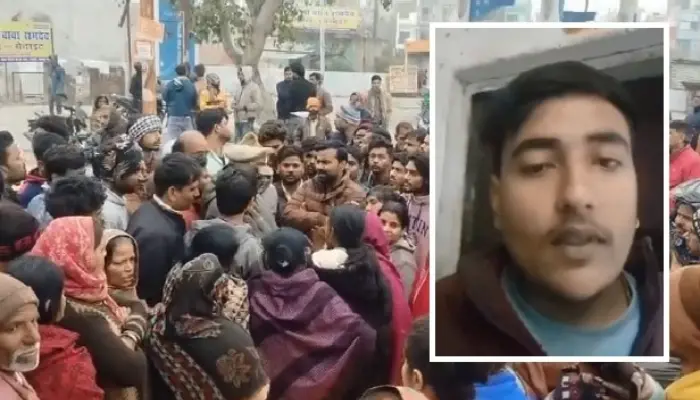
Case Summary
In the Ratanpur area of Kanpur, Uttar Pradesh, a 23-year-old Hindu youth named Deepak Singh, also known as Rohit Singh, committed suicide after facing brutal harassment and assault for religious conversion by a group of Muslim individuals. According to reports, the victim ran a grocery store in the Ratanpur area and had lost his father some time ago. On 26 January 2026, he went to Lucknow to meet his sister, Nisha Singh. During the journey to Lucknow, he came into contact with four Muslim individuals on the train who harassed and brutally assaulted him. They forcefully took him to a mazar in Charbagh, Lucknow, where they pressured him to convert to Islam. The deceased victim's family members revealed that the pressure to convert had caused him severe mental distress, that they had previously approached the police, but no action was taken in response, which deepened his despair. Prior to his death on 29 January 2026, he recorded and posted a video stating that he was being forced to change his religion and that he would remain loyal to his faith. He said, “I am Deepak Singh Gaur. I am being forced to change my religion, but I will stay loyal to my faith. To anyone watching this video, I urge you to take note: ganja must be prohibited in India, and women deserve respect. That is my sole request. I extend my apologies to everyone I have met. I made mistakes. I am contemplating suicide. Religious conversions are occurring throughout India.” Shortly thereafter, he locked himself in a room at his home and hanged himself. His mother later discovered his body through a window when she went to wake him up. Following his death, the family and local residents placed his body on the road and staged a protest demanding action. The police officials intervened, pacified the demonstrators and sent the body for post-mortem examination, despite initial resistance from the family. The police also recovered the video from the deceased’s mobile phone, registered a First Information Report, and constituted two investigation teams, with the Police Commissioner stating that call records and CCTV footage from Charbagh railway station were examined as part of the inquiry.
Why it is Hate Crime ?
This case has been added to the tracker under the primary category of - Predatory Proselytisation. Within it, the sub-category selected is - Harassment, threats, coercion for conversion. Harassment covers a wide range of behaviours of an offensive nature. It is commonly understood as behaviour that demeans, humiliates, and intimidates a person, including threats and coercion. Harassment and threats, in this case, find their root on discriminatory grounds which has the effect of nullifying a person’s rights or infringing upon his freedom to exercise his right specifically owing to the victim’s religious identity. Verbal and physical threats and psychological or physical harassment are often used against Hindu victims because they choose to practice their professed religion. Religious harassment also includes forced and involuntary conversions by harassment, threats or coercion. Coercion includes intimidatory tactics like force-feeding a Hindu victim beef to convert to another religion, forceful circumcision etc. In several cases documented, non-Hindu perpetrators or those who harbour specific animosity towards Hinduism, harass victims simply based on their religious identity. Such cases often also include harassment to ensure the Hindu victim abandons his/her professed religion and adopts the religion of the perpetrator. Such cases where Hindu victims are harassed to convert to the perpetrator’s religion are rooted in animosity towards the victim’s religious identity and are therefore documented as religiously motivated hate crimes. The other sub-category selected is - Suicide after pressure to convert. When there is pressure, threat or coercion employed upon the Hindu victim to convert to a different religion, in several cases, owing to the humiliation or pressure/threat, the victim commits suicide. In such cases, the pressure/threat/intimidation/coercion/violence itself is driven by animosity towards the victim’s Hindu faith. The pressure/threat that is employed leads to the Hindu victim taking his own life. Since the victim’s faith is at the heart of the pressure to convert and the ensuing suicide by the victim, such cases are considered religiously motivated hate crimes. The second primary category selected here is - Attack not resulting in death. Within it, the sub-category selected is - Attacked for Hindu identity. In several cases, Hindus are attacked merely for their Hindu identity without any perceived provocation. A classic example of this category of religiously motivated hate crime is a murder in 2016. 7 ISIS terrorists were convicted for shooting a school principal in Kanpur because they got ‘triggered’ seeing the Kalava on his wrist and tilak that he had put. In this, the Hindu victim had offered no provocation except for his Hindu religious identity. The motivation for the murder was purely religious, driven by religious supremacy. Such cases where Hindus are targeted merely for their religious identity would be documented as a hate crime. Under this category, cases where the attack led to the death of the Hindu victim/s would be documented. This case was added to the tracker because the Hindu youth named Deepak Singh was driven to suicide after facing brutal harassment and assault for religious conversion by a group of Muslim individuals. Pressuring a Hindu individual to discard his religious faith and embrace another was a direct attack on his religious identity and dignity. It was not a matter of personal choice; it was coercion rooted in hostility towards the victim's Hindu identity. Such an attempt reflects religious animosity because the act was not simply about personal differences but about erasing the victim’s Hindu faith, making it a religiously motivated crime. Also, forcing someone to convert to another faith to the extent that they took their own life showcased the intensity and severity of the harassment and oppression that the victim faced at the hands of the Muslim perpetrators. This also showcased the depth of hostility the perpetrators held towards Hindus and their faith, making it a religiously motivated crime. Furthermore, the victim was harassed, brutally assaulted and forcibly taken to a mazar by the Muslim perpetrators. This act of physical violence, combined with religious coercion, demonstrated an attempt to break his resistance through fear, humiliation and psychological domination. The pressure he faced was not momentary but persistent, leaving him deeply traumatised and mentally distressed. This was not random violence; it was systematic, targeted, and rooted in religious animosity. This willingness to assault and intimidate a Hindu individual for refusing to abandon his faith elevated the incident beyond personal harassment into a clear instance of a religiously motivated hate crime. The victim’s suicide did not occur in isolation but followed a clear and continuous sequence of coercive acts, including assault, forced religious exposure at the mazaar, and sustained pressure to convert, which was compounded by institutional apathy. His final video explicitly linked his despair to forced religious conversion, making it evident that his decision to end his life was rooted in the cumulative impact of these acts rather than any unrelated personal issue. Such instances of predatory proselytisation stem from inherent hostility towards the victim's professed faith since Abrahamic faiths like Islam believe that any non-adherent to the faith is subject to being dehumanised till they convert. Such acts are not merely personal crimes; they are rooted in a desire to dominate and erase the religious identity of the victim. Since such predatory actions stem from doctrinal animosity towards the Hindu faith and its adherents, this case is being documented as a religiously motivated hate crime in the Hinduphobia Tracker.
Victim Details
Total Victim
1
Deceased
1
Gender
- Male 1
- Female 0
- Third Gender 0
- Unknown 0
Caste
- SC/ST 0
- OBC 0
- General 1
- Unknown 0
Age Group
- Minor 0
- Adult 1
- Senior Citizen 0
- Unknown 0


Case Status
Complaint registered


Perpetrators Details
Perpetrators
Muslim Extremists
Perpetrators Range
From 2 To 5
Perpetrators Gender
unknown
 Sources




