Hindu woman forcibly converted to Islam by Muslim man faking Hindu identity; made to wear burqa and recite kalma
 Yamunanagar, Haryana, India
  21 January, 2020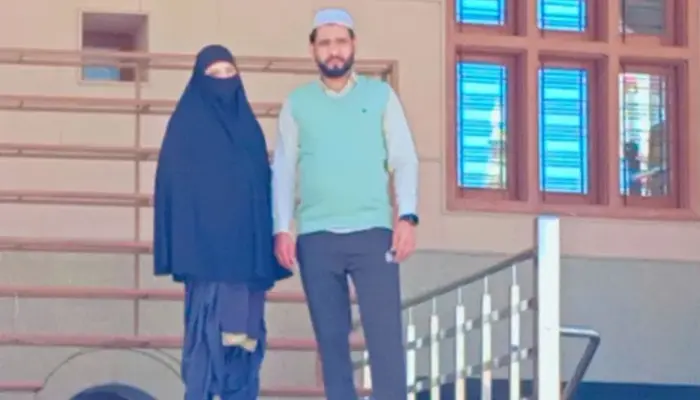
Case Summary
In Yamunanagar, Haryana, a Hindu woman named Rekha was deceived, made to wear a burqa, and converted to Islam by a Muslim man named Furkan, who pretended to be Hindu. According to reports, the victim, Rekha, a divorced mother of two, came into contact with the accused, Furkan, in 2020 while working at a job. Furkan introduced himself as a Hindu man named Ajay and portrayed himself as unmarried, gradually luring her into a relationship that culminated in marriage. Only after the marriage did Rekha discover that the accused was Muslim and already married with children. She was taken to Deoband in Uttar Pradesh, where she was converted to Islam, compelled to recite the Kalma, forced to adopt the name “Rubina,” and pressured to wear a burqa. Her name was subsequently altered on official identity documents, including her Aadhaar card, to conceal the existence of Furkan’s first wife, who bore the same name. Subsequently, the victim was kept in a rented house in Yamunanagar rather than being taken to Furkan’s family home. Over time, she was subjected to repeated physical assaults, threats, and religious humiliation. Hindu deities’ photographs and idols were destroyed, burned, and disposed of, and she was prevented from visiting temples or practising her faith. It was also revealed that Furkan remained in contact with multiple other Hindu women and continued to approach them with promises of marriage. Rekha was taken to a public event where she was honoured specifically for converting to Islam, reinforcing the coercive nature of the conversion. The accused also financially exploited her, taking approximately four lakh rupees that Rekha had received as a divorce settlement from her first marriage, and further extracted money from her relatives. Furthermore, the harassment intensified when Rekha confronted Furkan about his deception and prior marriage. She was assaulted by him and later abused and beaten by his family members when she approached them. Furkan went missing for a period, during which his relatives blamed and assaulted her, before he resumed contact and continued the violence. On 22 January 2026, after enduring prolonged abuse, religious coercion, and financial ruin, the victim attempted suicide by breaking a thermometer and ingesting mercury. She was admitted to hospital in critical condition but later stabilised. Subsequently, her statement was recorded before a magistrate, following which the Yamunanagar City Police registered a case against Furkan and his brother under multiple sections of the Indian Penal Code. As of the date of writing this report, the accused was absconding, while the investigation was ongoing.
Why it is Hate Crime ?
This case has been added to the tracker under the primary category- Crimes against women in relationships and other sexual crimes. The subcategory selected is- Man pretends to be Hindu. The tertiary category selected is- Pattern of targeting Hindu women. When a non-Hindu man pretends to be a Hindu to deceive a Hindu woman into a relationship, the act is seen as triggered by malafide intentions. In some cases, the woman eventually accepts the man’s original religious identity and converts after the man’s identity is revealed. These cases could be argued as cases of religious brainwashing and a result of the pressure a woman feels after getting into a relationship with a man. The woman, it can be argued, also changed her religious identity because of the stigma she believes she might face if she chooses to walk out of a deceptive relationship. However, for the purpose of documenting hate crimes, the cases in this subcategory are limited to those where there is explicit violence aimed at religious conversion against the wishes of the victim (force-feeding beef, blackmailing with intimate videos, rape on refusal to convert, etc), or if the woman herself complains of the man’s religious deception. In such cases, it is established that the deception of the non-Hindu man had a specific aim of religious conversion or targeting of the victim due to her Hindu religious identity, therefore, making it a religiously motivated hate crime. This case has been added to the tracker because a Hindu woman was deceived, made to wear a burqa, and converted to Islam by a Muslim man named Furkan, who pretended to be Hindu. Firstly, the accused deliberately concealed his religious identity to initiate and sustain a relationship with a Hindu woman. This itself is a clear manifestation of bias and malicious intent towards the victim's religion. By concealing his true identity, he exploited her trust, targeting her under false pretences. This indicates a premeditated intent to manipulate her based on her religious background. In cases like these, the tactic of adopting a false Hindu identity to manipulate and "ensnare" a Hindu individual is not just an act of personal betrayal but can also be interpreted as an expression of disdain or disregard for Hinduism and its customs that reflects a deeper animosity towards Hindus and their beliefs. Secondly, in Islam, marriage to a non-Muslim partner is prohibited, which is why she was converted to Islam by the accused. This shows that the accused specifically targeted the Hindu woman for exploitation and subjected her to violence when she resisted or questioned the marriage. Often in such cases, violence serves a dual purpose: physical subjugation and religious humiliation. The intention is to break the victim down, emotionally, physically, and spiritually, so that she can be converted. This was not random violence; it was systematic, targeted, and rooted in religious animosity. Thirdly, pressuring a Hindu individual to discard her religious faith and embrace another is a direct attack on her religious identity and dignity. It is not a matter of personal choice; it is coercion rooted in hostility towards the victim's Hindu identity. Such an attempt reflects religious animosity because the act is not simply about personal differences but about erasing the victim’s Hindu faith, making it a religiously motivated crime. Fourthly, the accused forced her to wear a burqa, recite the Kalma, and change her name to Rubina. Making her wear a burqa was a symbolic erasure of her previous Hindu identity by imposing an Islamic identity on her. Such manipulation reflects the deeper intent to sever the victim’s ties with her community and to normalise her new identity as a Muslim. It was an attempt to impose an Islamic lifestyle upon her. It was not merely about clothing; it symbolised the effort to overwrite her Hindu identity and forcibly assimilate her into practices of the Islamic faith. This again glaringly demonstrates the religiously motivated nature of the crime. These exploitations were not random acts of crime; rather, they functioned as religiously motivated tools aimed at humiliating and dominating a Hindu girl because of her faith. The target was not the victim as an individual, but her Hindu identity, as she was forcibly converted to Islam. The specific focus on her Hindu identity in the commission of these acts highlights the religious hatred underlying the crime, making it a religiously motivated offence. Such actions stem from inherent hostility towards the victim's professed faith since Abrahamic faiths believe that any non-adherent to the faith is subject to being dehumanised till they convert. Such acts were not merely personal crimes; they were rooted in a desire to dominate and erase the religious identity of the victim. Since such predatory actions stem from doctrinal animosity towards the Hindu faith and its adherents, this case is being documented as a religiously motivated hate crime. Disclaimer: The Hinduphobia Tracker records the date of the incident based on when the crime occurred. The media reports published this case on 24 January 2026. However, the media reports do not specify the exact date of the beginning of the victim’s ordeal. The victim came in contact with the accused in 2020, and on 22 January 2026, the victim attempted suicide. Considering these two pieces of information, we are using an indicative date of 22 January 2020. This date is used for documentation purposes only and represents the estimated beginning of her ordeal.
Victim Details
Total Victim
1
Deceased
0
Gender
- Male 0
- Female 1
- Third Gender 0
- Unknown 0
Caste
- SC/ST 0
- OBC 0
- General 0
- Unknown 1
Age Group
- Minor 0
- Adult 1
- Senior Citizen 0
- Unknown 0


Case Status
Complaint registered


Perpetrators Details
Perpetrators
Muslim Extremists
Perpetrators Range
One Person
Perpetrators Gender
male
 Sources




