Minor Hindu girl driven to suicide after being raped and pressured to convert to Islam by Muslim men
 Kheri, Uttar Pradesh, India
  25 January, 2026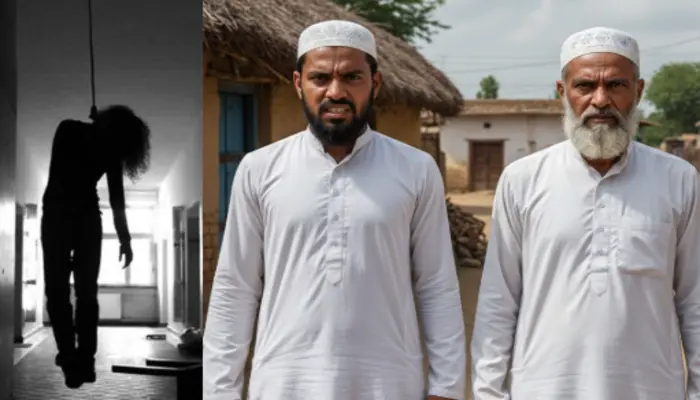
Case Summary
In Lakhimpur Kheri, Uttar Pradesh, a 17-year-old Hindu girl died by suicide after being raped and subsequently pressured to convert to Islam by a Muslim man named Mahfooz and his uncle, Mobeen Khan. According to the complaint filed by the victim's mother, on the night of 26 January 2026, the minor Hindu girl went out to defecate near a sugarcane field. During this time, the accused, Mahfooz, son of Shabban Khan, forcibly dragged the victim into the field, brutally assaulted her and raped her, while his uncle Mobeen Khan stood nearby. When the victim came out crying, Mobeen Khan mocked her distress, stating that he would arrange her marriage to the accused and would convert her to Islam, while claiming that he would convince her parents. The victim returned home traumatised and informed her family about her ordeal, who approached the Dhaurahra police station to file a complaint. However, the police officials attempted to dilute the complaint and later removed the name of one accused from the FIR despite the family’s objections, while also intimidating them. Although a case was eventually registered after intervention by the Superintendent of Police, the continued obstruction and lack of accountability left the victim mentally devastated and shattered. On the night of 27 January 2026, she took her own life by hanging herself in her house. Following her death, police sent the body for a post-mortem and arrested the accused, Mahfooz, while additional forces were deployed in the village due to the sensitivity of the situation. The status of the co-accused remained unclear after his name was removed from the FIR.
Why it is Hate Crime ?
This case has been added to the tracker under the primary category- Predatory Proselytisation. Within this, the subcategory selected is- Proselytisation by grooming, brainwashing, manipulation or subtle indoctrination. The tertiary categories under it are: Conversion of minor and Rape and sexual assault/harassment. Religious brainwashing essentially means the often subtle and forcible indoctrination to induce someone to give up their religious beliefs to accept contrasting, regimented ideas. Religious grooming or brainwashing also involves propaganda and manipulation. It involves the systematic effort, driven by religious malice and indoctrination, to persuade “non-believers’ to accept allegiance, command, or doctrine to and of a contrasting faith. Cases of such grooming or brainwashing are far more nuanced than direct threats, coercion, inducement and violence. In such cases, it is often seen that there is repeated, subtle and continual manipulation of the victim to induce disaffection towards their own faith and acceptance of the contrasting faith of the perpetrator. While subtle indoctrination is widely acknowledged as predatory, an element which is often understated in such conversions or the attempts of such conversion is the role of loyalty and trust which might develop between the perpetrator and the victim. Fiduciary relationships are often abused to affect such religious conversion. For example, an educator transmitting religious doctrine of a competing faith to a Hindu student. The Hindu student is likely to accept what the teacher is transmitting owing to the existence of the fiduciary relationship. The exploitation of the fiduciary relationship to religiously indoctrinate victims would also be included in this category. Since the underlying animosity towards the victim’s faith forms the basis of predatory proselytisation, such cases are considered religiously motivated hate crimes. The other sub-category selected here is - Harassment, threats, coercion for conversion. Harassment covers a wide range of behaviours of an offensive nature. It is commonly understood as behaviour that demeans, humiliates, and intimidates a person, including threats and coercion. Harassment and threats, in this case, find their root on discriminatory grounds which has the effect of nullifying a person’s rights or infringing upon his freedom to exercise his right specifically owing to the victim’s religious identity. Verbal and physical threats and psychological or physical harassment are often used against Hindu victims because they choose to practice their professed religion. Religious harassment also includes forced and involuntary conversions by harassment, threats or coercion. Coercion includes intimidatory tactics like force-feeding a Hindu victim beef to convert to another religion, forceful circumcision etc. In several cases documented, non-Hindu perpetrators or those who harbour specific animosity towards Hinduism, harass victims simply based on their religious identity. Such cases often also include harassment to ensure the Hindu victim abandons his/her professed religion and adopts the religion of the perpetrator. Such cases where Hindu victims are harassed to convert to the perpetrator’s religion are rooted in animosity towards the victim’s religious identity and are therefore documented as religiously motivated hate crimes. The other sub-category selected here is - Suicide after pressure to convert. When there is pressure, threat or coercion employed upon the Hindu victim to convert to a different religion, in several cases, owing to the humiliation or pressure/threat, the victim commits suicide. In such cases, the pressure/threat/intimidation/coercion/violence itself is driven by animosity towards the victim’s Hindu faith. The pressure/threat that is employed leads to the Hindu victim taking his own life. Since the victim’s faith is at the heart of the pressure to convert and the ensuing suicide by the victim, such cases are considered religiously motivated hate crimes. This case was added to the tracker because a minor Hindu girl died by suicide after being raped and subsequently pressured to convert to Islam by a Muslim man named Mahfooz and his uncle, Mobeen Khan. Firstly, it is important to note here that the victim was a minor, which means the element of consent and genuine change of conscience was missing ab initio. Minors, due to their young age and lack of maturity, are particularly vulnerable to manipulation and coercion. They may not have the ability to fully understand the implications of converting to another religion, and the Muslim perpetrators purposely targeted and exploited this vulnerability of the victim. This deliberate targeting of a minor rendered the conduct inherently coercive and abusive. Secondly, the victim was forcibly dragged into the field where the accused brutally assaulted her and raped her. Furthermore, Mobeen Khan mocked her distress, stating that he would arrange her marriage to the accused and would convert her to Islam. This was not a spontaneous remark but a deliberate assertion of control made immediately after the sexual assault. Compelling a minor Hindu girl to discard her religious faith and embrace another was a direct attack on her religious identity and dignity. It was not a matter of personal choice; it was coercion rooted in hostility towards the victim's Hindu identity. Thirdly, the invocation of marriage and religious conversion functioned as a tool to normalise the crime, suppress resistance and subordinate the victim by forcibly reorienting her religious and social identity. Such conduct demonstrated that the sexual violence was followed by an attempt at religious domination, transforming the incident from an isolated criminal act into one involving ideological and religious coercion. Often in such cases, sexual violence serves a dual purpose: physical subjugation and religious humiliation. The intention was to break the victim down, emotionally, physically, and spiritually, so that she could be converted. This was not random violence; it was systematic, targeted, and rooted in religious animosity. Fourth, the victim’s suicide was not an independent or unrelated act but occurred in direct continuity with the sexual assault, the conversion pressure and the institutional apathy she experienced thereafter. Being raped, threatened with forced marriage and conversion, and then denied justice left the minor mentally shattered. Her death reflected the extreme severity of the coercion and oppression inflicted upon her. The fact that she took her own life showcased the intensity and severity of the harassment and oppression she faced at the hands of the Muslim perpetrators. This also showcased the depth of hostility the perpetrators held towards Hindus. Hence, this elevated the severity of the hate crime, rooted in anti-Hindu hostility. Furthermore, the institutional apathy displayed by the authorities, particularly the pressure exerted on the victim’s family to remove the name of one of the accused from the FIR, reflected a pattern of institutionalised discrimination. Such conduct demonstrated how justice was selectively weakened when the victims were Hindu, reinforcing systemic bias and further compounding the victim’s vulnerability. Such actions stem from inherent hostility towards the victim's professed faith since Abrahamic faiths believe that any non-adherent to the faith is subject to being dehumanised till they convert. Therefore, religious conversions, even of minors, are often seen as a badge of honour, totally disregarding the methods used to achieve it. These actions were not merely personal crimes but reflected a broader attempt to subjugate the victim’s identity following sexual violence. Since such predatory actions stem from doctrinal animosity towards the Hindu faith and its adherents, this case is being documented as a religiously motivated hate crime.
Victim Details
Total Victim
1
Deceased
1
Gender
- Male 0
- Female 1
- Third Gender 0
- Unknown 0
Caste
- SC/ST 0
- OBC 0
- General 0
- Unknown 1
Age Group
- Minor 1
- Adult 0
- Senior Citizen 0
- Unknown 0


Case Status
Case sub-judice


Perpetrators Details
Perpetrators
Muslim Extremists
Perpetrators Range
From 2 To 5
Perpetrators Gender
male
 Sources




