Elderly Hindu man pushed to death over trivial issue by Muslim man amidst ongoing persecution of Hindus in Bangladesh
 Kurigram District, Bangladesh
  25 January, 2026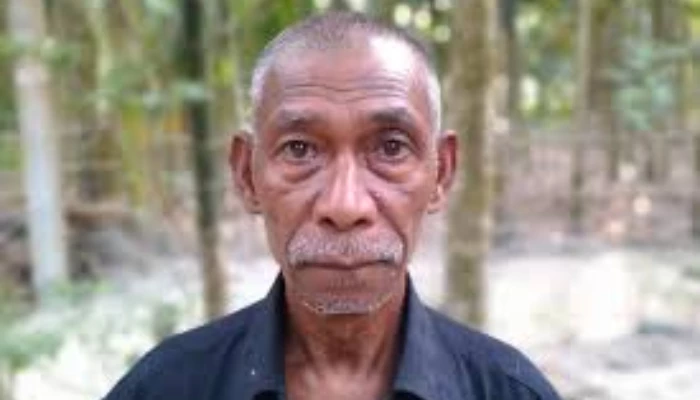
Case Summary
A Hindu man was killed over a land dispute in front of his house by his Muslim neighbour in Bangladesh. Madhu Chandra Shil, who was 60-62 years old, resided in Joydev Malsabari village in Umar Majid Union of Rajarhat upazila in Bangladesh. He had been involved in a dispute with his Muslim neighbour, Abed Ali, over the boundary of their joint land for several years. As per reports, family members submitted that tensions flared on 26th January afternoon at around 12:30 pm when Madhu Shil was planting saplings in front of his house. This upset his neighbours. Ashraf Ali, the son of Abed Ali, objected to the planting and asked Shil to stop. According to Shrishti Rani, the wife of Shil’s son, the situation quickly worsened when Abed Ali uprooted the newly planted saplings. An argument broke out soon after. “Ashraf Ali, his wife, Lucky Begum, and some others pushed my father-in-law during the argument,” she said. “He lost balance and fell on a cemented structure near a tube well.” Shil collapsed and was immediately taken to Kurigram General Hospital by locals, where doctors declared him dead on arrival. His body was later returned to the village, leaving the local Hindu community in shock and grief. Police officials reached the spot on the same day. A group of police officials, led by Rajarhat Police Station Officer-in-Charge Abdul Wadud, retrieved the body and sent it to the Kurigram morgue for a post-mortem examination. In the initial investigation, Ashraf Ali was arrested and taken into custody. “We are treating this as a serious criminal case,” said a police official. “Legal action is being taken under the relevant sections of the law.” Madhu Shil’s family demanded strict punishment for those responsible. His son, Palash Shil, said the family was devastated by the loss. “My father was a simple, innocent man,” he said. “We want justice so that something like this does not happen to anyone else.” The land dispute had been going on for several years, villagers said. They also said that if the local administration had intervened in time, the situation would not have escalated to violence. The death caused a stir among minority rights groups, who said that incidents like this were a manifestation of the insecurity faced by minorities in Bangladesh, particularly in rural areas where land disputes were common. Manindra Kumar Nath, the acting general secretary of the Bangladesh Hindu Buddhist Christian Unity Council, said that the death should not be treated as an isolated incident. “This death again proves how insecure minority communities are,” he said. “The administrative inaction led to the escalation of the long-pending dispute into violence.” He stressed that while punishing the accused was important, authorities must also examine why no preventive steps were taken earlier. “Without accountability, this will become just another number,” he warned. This incident occurred at a time when Hindus in Bangladesh are being systematically targeted, intimidated, and attacked; even minor disputes have increasingly served as pretexts for violence against them. The atrocities intensified recently following the death of Sharif Osman Bin Hadi. This escalation occurred against the backdrop of ongoing anti-Hindu violence that had persisted since the ouster of the Sheikh Hasina government in August 2024, during which Hindu homes, temples, and religious spaces were repeatedly attacked, and the Hindu community faced intimidation, arson, and mob attacks. In the aftermath of Hadi’s death, Hindu homes were selectively targeted and set ablaze in multiple localities by Muslim mobs, forcing families to flee and rendering many homeless. The violence was not sporadic but patterned, with Muslim mobs targeting Hindu neighbourhoods, properties, and religious symbols with impunity. One of the many victims of this wave of violence was a Hindu man named Dipu Chandra Das, who was brutally lynched by a Muslim mob over false allegations of blasphemy. Such targeting of innocent Hindus over fabricated charges illustrated the vulnerability of the Hindu minority under conditions of rising communal hostility. Posters and written materials calling for the extermination of Hindus were displayed in public spaces, signalling an alarming normalisation of genocidal rhetoric. Combined with acts of physical violence, arson, and vandalism, these developments demonstrated a coordinated campaign designed to terrorise the Hindu community and assert Islamic dominance. Notably, Sharif Osman Bin Hadi was a Muslim political activist and student leader known for his anti-Hindu and anti-India stance. He was actively involved in the political unrest that followed the fall of Sheikh Hasina’s government and was killed in Dhaka in December 2025 during clashes, after which Hindus were blamed and subsequently targeted.
Why it is Hate Crime ?
The primary category selected in the case is- Attack resulting in death. The sub-category selected is- Attacked for Hindu identity. In several cases, Hindus are attacked merely for their Hindu identity without any perceived provocation. A classic example of this category of religiously motivated hate crime is a murder in 2016. 7 ISIS terrorists were convicted for shooting a school principal in Kanpur because they got ‘triggered’ seeing the Kalava on his wrist and the tilak that he had put. In this, the Hindu victim had offered no provocation except for his Hindu religious identity. The motivation for the murder was purely religious, driven by religious supremacy. Such cases where Hindus are targeted merely for their religious identity would be documented as a hate crime. Under this category, cases where the attack led to the death of the Hindu victim/s would be documented. In this case, an elderly Hindu man was killed by his Muslim neighbour over the act of planting saplings in Bangladesh. While the immediate trigger may appear trivial or non religious in isolation, the incident unfolded within a broader environment of sustained anti Hindu hostility and violence in the country. The act that preceded the killing was benign. The victim was planting saplings on land he believed to be his own and did not engage in trespass, encroachment, or provocation. There was no aggressive conduct, threat, or escalation initiated by him. Despite this, the Muslim neighbour responded with violence severe enough to result in the death of an elderly man. The complete disproportionality of the response, coupled with the absence of any immediate threat, indicates that the conflict cannot be understood purely as a routine land dispute. When viewed through the wider context of Bangladesh’s prevailing conditions, the incident takes on a distinctly different character. In an environment where Hindus are being systematically targeted, intimidated, and attacked, even minor disputes have increasingly served as pretexts for violence against them. The threshold for violence against Hindus has drastically lowered, such that ordinary, everyday actions are enough to trigger lethal outcomes. Therefore, in many incidents, even if the reason for killing a Hindu does not appeal to a reasonable mind, it fits perfectly within the ethnic cleansing mindset. When there is an ongoing ethnic cleansing based on religious identity, every crime in and of itself is assumed to be motivated by the same religious animosity even if there is a lack of specific religious marker in the immediate crime. During an ongoing ethnic cleansing, the dehumanisation of people based on their religious identity and the normalisation of religious hostility drive the crimes committed against them, even when there is a lack of stated religious motive. For the purpose of documenting the 2024 ethnic cleansing of Hindus in Bangladesh, the Hinduphobia Tracker is assuming religious motivation ab initio. If a case is specifically and beyond a reasonable doubt proven to be driven by motivations other than religious hostility, it will post-facto be removed from the hate crime database.
Victim Details
Total Victim
1
Deceased
1
Gender
- Male 1
- Female 0
- Third Gender 0
- Unknown 0
Caste
- SC/ST 0
- OBC 0
- General 0
- Unknown 1
Age Group
- Minor 0
- Adult 0
- Senior Citizen 1
- Unknown 0


Case Status
Arrested


Perpetrators Details
Perpetrators
Muslim Extremists
Perpetrators Range
One Person
Perpetrators Gender
male
 Sources




