Hindu sentiments under attack; Hindu Gods mocked in comedy show aired on popular Kannada channel
 Bangalore Urban, Karnataka, India
  20 January, 2026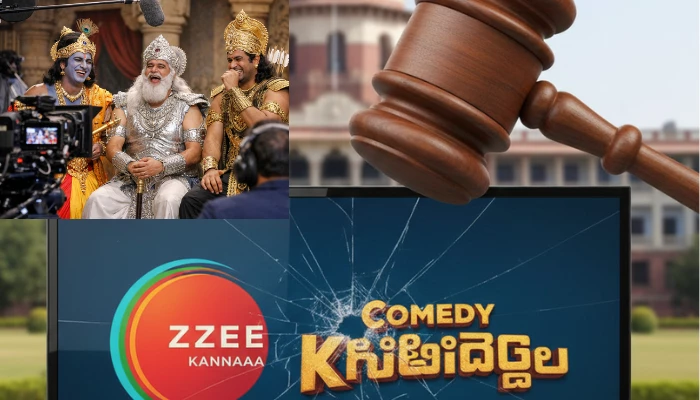
Case Summary
Hindu Gods were mocked and defamed in a popular comedy show on Zee Kannada, prompting the Karnataka High Court to question the limits of humour. The Karnataka High Court expressed strong displeasure over derogatory remarks made about Hindu deities in the popular Kannada comedy show Comedy Khiladigalu, aired on Zee Kannada. The court sharply questioned the limits of humour and freedom of speech, observing that insensitive content could not be justified merely in the name of entertainment. A bench of the Karnataka High Court, while taking up the matter, made strong oral observations questioning whether “anything can happen in this country in the name of humour and freedom of speech.” The judges remarked that freedom of expression was not absolute and came with reasonable restrictions, especially when it concerned religious beliefs and sentiments. The case originated from a complaint lodged by Prashant Shashidhar Naragund, a resident of Hubballi, at the Subramanyapura Police Station in Bengaluru. According to the complainant, the show included objectionable references and jokes involving Hindu mythological figures such as Lord Krishna, Draupadi, and King Dhritarashtra. The First Information Report was registered under Section 299 of the Bharatiya Nyaya Sanhita at Hubballi, and the case was transferred to the Subramanyapura Police Station, Bengaluru city. Based on the complaint, the police registered a case and initiated an investigation, prompting the show’s organiser to approach the High Court for relief. The complaint stated that the language used in the skits was not only inappropriate but also embarrassing and disrespectful, crossing the boundaries of satire and humour. It further stated that such content had the potential to hurt the religious sentiments of a large section of viewers who held these figures in deep reverence. Senior Advocate Sandesh Chouta, representing the show’s producers, argued that the episode did not directly depict Hindu deities. According to him, the scene was built around fictional village characters rehearsing a play based on the Mahabharata. The humour originated from the rehearsal process rather than mocking mythological characters. Representing the petitioner, counsel argued that Comedy Khiladigalu was a scripted comedy programme meant purely for entertainment and that there was no deliberate intention to insult any religion or deity. The defence maintained that the skits should be viewed in the context of humour and creative expression, and that criminal proceedings would have a chilling effect on artistic freedom. The petitioner sought the quashing of the First Information Report, contending that the allegations were exaggerated and did not warrant criminal prosecution. It was also argued that comedy shows often relied on exaggeration and parody, which should not be interpreted literally. However, the court remained unconvinced. “What else is it?” the judge asked, and later questioned why such a rehearsal needed to be shown on air at all. The courts judicially noted the complaint specifically referred to the use of words and references that were “embarrassing to read” and prima facie offensive. The court went on to comment that such incidents occurred because “courts are too liberal,” adding that if the judiciary were stricter in dealing with such cases, the situation might be different. These remarks underlined the court’s concern over what it viewed as a growing trend of crossing ethical and cultural boundaries in the pursuit of entertainment and viewership ratings. “Anything under the garb of free speech? You do not deserve any indulgence. Such people do not deserve any indulgence who display gods and mythological figures as useless,” Justice M. Nagaprasanna orally observed during the hearing of the petition. The observations came while the court was hearing a petition filed by K. Anil Kumar, one of the organisers associated with the show, seeking the quashing of a police complaint registered against him. The complaint stated that certain episodes of Comedy Khiladigalu contained indecent and offensive jokes targeting Hindu deities, thereby hurting religious sentiments. After hearing submissions from both sides, the High Court adjourned the matter for further consideration. While doing so, the bench directed the accused petitioner to fully cooperate with the ongoing police investigation. At the same time, the court provided interim relief by instructing the police not to arrest the petitioner under the pretext of investigation. This direction offered temporary protection while ensuring that the investigative process was not hindered. Comedy Khiladigalu was one of the most popular comedy reality shows on Kannada television and enjoyed a wide viewership across Karnataka. For many viewers, it had become a staple of evening entertainment, offering a break from daily stress and routine. The controversy, however, sparked a broader debate on social media and among viewers about the responsibility of content creators and broadcasters. While some defended the show, citing creative freedom, others supported the court’s stance, arguing that humour should not come at the cost of religious disrespect. The Karnataka High Court’s sharp remarks in the Comedy Khiladigalu case highlighted the delicate balance between freedom of expression and respect for religious sentiments in India’s diverse society. As the investigation continued and the court examined the matter in detail, the case had the potential to set an important precedent for television content and the limits of humour. For now, the spotlight remained firmly on the show and its makers as they navigated legal scrutiny amid public debate. The case, at the time of writing, was pending before the court and remained under adjudication.
Why it is Hate Crime ?
This case has been added to the hate tracker under the primary category: Hate speech against Hindus. The sub-category selected is 'Anti-Hindu slurs and mocking of faith'. Anti-Hindu slurs and the deliberate mocking of the Hindu faith owing to religious animosity involve the usage of derogatory terms, stereotypes, or offensive references to religious practices, symbols, or figures. One of the common anti-Hindu slurs used against Hindus is “cow-worshipper” and “cow piss drinker”. The intention of using this term is to demean and mock Hindus as a group and their religious beliefs since Hindus consider the cow holy. Additionally, some symbols and the slurs attached to them have a historical context that exacerbates the insult, hate, stereotyping, dehumanisation and oppression against Hindus. Cow worship has been used for centuries to denigrate Hindus, insult their faith and oppress Hindus specifically as a religious group. There has been overwhelming documentation about how cow slaughter has been used to persecute Hindus, with cow meat being thrown in temples and places of worship. There has also been overwhelming documentation where cow meat (beef) has been force-fed to Hindus to either forcefully convert them to Islam or denigrate their faith. Apart from cow worship, the Swastika – which holds deep religious significance for the Hindus – has also been misinterpreted and distorted to use as a slur against Hindus. Similarly, the worship of the Shivling has been used by supremacist ideologies and religions to denigrate Hindus owing to religious animosity. Such slurs and denigration stem from inherent animosity and hate towards Hindus and their faith; therefore, it is categorised as hate speech targeted at Hindus specifically owing to their religious identity. It has multiple religious markers indicating targeted denigration of the Hindu faith through mass media content, where humour was used as a vehicle to normalise disrespect toward Hindu deities. Mockery of Hindu deities and sacred figures: The central marker is the use of derogatory and embarrassing references to Hindu gods and revered figures such as Lord Krishna, Draupadi, and King Dhritarashtra. These figures are not fictional characters but core religious and cultural symbols for Hindus. Portraying them in a demeaning or trivialised manner directly attacks the dignity of the Hindu faith. Use of humour as a shield for religious insult: Framing offensive references as comedy or parody functions as a deflection mechanism. When religious mockery is excused under the guise of humour, it enables the normalisation of contempt toward a faith while denying accountability. This selective framing becomes discriminatory when it targets a specific religion’s sacred figures for ridicule. Mass broadcast amplifying harm: The content was aired on a popular television channel with a wide audience, multiplying the impact of the insult. Unlike private speech, televised mockery exposes millions of viewers to religious denigration, intensifying humiliation and reinforcing the social acceptability of disrespect toward Hindu beliefs. Asymmetry of power and vulnerability: Hindu deities and beliefs were subjected to ridicule in a mainstream entertainment format where adherents had no opportunity to consent, respond, or opt out. This imbalance allows dominant media platforms to impose narratives that demean a religious group without dialogue or redress. Judicial recognition of offence: The Karnataka High Court’s strong observations underscore that the content crossed from creative expression into prima facie offensive territory. The court’s remarks that such portrayals depict gods and mythological figures as “useless” reinforce that the issue was not subjective hurt alone, but identifiable disrespect toward religious faith. Pattern of cultural desensitisation: The incident reflects a broader pattern where Hindu religious symbols are increasingly treated as fair targets for satire in mainstream media, while similar treatment of other faiths is often avoided. This selective irrelevance contributes to a climate where Hindu beliefs are seen as expendable or less deserving of respect. Taken together, the deliberate inclusion of offensive references to Hindu deities, their broadcast to a mass audience, and the attempt to justify them solely as humour demonstrate religiously motivated denigration. These markers establish that the act was not neutral entertainment but a targeted affront to Hindu religious identity, justifying its classification as a hate-driven incident targeting the Hindu community.


Case Status
Case sub-judice


Perpetrators Details
Perpetrators
Others
Perpetrators Range
Unknown
Perpetrators Gender
unknown
 Sources




