Hindu sentiments outraged after video denigrating Hindu deities was posted on social media in Bareilly, Uttar Pradesh
 Shahi, Uttar Pradesh, India
  19 January, 2026
Case Summary
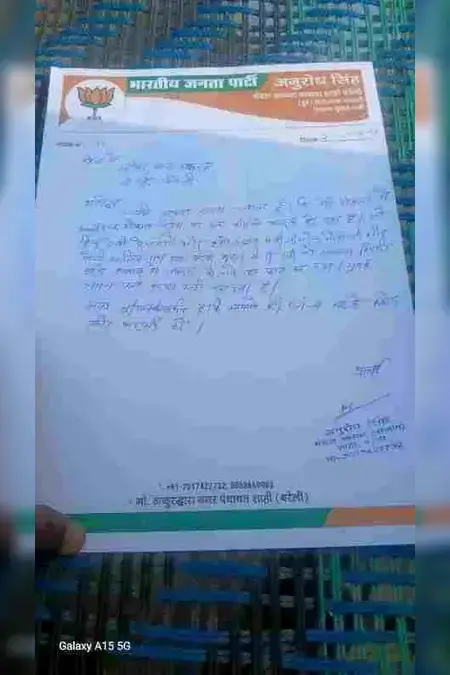
In the Shahi town of Bareilly district, Uttar Pradesh, Hindu sentiments were insulted after an objectionable video circulated widely on social media showing a young man making derogatory remarks against Hindu deities. Shahi Mandal President Anurodh Singh filed a complaint with the police stating that a man uploaded a video on social media targeting and insulting Hindu deities, Prime Minister Narendra Modi and Chief Minister Yogi Adityanath. The video depicted the individual repeatedly using abusive and inflammatory language, directly targeting Hindu religious beliefs and revered figures, thereby provoking religious sentiments and contributing to social unrest. Anurodh Singh further stated that the video promoted hatred in society and posed a threat to communal harmony and demanded immediate legal action. Treating the matter as serious, police officials initiated an investigation and visited the accused's village, where his house was found locked. Police officials stated that the accused had been away for some time, earning a livelihood and that the video was uploaded from outside the Shahi area, although he remained a resident of the locality. The Station House Officer clarified that the incident did not physically occur within the Shahi jurisdiction but confirmed that an investigation was underway to examine the content of the video, identify the circumstances of its recording and circulation, and determine further legal action based on the evidence.
Case Images
Why it is Hate Crime ?
The primary category selected in this case is- Hate Speech against Hindus. The subcategory selected is- Anti-Hindu slurs, mocking faith. Anti-Hindu slurs and the deliberate mocking of the Hindu faith owing to religious animosity involve the usage of derogatory terms, stereotypes, or offensive references to religious practices, symbols, or figures. One of the common anti-Hindu slurs used against Hindus is “cow-worshipper” and “cow piss drinker”. The intention of using this term is to demean and mock Hindus as a group and their religious beliefs since Hindus consider the cow holy. Additionally, some symbols and the slurs attached to them have a historical context that exacerbates the insult, hate, stereotyping, dehumanisation and oppression against Hindus. Cow worship has been used for centuries to denigrate Hindus, insult their faith and oppress Hindus specifically as a religious group. There has been overwhelming documentation about how cow slaughter has been used to persecute Hindus with cow meat being thrown in temples and places of worship. There has also been overwhelming documentation where cow meat (beef) has been force-fed to Hindus to either forcefully convert them to Islam or denigrate their faith. Apart from cow worship, the Swastika – which holds deep religious significance for the Hindus – has also been misinterpreted and distorted to use as a slur against Hindus. Similarly, the worship of the Shivling has been used by supremacist ideologies and religions to denigrate Hindus owing to religious animosity. Such slurs and denigration stem out of inherent animosity and hate towards Hindus and their faith, therefore, it is categorised as hate speech targeted at Hindus specifically owing to their religious identity. The other subcategory selected is- Mocking/denigrating Hindu leaders. Hate speech is defined as any speech, gesture, conduct, writing, or display that is prejudicial against a specific individual and/or group of people, which is leading to or may lead to violence, prejudicial action or hate against that individual and/or group. Religious leaders are often seen as representatives of the community, especially, the community’s religious faith and beliefs. Mocking or denigrating a religious leader specifically owing to his religious identity and/or the religious rituals he observes can be considered hate speech because the motivating factor of the speech is animosity and/or dislike for what he represents – the religious beliefs and faith of the community. It is important to note that mere insulting words against an individual do not constitute hate speech. It is entirely possible that insulting words are used for an individual, however, the specific speech is not the result of religious hate and/or animosity towards the professed faith of the religious leader, but the individual himself. For the speech to be considered hate speech, the speech itself or the motivating factor behind the speech has to be religious in nature. Such speech which denigrates Hindu religious leaders specifically owing to animosity towards the faith they profess and the community faith they represent will be treated as hate speech under this category. This case was added to the tracker because Hindu religious sentiments were deliberately insulted by the accused, who circulated an objectionable video in which he used abusive and derogatory language against Hindu deities, Prime Minister Narendra Modi and Chief Minister Yogi Adityanath on social media. The content of the video went beyond casual provocation and constituted a direct attack on Hindu religious beliefs and symbols, with the explicit intent of ridiculing and humiliating the Hindu faith in a public and widely accessible digital space. Firstly, this clearly constitutes hate speech against Hindus and Hindu deities by the accused, involving deliberate and public expressions designed to insult and provoke the religious sentiments of the Hindu community. The derogatory remarks directed at Hindu deities aimed to undermine Hindu beliefs, marking it as religiously motivated hate speech targeting the Hindu community. Hindu deities are central to the Hindu religion and are deeply revered. Any attempt to mock or abuse them reflects outright religious animosity towards Hinduism. In this case, the derogatory comments were a direct assault on the sanctity of the Hindu faith. This was not a spontaneous or misguided act, but a calculated and premeditated attempt to destabilise Hinduism and the wider Hindu community. Such actions are rarely isolated; they form part of a persistent pattern aimed at disrespecting the Hindu faith, driven by entrenched hostility and contempt for Hindus and their beliefs. Secondly, the video also targeted CM Yogi Adityanath and PM Narendra Modi in a manner that was inseparable from their religious identity. Yogi Adityanath is not only a constitutional authority as the Chief Minister of Uttar Pradesh but also the head priest of the Gorakhnath Math, a prominent Nath Sampradaya institution within the Shaivite tradition of Hinduism. As a saffron-clad monk and spiritual leader, he symbolises Hindu religious authority, values, and tradition. Similarly, in many instances, PM Narendra Modi has been targeted due to his actions for the development of the Hindu community. Thus, the simultaneous abuse of Hindu deities, Narendra Modi and Yogi Adityanath, clearly demonstrated that the targeting was directed at them as Hindu religious figures rather than merely as political office-holders. The remarks reflected animosity towards Hinduism and its visible representatives, reinforcing the religiously motivated nature of the offence. In recent times, social media has increasingly become a platform for anti-Hindu hate, with derogatory memes, videos, and messages targeting Hindu religious symbols, practices, and deities. Such content is recognised as part of a broader pattern of Hinduphobia and religious hate crimes online. This deliberate targeting of revered religious icons firmly establishes this act as a hate-driven offence. Therefore, it is being added to the hate crime database of the tracker. Disclaimer: The Hinduphobia Tracker records incident dates based on when a crime occurs, rather than when the media reports it. In this case, media reports did not specify the date of the crime; hence, the media reporting date of 20 January 2026 was selected as the indicative incident date for documentation purposes.


Case Status
Complaint filed


Perpetrators Details
Perpetrators
Unknown
Perpetrators Range
One Person
Perpetrators Gender
male
 Sources




