Hindu employee face caste abuse, physical assault and conversion pressure by Muslim professor at Jamia Millia Islamia University, Delhi
 South West Delhi, Delhi, India
  12 January, 2026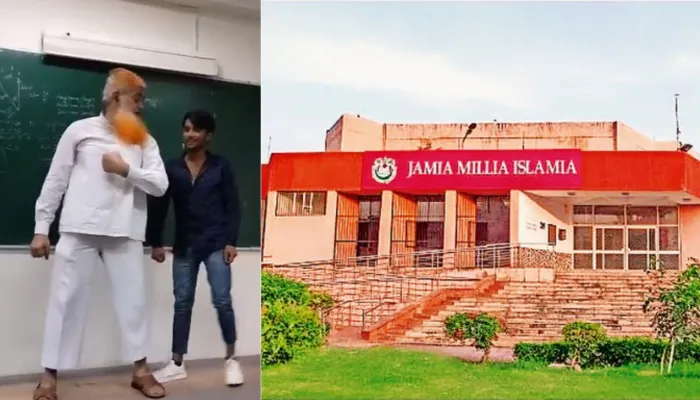
Case Summary
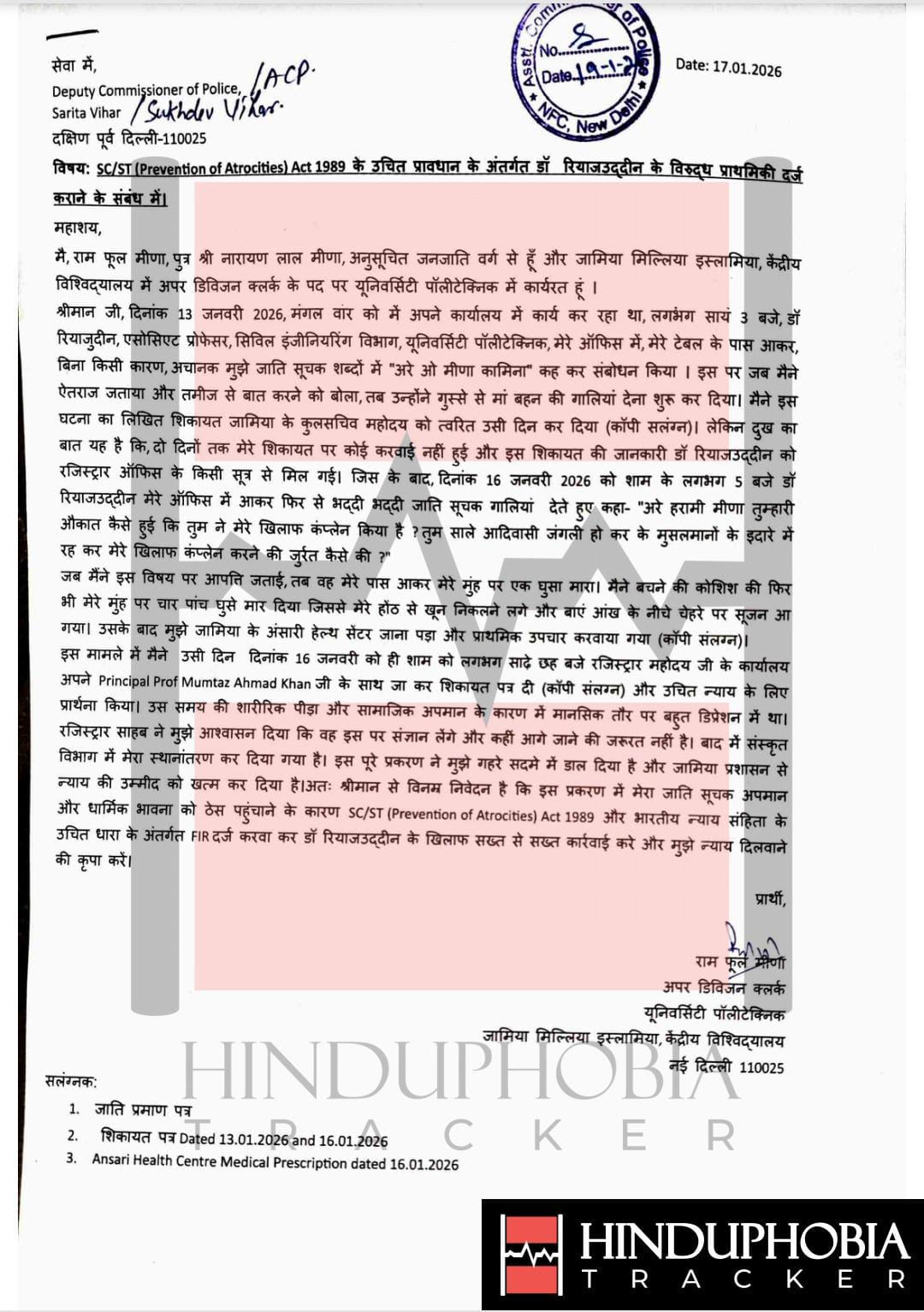
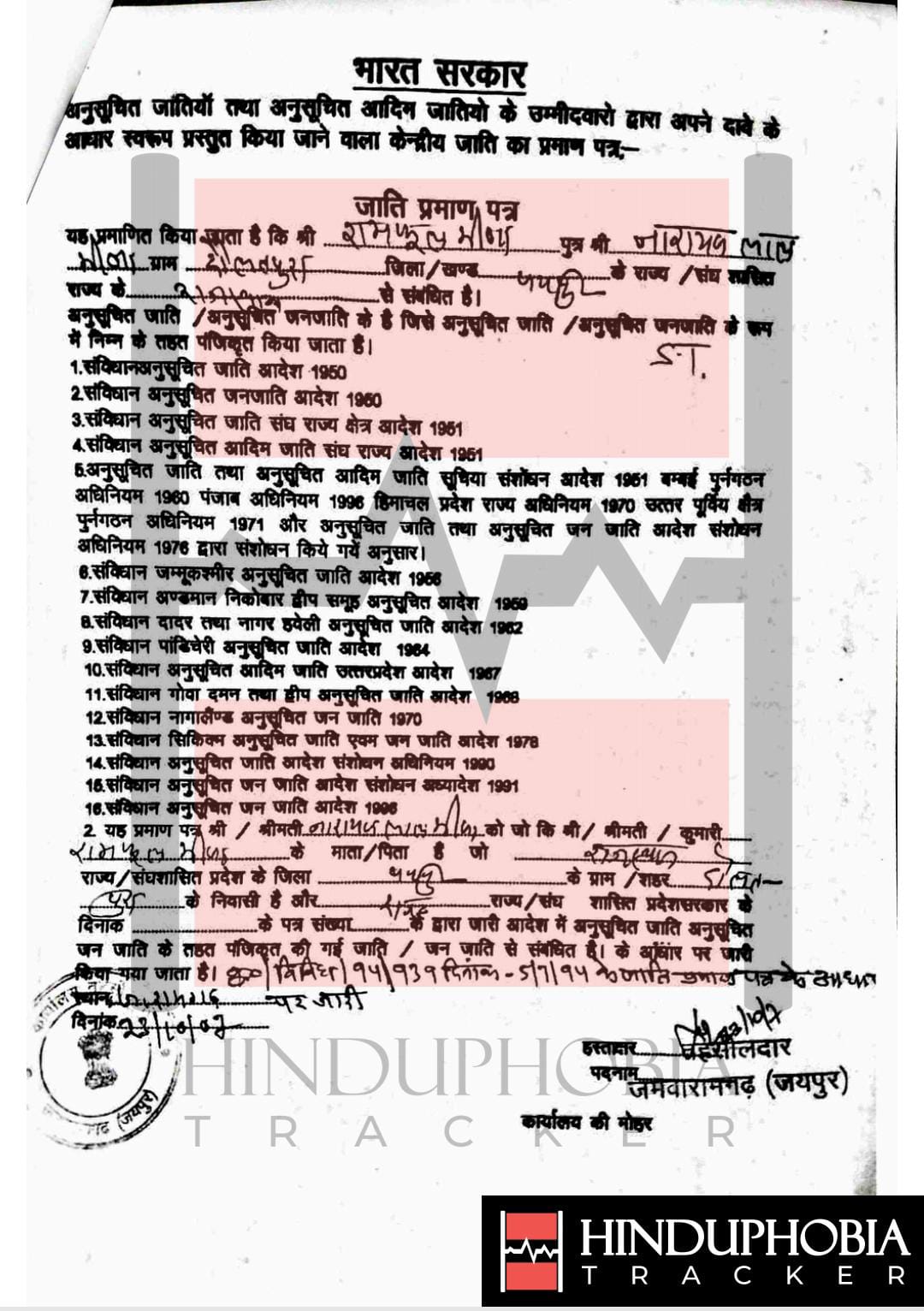
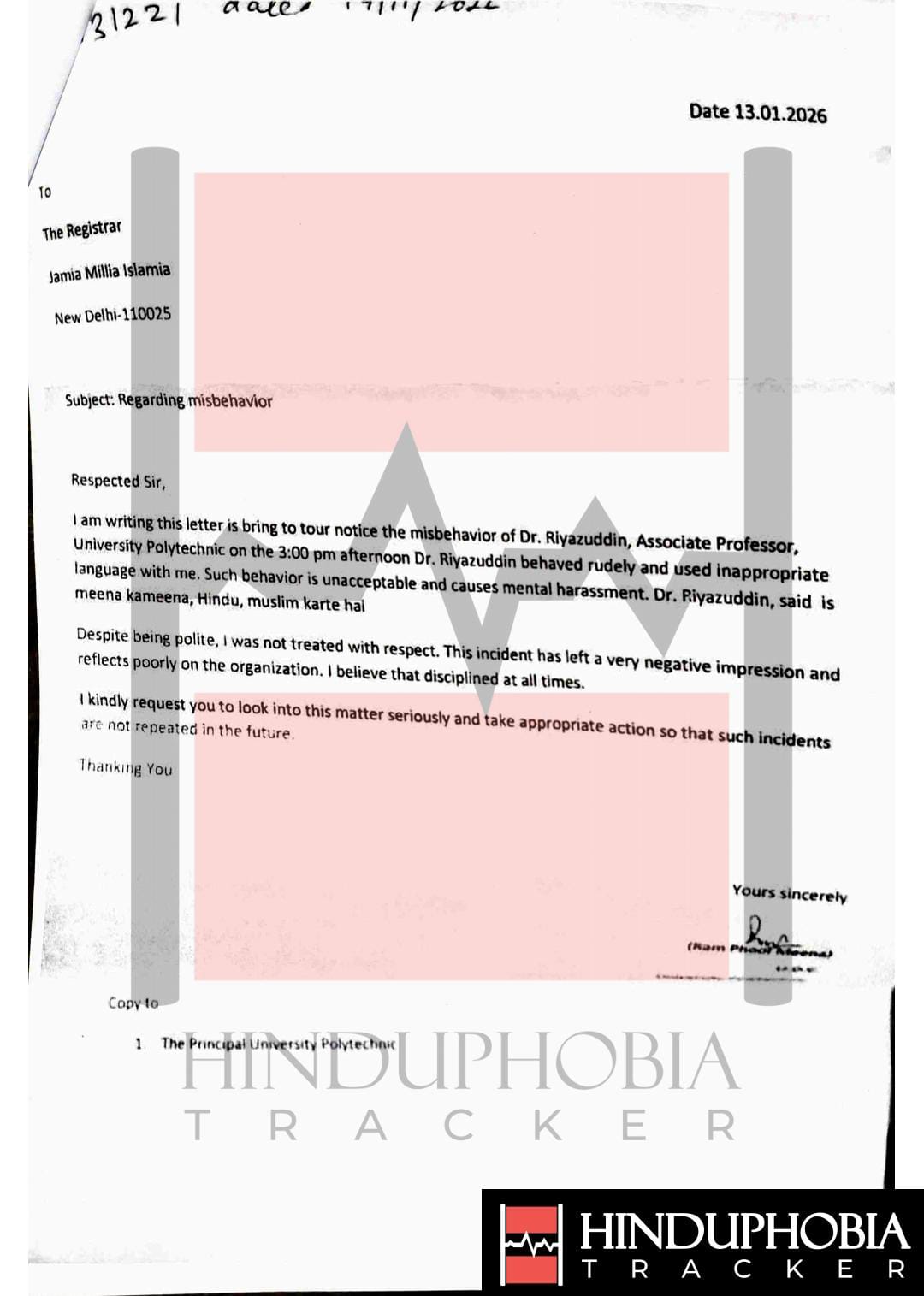
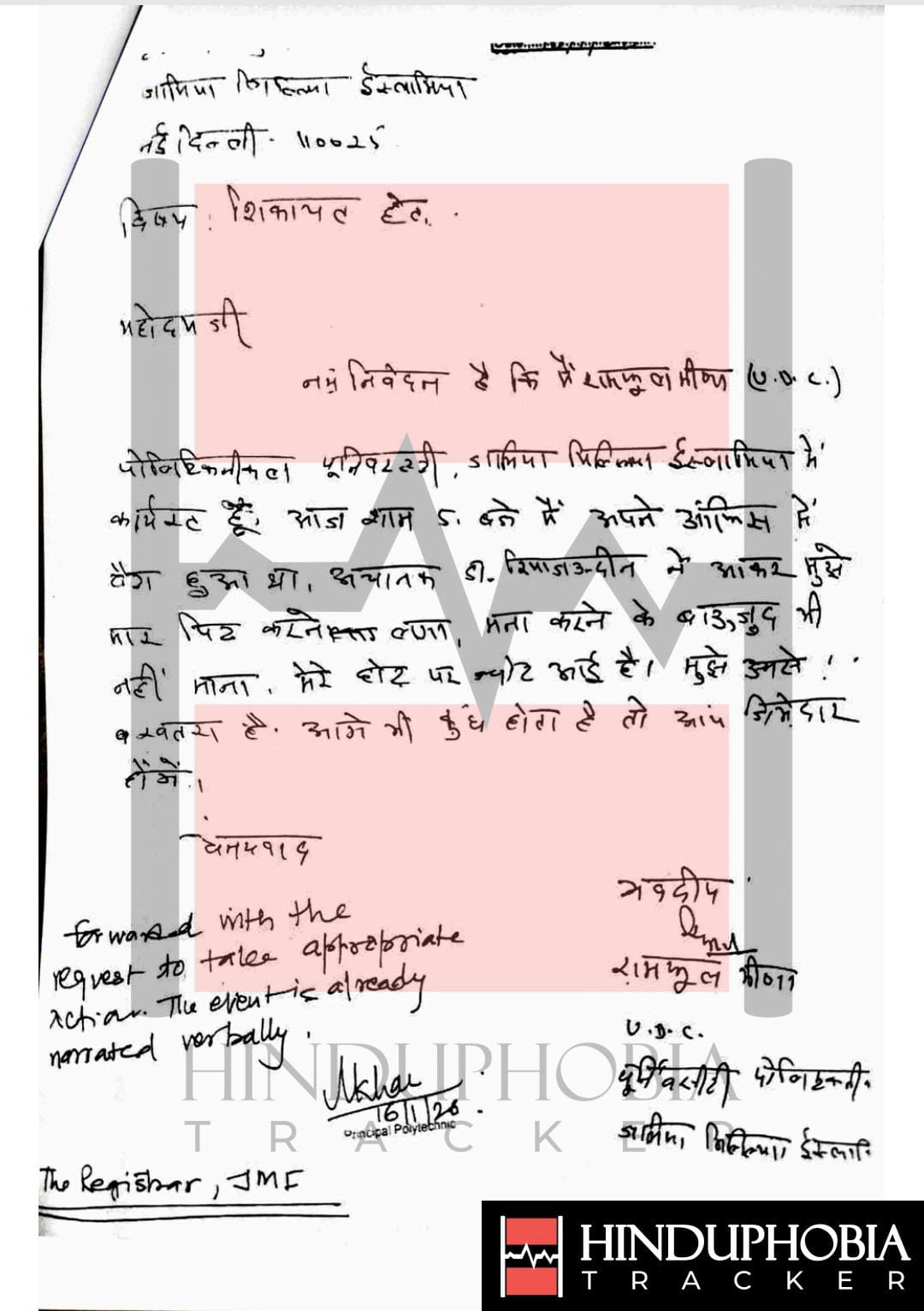
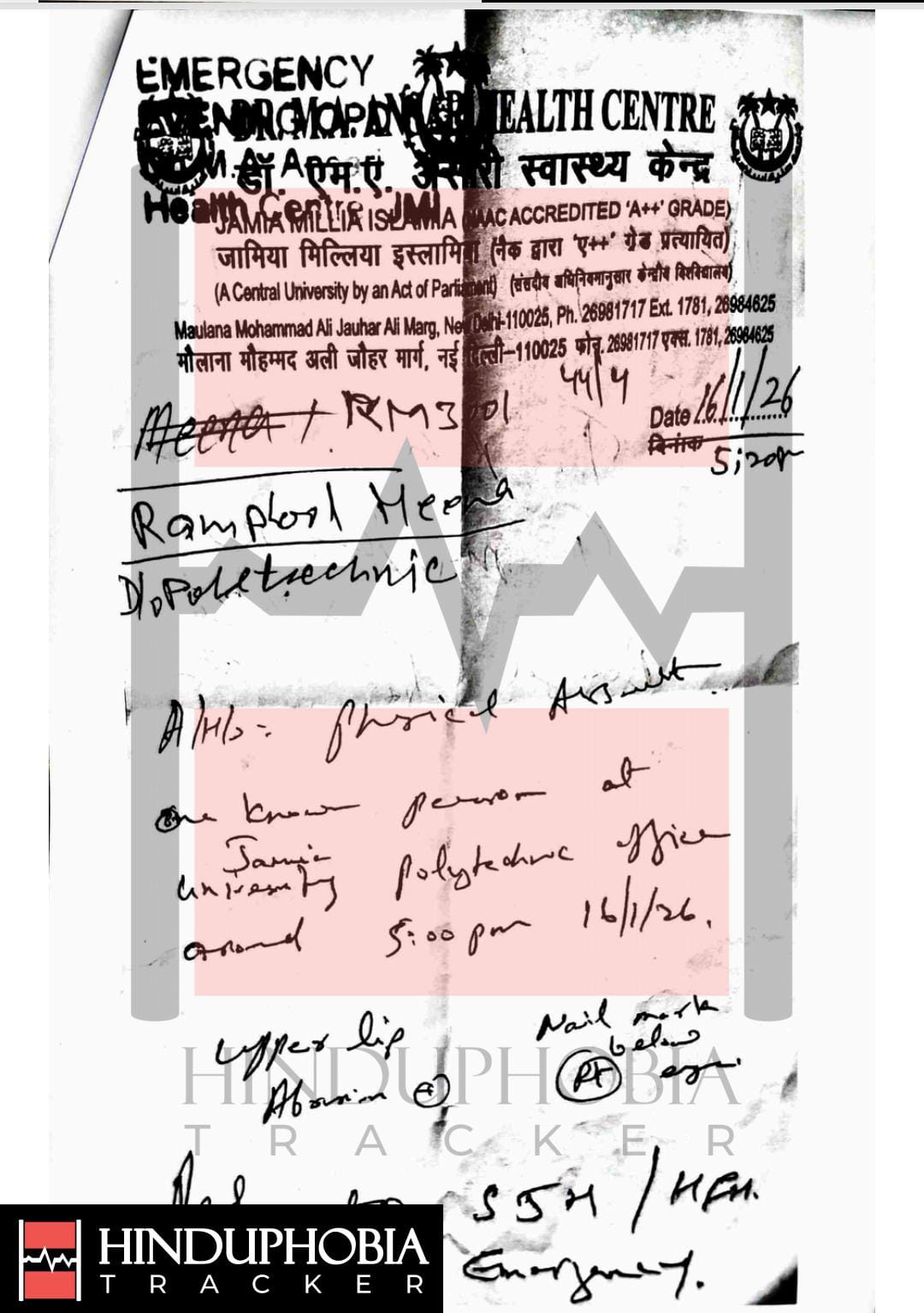
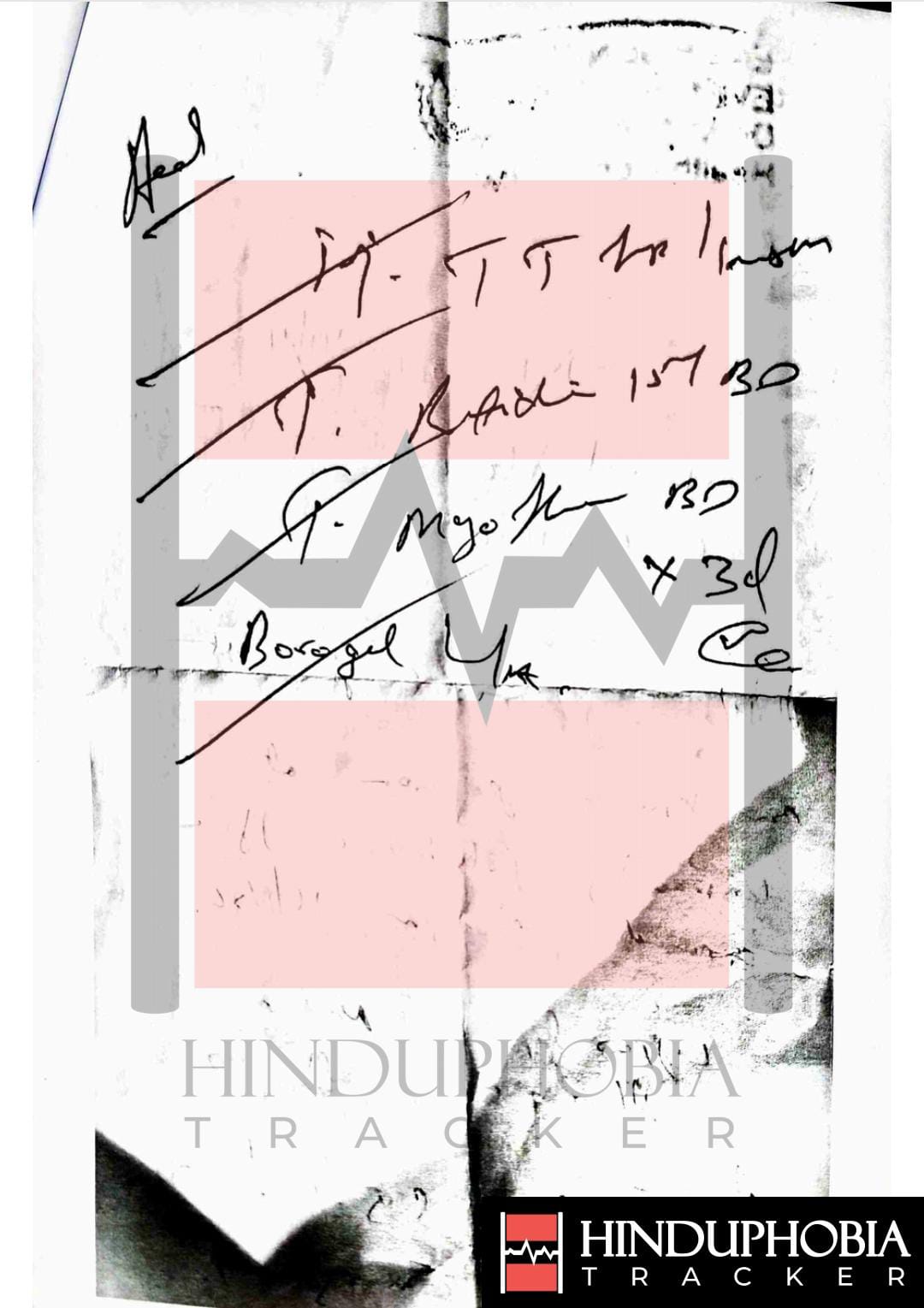
Hindu employee, Ram Phool Meena, faced caste-based abuse, physical assault, and sustained pressure to convert to Islam by Muslim associate Professor, Dr Riyazuddin. He was from the Civil Engineering Department at University Polytechnic, Jamia Millia Islamia, New Delhi. Ram Phool Meena belonged to the Scheduled Caste community. The incidents occurred within the university premises following prior complaints against the faculty member and the circulation of a related video. Ram Phool Meena, son of Narayan Lal Meena, worked as an Upper Division Clerk at University Polytechnic, a unit of Jamia Millia Islamia, a centrally funded university. Meena submitted a written complaint to the Assistant Commissioner of Police, Sarita Vihar-Sukhdev Vihar, on 17th January 2026, detailing repeated caste and religion-based harassment. The first incident occurred on 13 January 2026 at around 3:00 pm. Meena was at his desk when Dr Riyazuddin entered without provocation. He addressed Meena using caste-linked language, saying, “Arey O Meena kamina Hindu Muslim karte hain. You, Meena, scoundrel,” loosely translated in English to, “Hey, Meena, you scoundrel, you’re the one who keeps doing Hindu Muslim.” Meena objected and asked the faculty member to maintain dignity and decorum. Dr Riyazuddin then hurled obscene abuses involving Meena’s mother and sister. Shaken, Meena immediately submitted a written complaint to Dr Mehtab Alam, the Registrar of Jamia Millia Islamia. Copies of this complaint were annexed to his police filing. No action was taken for two days. Meena stated that the contents of his complaint were leaked from within the Registrar’s office to Dr Riyazuddin, which Meena said led to further escalation. The second incident occurred on 16th January 2026, at around 5:00 pm. Dr Riyazuddin returned to Meena’s office and issued caste-based abuses. The accused questioned him regarding his complaint within the “Muslim institution.” Meena quoted Dr Riyazuddin as saying in Hindi, “Arey harami Meena, tumhari aukaat kaise hui ki tumne mere khilaaf complaint ki? Tum saale Adivasi jangli ho, Musalmanon ke idare mein rehkar mere khilaaf shikayat karne ki jurrat kaise ki?”, loosely translated in English to "Hey, you bastard Meena, how did you dare file a complaint against me? You’re a filthy, wild Adivasi. Living under Muslim rule, how did you have the nerve to complain about me?” When Meena protested, Dr Riyazuddin punched him in the face and delivered four to five additional blows. Meena suffered bleeding lips, swelling below his left eye, and nail marks. He visited Jamia’s Ansari Health Centre, where he received primary medical treatment. Medical documentation was annexed to his police complaint. Meena stated that the assault caused severe mental trauma, depression, and social humiliation. Later that evening, around 6:30 pm, Meena submitted a second written complaint to the Registrar’s office, accompanied by Principal Professor Mumtaz Ahmad Khan. The Registrar assured that the matter would be taken seriously and instructed that Meena need not go elsewhere. Despite this, a transfer order was issued the same day, dated 16 January 2026, under Order Number F. No. Gen. 32/Esstt.-NT/RO/JMI/2025. Meena described the transfer as retaliatory and punitive, aimed at silencing him. Meena stated that over time, he had faced sustained pressure to convert to Islam, both directly and indirectly. He reported being repeatedly called a “kafir” by multiple people on campus. Meena asserted that the harassment and targeting stemmed solely from his Hindu identity. This case followed prior incidents at Jamia Millia Islamia. On 17 July 2024, the Registrar, Nazim Hussain, told a Dalit employee, “Bring Iman, and we will secure your and your children’s careers.” On 26 October 2024, a girl was pressured to convert and told, “Wearing a hijab will bring noor to your face.” A fact-finding committee released a 64-page report on 14 November 2024, addressing these and related cases. The report recorded testimonies from 27 individuals, including seven teaching faculty members, six non-teaching staff members, PhD scholars, students, and alumni. The report documented coercion into religious conversion, discrimination against non-Muslims, and career stagnation for those who refused conversion. Following the Meena case, he sought registration of a First Information Report under the Scheduled Castes and Scheduled Tribes (Prevention of Atrocities) Act, 1989, along with relevant provisions of the Indian Penal Code. Copies of written complaints and medical documentation were annexed to the police filing. Pursuant to FIR, the Jamia Milia University initiated disciplinary proceedings against Ramphool Meena, who himself had complained of physical assault and casteist abuse over pressure of conversion by Associate Professor Dr Riyazuddin. As per the order dated March 5 2026, signed by Jamia Registrar Mohammad Mahtab Alam Rizvi, the University concluded that “there was a physical altercation between the two employees within the office premises during working hours.” And further it held “Ramphool Meena also engaged in conduct which contributed to the escalation of the altercation and attempted to assault Dr Riyazuddin by using a chair.” The committee further noted that he approached media platforms and made statements regarding the matter. The order stated that “making statements before media houses on matters pending consideration of the Competent Authority is not appropriate conduct for a Government servant.” Based on these observations, the administration concluded that Meena’s conduct prima facie violated Rule 3(1)(i), Rule 3(1)(ii) and Rule 3(1)(iii) of the CCS (Conduct) Rules, 1965, along with provision of Jamia Millia Islamia Ordinance 6 (VI) 32 (1) relating to administrative conduct and initiated disciplinary proceedings against the victim. The order further stated that Meena’s continued posting in the same office during the inquiry “may not be conducive to ensuring an impartial and uninfluenced inquiry. And therefore, he is transferred from University Polytechnic to another department or centre of Jamia Millia Islamia with immediate effect until further orders.” This development prompted serious questions about institutional fairness at Jamia Milia and sparked widespread media outrage.
Case Images
Why it is Hate Crime ?
This case has been documented under the selected primary category: Predatory proselytisation. Under this, the selected secondary category is: Harassment, threats, coercion for conversion. Harassment covers a wide range of behaviours of an offensive nature. It is commonly understood as behaviour that demeans, humiliates, and intimidates a person, including threats and coercion. Harassment and threats, in this case, find their root on discriminatory grounds, which has the effect of nullifying a person’s rights or infringing upon his freedom to exercise his right specifically owing to the victim’s religious identity. Verbal and physical threats and psychological or physical harassment are often used against Hindu victims because they choose to practice their professed religion. Religious harassment also includes forced and involuntary conversions by harassment, threats or coercion. Coercion includes intimidatory tactics like force-feeding a Hindu victim beef to convert to another religion, forceful circumcision, etc. In several cases documented, non-Hindu perpetrators or those who harbour specific animosity towards Hinduism, harass victims simply based on their religious identity. Such cases often also include harassment to ensure the Hindu victim abandons his/her professed religion and adopts the religion of the perpetrator. Such cases, where Hindu victims are harassed to convert to the perpetrator’s religion, are rooted in animosity towards the victim’s religious identity and are therefore documented as religiously motivated hate crimes. Another selected secondary category is: Attempting to convert/converting by denigrating Hinduism. In several cases, Hindus are converted, or an attempt is made to convert Hindus by denigrating their faith, Hinduism. In such cases, the Hindus associate with the non-Hindu perpetrators often by choice, and then the attempt to convert them by insulting their faith, showing the faith down, etc., begins. An example of this would be a non-Hindu gathering where Hindus attend voluntarily. However, once they attend the gathering, there is an explicit attempt to convert them by abusing their faith and hailing the faith of the perpetrator. The denigration of the Hindu faith is often based on misrepresentation of the Hindu faith, its doctrine and scriptures, andan insult to espoused traditions, if not blatant lies about Hindu beliefs and ways. Such conversions or attempts at conversions are driven by animosity towards the Hindu faith and are therefore documented as religiously motivated hate crimes. Another selected primary category is: Hate speech against Hindus. Under this, the selected secondary category is: Anti-Hindu slurs, mocking faith. Anti-Hindu slurs and the deliberate mocking of the Hindu faith owing to religious animosity involve the usage of derogatory terms, stereotypes, or offensive references to religious practices, symbols, or figures. One of the common anti-Hindu slurs used against Hindus is “cow-worshipper” and “cow piss drinker”. The intention of using this term is to demean and mock Hindus as a group and their religious beliefs since Hindus consider the cow holy. Additionally, some symbols and the slurs attached to them have a historical context that exacerbates the insult, hate, stereotyping, dehumanisation, and oppression against Hindus. Cow worship has been used for centuries to denigrate Hindus, insult their faith, and oppress Hindus specifically as a religious group. There has been overwhelming documentation about how cow slaughter has been used to persecute Hindus, with cow meat being thrown in temples and places of worship. There has also been overwhelming documentation where cow meat (beef) has been force-fed to Hindus to either forcefully convert them to Islam or denigrate their faith. Apart from cow worship, the Swastika – which holds deep religious significance for the Hindus – has also been misinterpreted and distorted to use as a slur against Hindus. Similarly, the worship of the Shivling has been used by supremacist ideologies and religions to denigrate Hindus owing to religious animosity. Such slurs and denigration stem from inherent animosity and hate towards Hindus and their faith; therefore, it is categorised as hate speech targeted at Hindus specifically owing to their religious identity. Another selected primary category is: Attack not resulting in death. Under this, the selected secondary category is: Attacked for Hindu identity. In several cases, Hindus are attacked merely for their Hindu identity without any perceived provocation. A classic example of this category of religiously motivated hate crime is a murder in 2016. 7 ISIS terrorists were convicted for shooting a school principal in Kanpur because they got ‘triggered’ seeing the Kalava on his wrist and the tilak that he had put. In this, the Hindu victim had offered no provocation except for his Hindu religious identity. The motivation for the murder was purely religious, driven by religious supremacy. Such cases where Hindus are targeted merely for their religious identity would be documented as a hate crime under this category. This incident constituted a religiously motivated hate crime because Ram Phool Meena was targeted for who he was: a Hindu Scheduled Tribe employee working within the university. The hostility directed at him was rooted in his religious identity, not in any professional disagreement. He was singled out and treated as an outsider solely because he did not belong to the dominant religious group on campus. The language used against Ram Phool Meena was openly religious, degrading, and intended to humiliate. He was abused using references to his Hindu faith and was repeatedly called a “kafir”, a pejorative term used by Muslims to dehumanise non-Muslims, especially Hindus. He was reminded that he was working in a “Muslim institution”, a statement designed to assert religious dominance and strip him of dignity. Such language directly attacked his identity and affirmed religious hatred as the motive. The abuse intensified after he exercised his right to complain. On returning to his office, the faculty member openly questioned how a Hindu Adivasi could dare to file a complaint within a Muslim institution. This was followed by physical assault. The violence was not random or emotional; it was deliberate punishment for asserting equality and resisting religious humiliation. The sustained pressure placed on Ram Phool Meena to convert to Islam further established the hate-based nature of the conduct. Repeated references to his status as a non-believer and the expectation that he abandon his faith demonstrated an intent to coerce him into changing his religious identity. Forcing or pressuring an individual to convert strikes at the core of personal belief and constitutes religious persecution. The immediate transfer order issued after the assault reinforced the atmosphere of religious hostility. Instead of protecting the victim, the institution displaced him, signalling that a Hindu employee who spoke up against religious abuse would face consequences. This action deepened the harm, compounded the trauma, and validated the discrimination he endured. This incident did not occur in isolation. It formed part of a wider pattern within the university where non-Muslim employees and students faced religious coercion, exclusion, and stalled careers for refusing to convert. When viewed together, the repeated religious slurs, coercive pressure, physical violence, and institutional retaliation clearly demonstrated religious hatred as the driving force. For these reasons, the acts committed against Ram Phool Meena met every element of a religiously motivated hate crime, aggravated by caste-based violence, and represented a direct assault on his dignity, safety, and freedom of religion. Disclaimer: Two individuals were identified as perpetrators in this case, i.e., Dr Riyazuddin, Associate Professor, who committed the acts of abuse and assault, and Dr Mehtab Alam, Registrar, who used his institutional position to protect the professor and enable retaliatory action. Although the legal action has only been initiated against the professor.
Victim Details
Total Victim
1
Deceased
0
Gender
- Male 1
- Female 0
- Third Gender 0
- Unknown 0
Caste
- SC/ST 1
- OBC 0
- General 0
- Unknown 0
Age Group
- Minor 0
- Adult 1
- Senior Citizen 0
- Unknown 0


Case Status
Complaint filed


Perpetrators Details
Perpetrators
Muslim Extremists
Perpetrators Range
From 2 To 5
Perpetrators Gender
male
 Sources




