Hindu student found dead in college amidst the rising attacks on minority Hindus in Bangladesh; police call it 'suicide'
 Dhaka District, Bangladesh
  17 January, 2026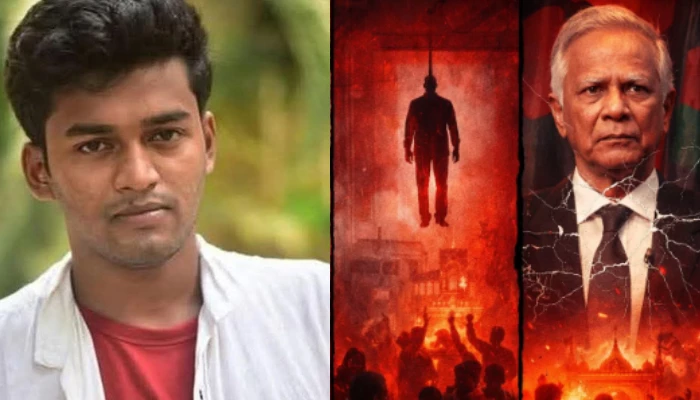
Case Summary
In Dhaka, Bangladesh, the hanging body of a Hindu student of Jagannath University (JnU) was recovered from the Bhatikhana area. The body of a Hindu student named Akash Sarkar of Jagannath University was recovered on 18 January from a mess in the area. The deceased was identified as Akash Sarkar, a student of the Department of Theatre at Jagannath University. He belonged to the department's 10th batch. His home district was Faridpur. According to media reports, Ishtiaq, a housemate, stated that around 9:00 p.m., Akash’s girlfriend phoned him, saying she could not reach Akash over the phone. “After the call, I found Akash’s room locked from the inside. As I did not get any response despite repeated calls, I broke the door open and saw his body hanging from the ceiling. Then, I immediately called the police,” he said. Nazmul Hasan, an investigation officer of Gandaria Police Station, said, "We arrived at the scene around 9:30 pm after receiving the information. The body was recovered in a hanging condition and later sent to Mitford Hospital for an autopsy." Officer-in-Charge (OC) of Gandaria Police Station, Moniruzzaman Khan, said that the victim's family members were informed, and further legal procedures were underway. This death came amid escalating violence against Bangladesh Hindus over the last few months, raising suspicion in the police narrative. A fresh wave of anti-Hindu violence prevailed across Bangladesh following the death of Sharif Osman Bin Hadi. This escalation occurred against the backdrop of ongoing anti-Hindu violence that had persisted since the ouster of the Sheikh Hasina government in August 2024, during which Hindu homes, temples, and religious spaces were repeatedly attacked, and the Hindu community faced intimidation, arson, and mob attacks. In the aftermath of Hadi’s death, Hindu homes were selectively targeted and set ablaze in multiple localities by Muslim mobs, forcing families to flee and rendering many homeless. The violence was not sporadic but patterned, with Muslim mobs targeting Hindu neighbourhoods, properties, and religious symbols with impunity. One of the many victims of this wave of violence was a Hindu man named Dipu Chandra Das, who was brutally lynched by a Muslim mob over false allegations of blasphemy. Such targeting of innocent Hindus over fabricated charges illustrated the vulnerability of the Hindu minority under conditions of rising communal hostility. Posters and written materials calling for the extermination of Hindus were displayed in public spaces, signalling an alarming normalisation of genocidal rhetoric. Combined with acts of physical violence, arson, and vandalism, these developments demonstrated a coordinated campaign designed to terrorise the Hindu community and assert Islamic dominance. Notably, Sharif Osman Bin Hadi was a Muslim political activist and student leader known for his anti-Hindu and anti-India stance. He was actively involved in the political unrest that followed the fall of Sheikh Hasina’s government and was killed in Dhaka in December 2025 during clashes, after which Hindus were blamed and subsequently targeted. Despite intensifying concern over attacks on Hindus in Bangladesh, the interim government put out official figures that aimed at downplaying the persecution of Hindus. The government tried to push this faith-based targeting as a mere law-and-order problem. The data, shared by Chief Adviser Mohammad Yunus, claimed that most incidents involving members of the minority Hindu community in 2025 were routine crimes and not religiously driven violence. According to the figures shared, out of 645 incidents involving members of the Hindu community, only 71 were communal attacks, while 574 were non-communal criminal cases. The report stated, “While every incident is a matter of concern, the data presents a clear and evidence-based picture: the overwhelming majority of cases were criminal in nature rather than communal, underscoring both the complexity of law-and-order challenges and the importance of grounding public discussion in facts rather than fear or misinformation.”
Why it is Hate Crime ?
In this case, a Hindu youth was discovered hanging in the old mess area of Dhaka. He was a student of the Department of Theatre at Jagannath University. This incident is being recorded under the 'Undecided' database. It occurred in a period of heightened fear among Bangladesh’s Hindu minority, with repeated reports of intimidation, arson, mob assaults, and attacks on Hindu homes and religious spaces. In such an environment, sudden and unexplained deaths of Hindu individuals raise legitimate concern, including the possibility that communal hostility may be a contributing factor even if it is not immediately reflected in early reporting. Notably, this death was reported within weeks of the killing of Hindu man Dipu Chandra Das in Bhaluka on 18 December 2025 following a blasphemy allegation, an incident that reinforced the vulnerability of Hindus during this period and the climate of impunity that often surrounds communal aggression. Viewed alongside such cases, the present death is being preserved as part of the broader pattern of insecurity affecting Hindus, warranting scrutiny rather than dismissal. At the same time, our documentation standard requires case-specific indicators before an incident is classified as religiously motivated. Here, the information currently available in the public domain is limited to the recovery of the body, police response, and the initiation of post-mortem procedures. There is no confirmed evidence yet establishing coercion, communal threats, forced entry, a motive message, identified perpetrators, or any other verifiable marker that would allow a responsible conclusion that the death was caused by anti-Hindu targeting. Because both realities coexist, a credible wider context of anti-Hindu hostility and an absence of incident-level proof in this specific case, the entry is being placed in the Undecided database. This ensures the case remains visible for follow-up while preserving evidentiary discipline. If credible investigation, autopsy findings, witness testimony, or court proceedings later establish communal targeting, the classification will be upgraded. If it is established that the death stemmed from causes unrelated to religious hostility, the entry will be revised accordingly.
Victim Details
Total Victim
1
Deceased
1
Gender
- Male 1
- Female 0
- Third Gender 0
- Unknown 0
Caste
- SC/ST 0
- OBC 0
- General 0
- Unknown 1
Age Group
- Minor 0
- Adult 0
- Senior Citizen 0
- Unknown 1


Case Status
Unknown


Perpetrators Details
Perpetrators
Unknown
Perpetrators Range
Unknown
Perpetrators Gender
unknown
 Sources




