Hindu female students and staff face deception, harassment, exploitation and trafficking by a Muslim coaching centre operator in Katihar, Bihar
 Katihar, Bihar, India
  17 January, 2026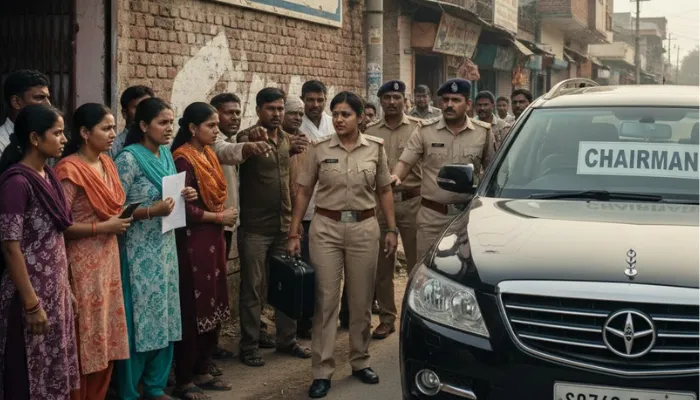
Case Summary
Hindu female students faced deception, harassment, and trafficking by a Muslim coaching centre operator, Mohammad Fantu, who concealed his identity by presenting himself as Aryan Singh, a Hindu. The incident happened in Manihai, Katihar district, Bihar. The case involved GAP Institute/Technology Welfare Trust, a private coaching institute operating in a remote area of Manihari. Students and staff at the institute were informed that the centre was run by a man named Aryan Singh. Investigations established that the real director and chairman of the institute was Mohammad Fantu, who had been operating the office for several months under the false Hindu name. Mohammad Fantu assumed the identity of Aryan Singh to interact with students and staff and presented himself publicly as the chairman. He travelled in a luxury vehicle with a board reading ‘Chairman’ and attracted students with promises of education, training, employment, and placement. Hindu female students and women working at the institute stated that Mohammad Fantu contacted them using the false name Aryan Singh, sent objectionable messages, and exerted continuous mental pressure. One woman employee accused him of inappropriate behaviour and sexual misconduct and approached the Manihari police station to submit a complaint. Following the complaint, efforts were made to suppress the matter. The complainant stated that a woman police officer posted at the Manihari police station, identified as Jeba, supported Mohammad Fantu and threatened her into withdrawing the complaint. The woman subsequently withdrew her initial complaint due to fear. After receiving support from her family, the complainant approached the Superintendent of Police of Katihar and presented a detailed account of the incidents. Acting on the directions of the Superintendent of Police, a formal case was registered at Manihari police station, and an investigation was initiated. The victims stated that under the guise of training programmes and educational tours, Hindu female students were taken to Purnia and later to Nepal. During these trips, the women were pressured to consume alcohol and were subjected to indecent behaviour. The students further stated that they were coerced into immoral activities during these visits. Police records showed that Mohammad Fantu faced charges including cheating, forgery, mental harassment, issuing threats to kill, establishing illicit relations by changing identity, and human trafficking. Following the registration of the case, Mohammad Fantu absconded, and police teams conducted raids to locate and arrest him. Hindu organisations treated the case as a serious issue and demanded strict administrative and legal action. The Superintendent of Police confirmed that the matter was under serious investigation and that action was being pursued against the accused.
Why it is Hate Crime ?
This case has been documented under the selected primary category: Crimes against women in relationships and other sexual crimes. Under this, the selected secondary category is: Man pretends to be Hindu. Under this, the selected tertiary category is: Name changed, Pattern of targeting Hindu women. When a non-Hindu man pretends to be a Hindu to deceive a Hindu woman into a relationship, the act is seen as triggered by malicious intentions. In some cases, the woman eventually accepts the man’s original religious identity and converts after the man’s identity is revealed. These cases could be argued as cases of religious brainwashing and a result of the pressure a woman feels after getting into a relationship with a man. The woman, it can be argued, also changed her religious identity because of the stigma she believes she might face if she chooses to walk out of a deceptive relationship. However, for the purpose of documenting hate crimes, the cases in this subcategory are limited to those where there is explicit violence aimed at religious conversion against the wishes of the victim (force-feeding beef, blackmailing with intimate videos, rape on refusal to convert, etc), or if the woman herself complains of the man’s religious deception. In such cases, it is established that the deception of the non-Hindu man had a specific aim of religious conversion or targeting of the victim due to her Hindu religious identity, therefore, making it a religiously motivated hate crime. Another selected secondary category is: Brainwashed and/or groomed. Under this, the selected tertiary category is: Rape and sexual assault/harassment, Victim says she was brainwashed/groomed. In our database, we have not added incidents where women have converted to another religion of their free will and no allegations of forced/involuntary conversion have been made. However, there are certain cases of conversion where the consent itself is a result of the brainwashing or grooming of a minor by the non-Hindu perpetrator trying to victimise a woman for her Hindu religious identity. The phenomenon of grooming points to non-Hindu perpetrators identifying their Hindu victims’ vulnerabilities and exploiting them over months and sometimes years, to extract the supposed ‘consent’ in order to convert their religion. In most cases of grooming, the victims are minors or the grooming started when the victim was a minor. In other cases of grooming, the non-Hindu perpetrator brainwashes and grooms a minor victim to extract their trust and then proceeds to rape them repeatedly with the intent of converting them to their faith. It is pertinent to understand here that when the victim is a minor, the ‘consent’ to convert or enter into a romantic relationship with an adult itself is redundant – addressed by POCSO. While every case of conversion of a minor and incidents of establishing a physical relationship with a minor by an adult are crimes, for this database, a case would be considered a hate crime only if there is a distinct religious angle to the grooming. For example, in the UK, if a Hindu minor is targeted by Pakistani grooming gangs, it would be considered a hate crime because the victims are specifically targeted owing to their non-Muslim religious identity, with the perpetrators being Muslim. In other cases, if a Hindu minor is brainwashed into entering a physical relationship with the non-Hindu adult perpetrator and the family alleges grooming/brainwashing of the minor to convert her religion, it would form a part of this database. If the victim is a Hindu adult, the case would form a part of this database only if the victim herself says that she was brainwashed/groomed to convert her religion. However, if the victim is deceased (murdered or otherwise), the case would form a part of this database if her family/friends provided testimony that the victim was brainwashed/groomed to convert her religion. Since these crimes have a distinct religious angle where the victim is being targeted owing to her Hindu religious identity, these cases are considered hate crimes. In this particular case, religion operated as the enabling condition of the offence rather than as a background detail. The sustained assumption of a Hindu identity allowed the accused to enter a social and educational space where religious belonging determined trust, credibility and safety. The victims were Hindu women whose consent, mobility and confidence were shaped by the belief that the person exercising authority belonged to their own religious community. The offence therefore began with a deliberate breach of religious trust. Secondly, the deception was structural and systematic. The false Hindu identity was embedded within an institutional framework and used to establish authority, legitimacy and control. By running a coaching institute under a Hindu name and projecting himself as its head, the accused converted religious disguise into an operational tool. This transformed individual deceit into organised exploitation directed at a specific religious community. Thirdly, the pattern of victimisation demonstrated selective targeting rather than random abuse. The movement from professional engagement to personal access, isolation and coercion relied on social permissions created by perceived shared religious identity. The offence exploited communal trust and cultural familiarity, not individual carelessness. The victims’ vulnerability arose precisely because religion functioned as a marker of safety. Fourthly, religious deception dismantled protective social barriers. The movement of Hindu female students, including travel across an international border, became possible because religious trust neutralised parental, social and cultural safeguards. Religion, therefore, functioned as the mechanism through which isolation, control, and exploitation were extended beyond local scrutiny. Fifthly, the intimidation surrounding the initial complaint intensified the harm and reflected the imbalance of power created by the offence. When a Hindu woman sought institutional protection, she encountered pressure and fear instead of safety. This secondary silencing deepened the original injury and reinforced isolation, a feature commonly associated with identity-based crimes. Finally, the consequences extended beyond the immediate victims and affected the wider Hindu community. The offence damaged communal trust, heightened fear for the safety of women and undermined confidence in educational spaces. The harm was therefore not confined to individuals but resonated collectively. Taken together, the offence involved deliberate religious deception, targeted selection rooted in communal identity and harm that extended beyond those directly affected. These elements established religious motivation, group-specific targeting, and community-level impact, which defined the offence as a religiously motivated hate crime. Disclaimer: The Hinduphobia Tracker records incident dates based on the date on which the offence occurred, rather than the date of media publication. In the present case, media reports did not specify the exact date on which the victim’s ordeal began. For documentation and record-keeping purposes, 18th January,2026 , the date on which the matter was reported in the media, was therefore used as the indicative incident date. Media sources used different names for the institution involved. Some reports referred to it as “GAP Institute”, while others described it as “Technology Welfare Trust”. As no authoritative clarification was available at the time of documentation, both names were retained to avoid confusion and to maintain transparency for readers. The number of victims recorded in this case was based strictly on the complaints formally acknowledged in the available reports. The exact number of females affected could not be independently verified. Given that the institution functioned as a coaching centre, the possibility that some victims were minors could not be ruled out. However, in the absence of verified evidence, no assumption regarding the number and age of victims was made.
Victim Details
Total Victim
1
Deceased
0
Gender
- Male 0
- Female 1
- Third Gender 0
- Unknown 0
Caste
- SC/ST 0
- OBC 0
- General 0
- Unknown 1
Age Group
- Minor 0
- Adult 1
- Senior Citizen 0
- Unknown 0


Case Status
Complaint filed


Perpetrators Details
Perpetrators
Muslim Extremists
Perpetrators Range
One Person
Perpetrators Gender
male
 Sources




