Hindu residents attacked by Muslim community during renovation of century-old Kali temple, threatened with conversion of area into Bangladesh
 Deogarh, Jharkhand, India
  17 January, 2026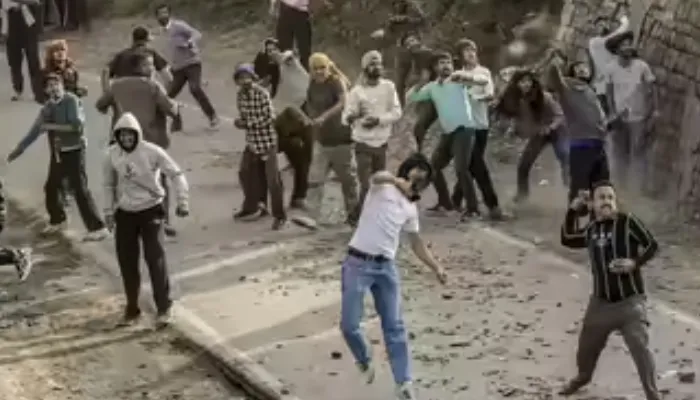
Case Summary
Hindu residents faced a one-sided violent attack by Muslim residents during the renovation of an old Kali temple in Lalgarh Mohalla, Madhupur police station area of Deoghar, Uttar Pradesh. The temple belonged to Dalit Hindus of the Rājāk community and had existed for over 100 years. Renovation efforts prompted objections from neighbouring Muslim families, who questioned why multiple temples were being built. The objections escalated into a violent assault on the Dalit Hindu families. Attackers, numbering in the hundreds, used sticks, rods, and stones. Named individuals among the mob included Akhtar, Rafiq, Tahiruddin, Fatima, and Shamima, with some women participating while wearing burqas. The attack specifically targeted Hindus, irrespective of gender and age, leaving several hospitalised. Seven people sustained serious injuries and were admitted to the Madhupur Subdivisional Hospital for treatment. During the assault, the attackers issued threats stating, "What we are doing to you is just a trailer... We will convert the entire area into Bangladesh. Just wait and watch." Residents explained how the Muslim population increased over time and has outnumbered the Hindus. Some residents said they were not allowed to perform pooja or even keep a photograph of their god, and that any religious activity caused conflicts, linking the threats to a larger plan for Hindu exodus. Tensions had emerged the night before the clash in connection with the temple renovation. The clash began when a young Hindu man was beaten during work on the temple renovation. The situation escalated, resulting in stone pelting, both as an attack and retaliation. Police and administrative officials promptly arrived at the scene, brought the situation under control, and strengthened security in the area. No arrests had been made at the time of reporting, and police continued to investigate and identify the attackers. Nishikant Dubey, Member of Parliament from Godda, issued a social media post questioning the role of Minister Hafizul Ansari. He wrote: "In Jharkhand, Hindus cannot even build a temple on their own land. Today's incident occurred in Lalgarh, Madhupur, my Lok Sabha constituency. Minister Hafiz Ansari's role should be investigated. Members of the Muslim community also targeted women and children. This is the true face of the Congress, Jharkhand Mukti Morcha, and Rashtriya Janata Dal." Police remained deployed at the site to prevent further incidents, while investigations continued to identify those responsible for the attack.
Why it is Hate Crime ?
This case has been documented under the selected primary category: Attack not resulting in death. Under this, the selected secondary category is: communal clash/attack. Communal clash is a form of collective violence that involves clashes between groups belonging to different religious identities. For a communal clash between Hindus and non-Hindus to qualify as a religiously motivated hate crime, the trigger of the violence itself would have to be anti-Hindu in essence. For example, if there is a Hindu religious procession that comes under attack from a non-Hindu mob, and after the initial attack, Hindus retaliate in self-defence, leading to a communal clash between the two religious communities. While at a later stage, both communities are involved in the clash/violence, the initial trigger of the violence was by the non-Hindu mob against the Hindus, and therefore, it could safely be termed as an anti-Hindu violence. Further, the trigger would also have to be religiously motivated. In the cited example, the attack by the non-Hindu mob was against religious processions and therefore can be concluded to be religiously motivated. In some cases, the trigger may be non-religious; however, it develops into religious violence against Hindus at a later stage. In such cases, too, the foundational animosity towards Hindus becomes the motivating factor of the crime, and therefore, it would be classified as a religiously motivated hate crime against Hindus under this category. Another selected secondary category is: Attacked for Hindu identity. In several cases, Hindus are attacked merely for their Hindu identity without any perceived provocation. A classic example of this category of religiously motivated hate crime is a murder in 2016. 7 ISIS terrorists were convicted for shooting a school principal in Kanpur because they got ‘triggered’ seeing the Kalava on his wrist and the tilak that he had put. In this, the Hindu victim had offered no provocation except for his Hindu religious identity. The motivation for the murder was purely religious, driven by religious supremacy. Such cases where Hindus are targeted merely for their religious identity would be documented as a hate crime under this category. Another selected secondary category is: Attacked to induce migration from non- Hindu dominated areas. There have been cases where the Hindus living in an area, often with a majority dwelling belonging to non-Hindus or those harbouring animosity towards the Hindu faith, the Hindu residents experience threats and violence. The violence is employed with the aim of making the Hindus leave the area and relocate, so the area could be turned into an exclusive ghetto for adherents of the non-Hindu faith or those who harbor animosity towards the Hindu faith. In several cases, the aim of exodus is explicit. However, in several cases, the demand for the exodus of Hindu residents is not explicit, however, violence by non-Hindu residents leaves the Hindu residents no option but to leave the area, thereby, turning the area into an exclusive ghetto of non-Hindu residents. In such cases, there are instances violence against the Hindu residents explicitly. For example, in the Hauz Qazi case of 2019, the Muslim residents claimed that mob violence against the Hindu residents had been triggered by a parking dispute. However, the violence did turn religious with a temple being desecrated and was directed specifically against the Hindu residents. The Hindu residents of the area were clear that the violence was religiously motivated and one of the motives was to affect an exodus of the Hindu residents. In such cases, even though the perpetrators have not explicitly expressed the aim of affecting exodus, the given circumstances and violence and precedent point to the intention of exodus and therefore would be categorised under this sub-category. Such crimes are religiously motivated and therefore are hate crimes. Another selected primary category is: Restriction/ban on Hindu practices. Under this, the selected secondary category is: Restriction on expression of Hindu identity. An example of the state-affected prejudicial and targeted orders against the Hindu community would be a government denying the right of a Hindu or a group of Hindus to hold a religious procession owing to the animosity of non-Hindu groups. Denial of the religious right of the Hindus to assuage the non-Hindu group, which harbours animosity to a point where it could lead to violence against Hindus, is not only a failure of law and order but is a prejudicial order against Hindus, denying them their fundamental rights to express their religious identity. An example of a hate crime against Hindus by a non-Hindu would be a non-Hindu institution forcing its Hindu employees to abandon religious symbols that a Hindu would wear as an expression of faith owing to inherent prejudice against the faith professed by the victim or a non-Hindu group of people restricting a Hindu group from constructing a place of worship simply because the demography of the area in which the temple is being built is dominated by non-Hindus. Such actions are driven by religious animosity and/or prejudice against Hindus and their faith and would therefore be categorised as a hate crime. The other category selected here is- Hate speech against Hindus, and, within this, the subcategory selected is- Violent Threats. Violent threats, explicit, implicit or implied, is the most dangerous form of hate speech since it goes beyond discriminatory and prejudicial language to express the intent of causing harm to an individual or a group of people based on their religious identity and faith. There could be several different kinds of threats that are issued to Hindus based on religious animosity. An explicit threat would mean the direct threat of violence towards an individual Hindu, a group of Hindus or Hindus at large. Physical violence, death threats, threats of destruction of property belonging to Hindus and threats of genocide would mean explicit threats against Hindus for their religious identity. Implicit threats may not be a direct threat but implied through the use of symbols of actions – for example – in the Nupur Sharma case, other than explicit threats, there were also implicit threats when Islamists took to the streets to burn and beat her effigies. It implies that they want to do the same to Nupur Sharma – thereby is considered an implicit threat. Violent threats can be delivered in person, through letters, phone calls, graffiti, or increasingly through social media and other online platforms. It would be important to understand that a threat – explicit or implicit, online or offline – to an individual who happens to be a Hindu does not qualify as a religiously motivated threat. Such a threat, while vile and dangerous, could be owing to non-religious reasons and/or personal animosity. To qualify as a religiously motivated threat, it would need to exhibit an indication that the individual is being targeted for religious reasons and/or owing to his/her religious identity as a Hindu. This incident is recorded as a hate crime because the violence was triggered by a Hindu religious act, the renovation of a Kali temple, and the attackers explicitly framed their hostility around Hindu religious presence in the area. Objecting to the renovation on the grounds of “why multiple temples are being built” is a direct marker of religious intolerance, because it targets the legitimacy of Hindu worship infrastructure itself, not any unlawful conduct. The assault then unfolded as identity-based targeting. A large mob attacked Hindu families with sticks, rods, and stones, injuring multiple people and sending several to the hospital. The victims were Dalit Hindus of the Rājāk community, which adds a vulnerability layer: a marginalised Hindu group attempting to preserve a local temple was met with coercion and collective violence aimed at enforcing dominance and deterring Hindu religious expression. The hate intent is further clarified by the threats issued during the attack. Statements such as “this is just a trailer” and the warning that the area would be turned into “Bangladesh” function as communal intimidation, signalling an agenda of demographic takeover, religious subordination, and forced displacement. These threats are not about a local dispute or construction nuisance; they are about asserting that Hindus will be pushed out and Hindu religious life will be curtailed. Accounts that Hindus were not allowed to perform pooja, keep religious images, or conduct routine worship without conflict indicate an environment of sustained suppression where Hindu practice is policed through fear. In such a setting, attacking a temple renovation serves a broader purpose: it communicates that even basic restoration of a century-old Hindu shrine will be met with violence, and it pressures the community into silence, compliance, or exit. For these reasons, the case is documented as religiously motivated violence targeting Hindus and a Hindu temple, with an added element of coercive intimidation against a Dalit Hindu community in a locality where Hindu religious expression is being challenged and suppressed through threats and mob violence. Disclaimer: The exact number of perpetrators involved in the violence was not known. Most reports referred to the presence of hundreds of individuals, while at least one source identified five named persons. For record-keeping purposes, the number of perpetrators was therefore marked within the range of ten to one hundred. The exact number of victims was also not fully established. What was clearly documented was that seven individuals sustained injuries and were taken to the hospital for treatment. Accordingly, the number of injured victims was recorded as seven.
Victim Details
Total Victim
7
Deceased
0
Gender
- Male 0
- Female 0
- Third Gender 0
- Unknown 7
Caste
- SC/ST 7
- OBC 0
- General 0
- Unknown 0
Age Group
- Minor 0
- Adult 7
- Senior Citizen 0
- Unknown 0


Case Status
Complaint filed


Perpetrators Details
Perpetrators
Muslim Extremists
Perpetrators Range
From 10 to 100
Perpetrators Gender
both
 Sources




