Hindu minority under siege as election rhetoric includes calls to destroy temples and expel Hindus
 Bangladesh
  17 January, 2026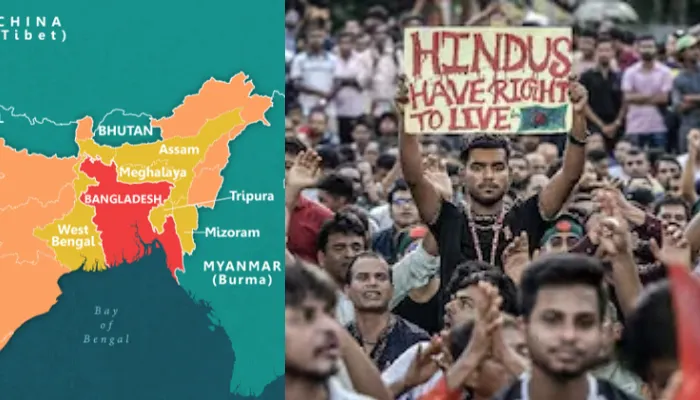
Case Summary
Hindu citizens, families and religious organisations faced hate speech, religious intimidation and direct threats by Islamic clerics ahead of the national elections in Bangladesh, creating fear among the Hindu minority community in several parts of the country. Videos circulated widely on social media ahead of the elections showed Islamic clerics and religious speakers delivering public announcements and sermons in which they declared that voting for Hindu candidates or any non-Muslim candidates was forbidden in Islam. The clerics described Hindus as 'Kafirs' and claimed that voting for them is “haram” and instructed Muslim voters not to support Hindu or non-Muslim candidates in the election. In multiple videos, clerics announced that supporting Hindus in elections was a religious offence and stated that being Hindu was the biggest crime. These announcements were made publicly and shared widely during the election period. In one video, a cleric standing on a public platform stated that Hindu temples were meant for destruction and that idols were meant for destruction. The same speaker declared that no Hindu could live in Bangladesh and that no International Society for Krishna Consciousness (ISKCON) organisation should remain in the country. During the same address, the cleric made anti-India remarks and stated that “Delhi’s brokers should go back to Delhi”. The announcements and speeches were described as alarming and were made in the context of the upcoming general elections scheduled for 12 February 2026. The videos circulated widely across social media platforms ahead of the polls. Reports stated that violence against Hindu minorities took place in the weeks preceding the election announcement. Within a period of forty-five days, fifteen incidents of violence against Hindus were recorded. Specific incidents of violence were detailed. A twenty-five-year-old Hindu man died in Naogaon district after jumping into a canal while attempting to escape an attacking mob. In another incident, Hindu businessman Mony Chakravarty was shot dead. Additional reports stated that seven to eight incidents occurred in recent weeks in which Hindus were killed through mob attacks and physical assaults. Indian government officials stated that extremist elements targeted Hindu citizens and Hindu business owners in Bangladesh and called on the Bangladesh government to ensure the safety and security of religious minorities. The government of the United Kingdom condemned violence in Bangladesh and urged that the national elections be conducted peacefully and credibly.
Why it is Hate Crime ?
This case has been documented under the selected primary category: Hate crime against Hindus. Under this, the selected secondary category is: Anti-Hindu slurs, mocking faith. Anti-Hindu slurs and the deliberate mocking of the Hindu faith owing to religious animosity involve the usage of derogatory terms, stereotypes, or offensive references to religious practices, symbols, or figures. One of the common anti-Hindu slurs used against Hindus is “cow-worshipper” and “cow piss drinker”. The intention of using this term is to demean and mock Hindus as a group and their religious beliefs since Hindus consider the cow holy. Additionally, some symbols and the slurs attached to them have a historical context that exacerbates the insult, hate, stereotyping, dehumanisation and oppression against Hindus. Cow worship has been used for centuries to denigrate Hindus, insult their faith and oppress Hindus specifically as a religious group. There has been overwhelming documentation about how cow slaughter has been used to persecute Hindus with cow meat being thrown in temples and places of worship. There has also been overwhelming documentation where cow meat (beef) has been force-fed to Hindus to either forcefully convert them to Islam or denigrate their faith. Apart from cow worship, the Swastika – which holds deep religious significance for the Hindus – has also been misinterpreted and distorted to use as a slur against Hindus. Similarly, the worship of the Shivling has been used by supremacist ideologies and religions to denigrate Hindus owing to religious animosity. Such slurs and denigration stem out of inherent animosity and hate towards Hindus and their faith, therefore, it is categorised as hate speech targeted at Hindus specifically owing to their religious identity. Another slected secondary category is: Violent threats. Violent threats, explicit, implicit or implied, is the most dangerous form of hate speech since it goes beyond discriminatory and prejudicial language to express the intent of causing harm to an individual or a group of people based on their religious identity and faith. There could be several different kinds of threats that are issued to Hindus based on religious animosity. An explicit threat would mean the direct threat of violence towards an individual Hindu, a group of Hindus or Hindus at large. Physical violence, death threats, threats of destruction of property belonging to Hindus and threats of genocide would mean explicit threats against Hindus for their religious identity. Implicit threats may not be a direct threat but implied through the use of symbols of actions – for example – in the Nupur Sharma case, other than explicit threats, there were also implicit threats when Islamists took to the streets to burn and beat her effigies. It implies that they want to do the same to Nupur Sharma – thereby is considered an implicit threat. Violent threats can be delivered in person, through letters, phone calls, graffiti, or increasingly through social media and other online platforms. It would be important to understand that a threat – explicit or implicit, online or offline – to an individual who happens to be a Hindu does not qualify as a religiously motivated threat. Such a threat, while vile and dangerous, could be owing to non-religious reasons and/or personal animosity. To qualify as a religiously motivated threat, it would need to exhibit an indication that the individual is being targeted for religious reasons and/or owing to his/her religious identity as a Hindu. This constituted a case of religiously motivated hate crime based strictly on the facts stated in the articles, set out clearly and assertively. It has multiple religious markers showing that Hindus were targeted as a community through dehumanising rhetoric, political exclusion, and threats of violence rooted in religious supremacy. A key marker is the explicit religious demonisation of Hindus. A cleric publicly labelled Hindus as “kafirs” and declared that voting for Hindu or non-Muslim candidates was “haram.” This language does not merely express disagreement but strips Hindus of equal moral and civic legitimacy. By framing Hindu identity as sinful or criminal, the rhetoric positions Hindus as unacceptable solely because of their religion. Closely linked to this is the call for religious and cultural erasure. Public speeches included declarations that Hindu temples and idols were meant to be destroyed and that no Hindu or ISKCON organisation should remain in the country. These statements directly target Hindu places of worship, sacred symbols, and religious institutions, signalling an intent to eliminate Hindu religious presence rather than coexist alongside it. The rhetoric also sought to exclude Hindus from democratic participation. Declaring that supporting Hindu candidates was forbidden framed Hindu political participation as illegitimate and sinful. This undermined the fundamental rights of Hindu citizens and attempted to push them out of public and political life through religious intimidation. Importantly, this hate speech coincided with real-world violence against Hindus, showing how dehumanising language translated into physical harm. During the same period, multiple Hindus were attacked and killed. The death of Dipu Chandra while fleeing a mob illustrates how portraying Hindus as kafirs and enemies lowers the threshold for violence. Other Hindu individuals and business owners were shot, assaulted by mobs, or killed in targeted attacks, all within an environment where clerics were openly asserting that Hindus should not be supported and should not belong. The repeated use of terms like “kafir” reflects a broader ideological framework in which non-Muslims are viewed as inferior or illegitimate unless they submit or convert. When combined with calls to boycott Hindus, destroy their temples, and deny them political rights, this ideology fosters an “us versus them” mindset that legitimises intimidation and violence. The overlap between extremist sermons and fatal attacks demonstrates a clear pattern where religious hate speech emboldens perpetrators and places the Hindu minority under direct threat. Taken together, the labelling of Hindus as kafirs, the declaration that supporting them is haram, calls for the destruction of temples and idols, efforts to exclude Hindus from democratic life, and the occurrence of lethal violence establish that the harm was directed at victims because they were Hindu. These markers confirm the religiously motivated nature of the conduct and justify its classification as a hate-driven attack on the Hindu minority. Disclaimer: The Hinduphobia Tracker recorded incident dates based on when the crime occurred rather than when it was reported by the media. In this case, media reports did not specify the exact date on which the victim’s ordeal began. Therefore, for documentation purposes, 17 January 2026, the date of media reporting, was recorded as the indicative incident date. Also, the number of perpetrators is marked as one; however, there are multiple such religious/political leaders who spread verbal hate. Including active influencers on social media and passive ones who help spread it.


Case Status
Unknown


Perpetrators Details
Perpetrators
Muslim Extremists
Perpetrators Range
One Person
Perpetrators Gender
male
 Sources




