Godhra Hindu massacre denied and whitewashed: Indian politician pushes false narratives, downplays religiously motivated violence
 Gujarat, India
  11 January, 2026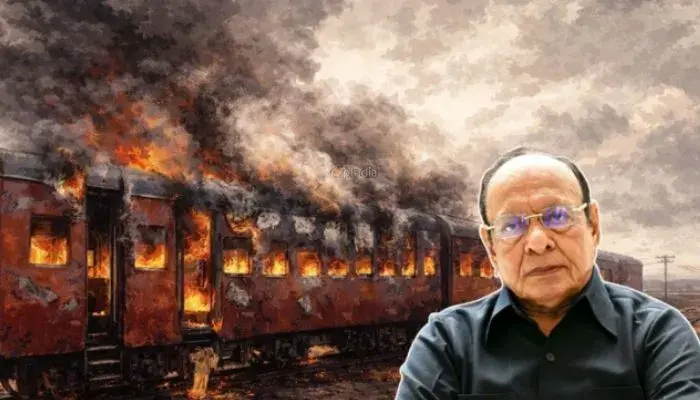
Case Summary
An instance of denial and distortion of anti-Hindu violence occurred after an Indian politician, Shankarsinh Vaghela, made publicly misleading statements regarding the 2002 Godhra Hindu massacre, absolving Muslims of responsibility and falsely claiming that the train was burnt from the inside. After retiring from active politics, former Gujarat Chief Minister Shankarsinh Vaghela began remaining active on social media and giving interviews to news channels. In most of his interviews, he always targets the BJP, Modi-Shah, and the Gujarat government on various issues. In one such interview conducted in January 2026, he deliberately made misleading and false statements regarding the 27 February 2002 Godhra Hindu massacre, in which 59 Hindu kar sevaks, including women and children, were locked and burnt alive inside the coach of the Sabarmati Express by a Muslim mob. However, Shankarsinh Vaghela, in an effort to absolve the Muslim community of the crime, claimed that the Sabarmati Express coach carrying Hindu kar sevaks was set on fire from inside as part of a political conspiracy intended to benefit the BJP. He also claimed that local Muslims did not know the train’s schedule or which coach the kar sevaks were present in and suggested that an insider had ignited the fire to provoke communal polarisation. He further added that the incident was orchestrated to create Hindu–Muslim enmity and to derive electoral advantage for the BJP by creating enmity between Hindus and Muslims. It is important to note here that these statements directly contradicted the findings of multiple investigative agencies and judicial proceedings conducted over two decades, including the conclusions upheld by the Supreme Court of India. Judicial records clearly established the fact that the attack on the kar sevaks in the Sabarmati Express at Godhra was premeditated and that the local Muslims had already planned and plotted the previous day, when they stockpiled stones and petrol for the attack. In fact, the court determined that this pre-planning allowed them to know the timings of the Sabarmati Express ' arrival at the station. They had locked two of its coaches from the outside and set them on fire, leading to the deaths of 59 Hindu kar sevaks, including 27 women and 10 children, who were returning from Ayodhya after performing kar seva. Several Muslim individuals were convicted and sentenced for the crime. Among those convicted over the years were Farooq Bhana and Imran Sheru (Imran Batuk), Yakub Pataliya and Rafik Bhatuk. The statements drew widespread criticism as they were made by a senior political figure with direct knowledge of the events and their legal adjudication. Thus, the viral dissemination of such false news was seen as contributing to misinformation and the distortion of a crime that killed 59 Hindu kar sevaks because of their Hindu identity, a crime that had already been conclusively examined and adjudicated by the courts.
Why it is Hate Crime ?
This case has been added to the tracker under the primary category of - Hate speech against Hindus. Within it, the sub-category selected is - Denial or mocking of genocide/large-scale persecution. Denial or mocking of genocide/large-scale persecution/ethnic cleansing refers to the act of denying or minimizing the fact of the ethnic cleansing and/or genocide and/or religious persecution of Hindus. This often involves denying the scale, mechanisms, religious intent, or even the occurrence of the ethnic cleansing and/or genocide and/or religious persecution of Hindus. Hate speech of this kind involves the dissemination of falsehoods that deny or distort established historical facts or mock the suffering of Hindus by saying that they deserved the persecution, motivated by Hinduphobia. Denying such atrocities is not only about the denial of facts or rewriting/revising history, but it also delegitimises the religiously motivated persecution of Hindus, the religious hate/motivation/animosity that led to the persecution, and dehumanises Hindus as a religious group. Such denial of ethnic cleansing and/or genocide and/or religious persecution of Hindus not only denies the suffering but also paves the way for future/present atrocities and hate speech, inciting prejudice and violence against Hindus. It also provides a justification for violence by delinking religious animosity from religiously motivated crimes committed against Hindus. Since such denial and/or mocking of genocide/ethnic cleansing/atrocities motivated by religious animosity leads to present and future ramifications of creating more hate speech, violence, dehumanisation and delegitimisation, it would be considered hate speech under this category. The other sub-category selected here is - Anti-Hindu subversion and prejudice, with the tertiary category being - Anti-Hindu Fake News or Downplaying and Mislabelling/Misrepresentation of perpetrator's religion as Hindu. Hate speech is defined as any speech, gesture, conduct, writing, or display that is prejudicial against a specific individual and/or group of people, which is leading to or may lead to violence, prejudicial action or hate against that individual and/or group. Media plays a specific and overarching reach in perpetuating prejudicial attitudes towards a community owing to unfair, untrue coverage and/or misrepresentation/misinterpretation, selective coverage and/or omission of facts of/pertaining to issues affecting a specific religious group. This type of bias can dehumanise the victim group, making it easier for others to justify harmful actions against them, which aligns with the objectives of hate speech laws aimed at preventing such harm. It is often observed that the media takes a prejudicial stand against the Hindu community driven by their need to shield the aggressor community which happens to be a numeric minority, however, is the one perpetrating violence against Hindus. For example, the media is often quick to contextualise religiously motivated crimes against Hindus, omit or misrepresent facts that point towards religiously motivated hate crimes, justify and/or downplay religiously motivated hate crimes or simply present fake news to stereotype Hindus. Such media bias leads to the denial of persecution and is often used to dehumanise Hindus, leading to justification for violence against them. For example, the media covered several fake allegations of Hindus targeting Muslims and forcing them to chant Jai Shree Ram. Most of these cases were proved false and fabricated after police investigation. These fake news reports were subsequently never retracted or clarified. Such fake news led to the justification of violence and dehumanisation of Hindus based on the argument that since Hindus targeted Muslims and forced them to chant Jai Shree Ram, the dehumanisation of Hindus and violence against them was par for the course and merely a retaliation. Such media bias leads to prejudicial portrayal of Hindus and offers a justification for violence against them and therefore, is considered hate speech under this category. This case has been added to the tracker because former Gujarat Chief Minister Shankarsinh Vaghela made public misleading statements denying and whitewashing the 2002 Godhra Hindu massacre. Vaghela claimed that the Sabarmati Express coach carrying Hindu kar sevaks was burnt from the inside and portrayed the massacre as a political conspiracy rather than a religiously motivated attack. By doing so, he absolved the Muslim perpetrators of responsibility and called the mass killing of Hindus an event manufactured for electoral gain. It is important to note here that the Godhra Hindu massacre of 27 February 2002 was a targeted act of religious violence against Hindus by members of the Muslim community. The victims were 59 Hindu kar sevaks, including 27 women and 10 children, who were returning from Ayodhya in the Sabarmati Express after performing kar seva. It was a premeditated conspiracy by the Muslim individuals, where they locked the door of the train coaches from the outside and set them on fire using petrol and other inflammable materials. The victims were killed solely because of their Hindu religious identity and their association with a religious pilgrimage. It should be noted that the person making these comments was not random individual or an uninformed observer. Shankarsinh Vaghela served as the Chief Minister of Gujarat and held senior political office during the period surrounding the Godhra massacre and its aftermath. As such, he possessed direct institutional knowledge of the incident, its investigations, and its legal trajectory. Multiple investigative agencies, including the Central Bureau of Investigation, as well as judicial processes in the Supreme Court of India, examined the Godhra case for over more than two decades. The Nanavati Commission and subsequent court proceedings conclusively rejected the theory that the coach was burnt from inside or that the incident was accidental or fabricated. The findings established a clear conspiracy involving local Muslim assailants who planned the attack in advance. Vaghela’s statements therefore directly contradicted settled facts that he was fully aware of, making it implausible to attribute his remarks to ignorance, confusion, or misinterpretation. By denying the established nature of the crime and shifting blame away from the Muslim perpetrators, Vaghela’s statements amounted to a denial of large-scale religious persecution of Hindus. This denial delegitimised the suffering of the victims and their families and functioned as a form of whitewashing of a religiously motivated crime. Such denial is not neutral speech; it actively erases the religious hatred that motivated the massacre. It also set a precedent that religiously motivated attacks against Hindus can be denied, downplayed, or politically reframed without consequence. Sharing such views in public or political spaces fuels dangerous stereotypes, which is why it qualifies as a hate crime and warrants inclusion in the Hinduphobia Tracker. Given Vaghela’s political experience and social stature, his remarks were intentional and calculated. They did not seek truth or accountability but instead attempted to shift blame away from the Muslim community to Hindu individuals and toward the BJP and the then Narendra Modi administration. This deliberate misrepresentation and dissemination of falsehoods fall squarely within the framework of hate speech against Hindus. It dehumanises Hindus by denying the targeted nature of their suffering and provides ideological cover for those who commit or justify religious violence against them. The statements align with a broader pattern of anti-Hindu subversion and prejudice, wherein crimes committed against Hindus are denied, rationalised, or erased to shield the aggressor community from scrutiny. By deflecting accountability from Muslim perpetrators despite overwhelming evidence, such act as both justification and incitement for further violence and hate against Hindus. This case also reflects a wider trend in which acts of terrorism and mass violence against Hindus are reframed, denied, or politically sanitised. This tendency stems from a deep-seated ideological contempt for Hindus and their faith. As a result, incidents where Hindus are threatened, assaulted or coerced by Islamist elements are either ignored or distorted to fit a narrative of Hindu guilt and Muslim victimhood. This narrative engineering is not accidental but rooted in an intrinsic hostility towards Hindu identity, which is viewed by such media as something that must be delegitimised, mocked, and weakened in order to uphold their so-called secular or progressive credentials. Over time, this pervasive hate has normalised the demonisation of Hindus while rationalising Islamist excesses as either justified or beyond criticism. Disclaimer: The Hinduphobia Tracker records incidents based on when an event occurred or when the victim's ordeal began. It is important to clarify that none of the media sources covering this case has specified the exact date when Shankarsinh Vaghela made these statements. Therefore, for documentation purposes, we have recorded the date based on when the incident was reported in the media, 12 January 2026.


Case Status
Unknown


Perpetrators Details
Perpetrators
Others
Perpetrators Range
One Person
Perpetrators Gender
male
 Sources




