Indian politician verbally abused and given death threats for advocating rights of Hindus in Bangladesh by Bangladeshi man
 Meerut, Uttar Pradesh, India
  4 January, 2026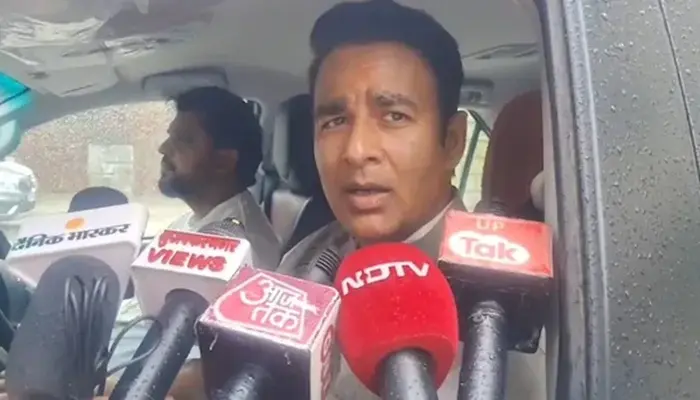
Case Summary
An indian politician named Sangeet Singh Som was verbally abused and given death threats for advocating the rights of Hindus in Bangladesh by a Bangladeshi man. According to reports, the incident occurred on 5 January 2026, when Sangeet Singh Som, a former BJP MLA from Sardhana in Meerut and a prominent political figure known for his outspoken positions on Hindu issues, received threatening calls and messages from a Bangladeshi phone number. The caller identified himself as a Bangladeshi citizen and contacted the mobile phone of the politician’s personal secretary, during which he used abusive language and issued explicit threats to kill Sangeet Som and his family. He further warned that he would target Som with a bomb and stated that national news channels would also be attacked. Following the incident, a written complaint was submitted at the Sardhana police station, and the phone number was handed over to the authorities. Meerut police initiated an investigation into the incident and began tracing the phone call and possible international linkages, while cyber and security agencies were placed on alert due to the cross-border nature of the threat. Security arrangements around Sangeet Som were heightened as the matter became public, triggering outrage among his supporters. In response, Sangeet Som stated that the threats were linked to his consistent public stance on violence against Hindus in Bangladesh and his earlier remarks criticising public figures associated with Bangladesh, asserting that he would continue to speak in defence of Sanatan Dharma and Hindu rights and would not withdraw his position despite the intimidation.
Why it is Hate Crime ?
This case has been added to the tracker under the primary category- Hate Speech against Hindus. The subcategory selected is- Violent Threats. Violent threats, explicit, implicit or implied, is the most dangerous form of hate speech since it goes beyond discriminatory and prejudicial language to express the intent of causing harm to an individual or a group of people based on their religious identity and faith. There could be several different kinds of threats that are issued to Hindus based on religious animosity. An explicit threat would mean the direct threat of violence towards an individual Hindu, a group of Hindus or Hindus at large. Physical violence, death threats, threats of destruction of property belonging to Hindus and threats of genocide would mean explicit threats against Hindus for their religious identity. Implicit threats may not be a direct threat but implied through the use of symbols of actions – for example – in the Nupur Sharma case, other than explicit threats, there were also implicit threats when Islamists took to the streets to burn and beat her effigies. It implies that they want to do the same to Nupur Sharma – thereby is considered an implicit threat. Violent threats can be delivered in person, through letters, phone calls, graffiti, or increasingly through social media and other online platforms. It would be important to understand that a threat – explicit or implicit, online or offline – to an individual who happens to be a Hindu does not qualify as a religiously motivated threat. Such a threat, while vile and dangerous, could be owing to non-religious reasons and/or personal animosity. To qualify as a religiously motivated threat, it would need to exhibit an indication that the individual is being targeted for religious reasons and/or owing to his/her religious identity as a Hindu. This case has been added to the tracker because the threats and abuse directed at Sangeet Singh Som were explicitly rooted in hostility towards his advocacy for Hindu rights and his public stance on violence against Hindus in Bangladesh. The accused deliberately targeted Som due to his identity as a Hindu leader and his vocal defence of Sanatan Dharma, using abusive language and issuing death and bomb threats as a means of intimidation. Issuing violent threats of this nature to a Hindu individual solely for advocating Hindu rights revealed the perpetrator’s deep-seated hatred towards the Hindu community. These threats did not arise from a random act of crime or opportunity but were driven by religious animosity towards Hindus, making this a clear case of a religiously motivated offence. The nature of the threats, which extended beyond personal harm to include threats against Som’s family and national news channels, reflected a deliberate intent to terrorise and silence voices speaking on Hindu issues. The cross-border origin of the threats further intensified the seriousness of the incident, indicating a calculated effort to instil fear through the threat of extreme violence. The conduct of the accused demonstrated a clear intention to intimidate and punish the Hindu community for its religious identity, disrupt communal harmony, and deter public advocacy for Hindu causes, thereby fulfilling the criteria of a hate-driven act targeting the wider Hindu community through fear and coercion. It is important to understand that a fresh wave of anti-Hindu violence had prevailed across Bangladesh following the death of Sharif Osman Bin Hadi. This escalation occurred against the backdrop of sustained anti-Hindu persecution that had continued since the ouster of the Sheikh Hasina government in August 2024. In the aftermath of Hadi’s death, Hindu neighbourhoods were selectively targeted by Muslim mobs, homes were set on fire, families were forced to flee, and many were rendered homeless. The violence followed a clear pattern of targeting Hindu properties, religious symbols, and individuals with impunity. Among the victims was a Hindu man, Dipu Chandra Das, who was brutally lynched by a Muslim mob over false allegations of blasphemy, illustrating the extreme vulnerability of the Hindu minority amid rising communal hostility. Public displays of posters and written material calling for the extermination of Hindus further reflected the normalisation of genocidal rhetoric alongside physical violence, arson, and vandalism.
Victim Details
Total Victim
1
Deceased
0
Gender
- Male 1
- Female 0
- Third Gender 0
- Unknown 0
Caste
- SC/ST 0
- OBC 0
- General 1
- Unknown 0
Age Group
- Minor 0
- Adult 1
- Senior Citizen 0
- Unknown 0


Case Status
Complaint filed


Perpetrators Details
Perpetrators
Unknown
Perpetrators Range
One Person
Perpetrators Gender
male
 Sources




