Hindu temple targeted with demolition threat; Hindu activists attacked by Muslim mob for protesting
 Firozabad, Uttar Pradesh, India
  10 January, 2026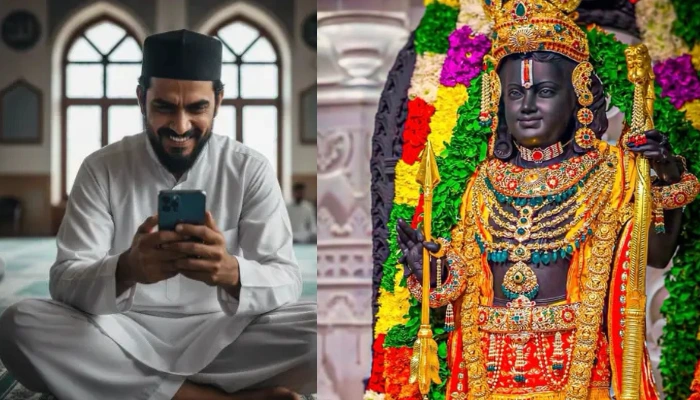
Case Summary
In the village of Dori in Firozabad, Uttar Pradesh, a violent threat of demolishing the Ram Janmabhoomi temple, a revered Hindu temple in Ayodhya, was made by a Muslim man named Rashid Khan. Following this, when Hindu activists opposed this act, they were attacked by a Muslim mob. According to reports, tension brewed in the village of Dori in Firozabad after Rashid Khan, a resident of the village, posted on Facebook about the demolition of the Ram Temple. He stated that when a Muslim becomes the Prime Minister of India, the Ram Temple would be demolished. This Facebook comment quickly went viral, and Bajrang Dal activists, a Hindu organisation, became aware of it. On 11th January 2026, Bajrang Dal activists arrived in the village accompanied by some police officers. They then engaged in an argument with some members of the Muslim community. The Muslim mob then surrounded the Bajrang Dal activists and began pelting stones at them. The Bajrang Dal activists fled to the fields to save their lives. Three Hindu activists were injured in the incident. Even the motorcycles of Bajrang Dal activists were damaged by Muslims. Following the incident, a large police force was deployed in the village. Upon receiving information about the incident, Tundla Superintendent of Police Amrish Kumar arrived at the scene and began investigating the matter. On getting information about the situation, a sub-inspector and some constables from Narkhi police station also reached the spot in a police vehicle. As per the police, a discussion was going on regarding the objectionable post on the Ram Temple by a youth of the village, when people of the Muslim community surrounded the Hindu activists from all sides and suddenly started pelting stones. The sudden stone pelting created a stampede at the spot. The policemen present at the spot also had to defend themselves from the Muslim mob. Notably, the Ayodhya Ram Janmabhoomi is a site in Uttar Pradesh deeply revered by Hindus as the birthplace of Lord Rama, considered an incarnation of Vishnu and a central figure in the Hindu faith. The temple held immense religious and cultural significance, existing on this sacred land for centuries before being desecrated in 1528. At that time, the Mughal emperor Babur ordered the destruction of the original temple and the construction of Babri Masjid on its ruins, causing generations of dispute and pain within the Hindu community. Hindus endured decades of legal and social hardships, fighting relentlessly in courts for the right to reclaim and restore their holy site. Their struggle ended with the Supreme Court of India’s verdict in 2019, legally restoring the site to the Hindu community and permitting the temple’s consecration.
Why it is Hate Crime ?
This case is being recorded in the Hinduphobia Tracker under the primary category- Hate Speech against Hindus. Within this, the sub-category selected is- Violent threats. Violent threats, explicit, implicit or implied, is the most dangerous form of hate speech since it goes beyond discriminatory and prejudicial language to express the intent of causing harm to an individual or a group of people based on their religious identity and faith. There could be several different kinds of threats that are issued to Hindus based on religious animosity. An explicit threat would mean the direct threat of violence towards an individual Hindu, a group of Hindus or Hindus at large. Physical violence, death threats, threats of destruction of property belonging to Hindus and threats of genocide would mean explicit threats against Hindus for their religious identity. Implicit threats may not be a direct threat but implied through the use of symbols of actions – for example – in the Nupur Sharma case, other than explicit threats, there were also implicit threats when Islamists took to the streets to burn and beat her effigies. It implies that they want to do the same to Nupur Sharma – thereby is considered an implicit threat. Violent threats can be delivered in person, through letters, phone calls, graffiti, or increasingly through social media and other online platforms. It would be important to understand that a threat – explicit or implicit, online or offline – to an individual who happens to be a Hindu does not qualify as a religiously motivated threat. Such a threat, while vile and dangerous, could be owing to non-religious reasons and/or personal animosity. To qualify as a religiously motivated threat, it would need to exhibit an indication that the individual is being targeted for religious reasons and/or owing to his/her religious identity as a Hindu. Another primary category selected in this case is- Attack not resulting in death. The sub-category selected is- Attacked for opposing radicals or trying to save victim. In several cases, Hindus are attacked for opposing religiously motivated crimes being committed against a fellow Hindu or simply for voicing an opinion opposing radical elements, who either have in the past or continue to persecute Hindus. In such cases, the initial attack against the victim, against which the Hindu was trying to defend the victim, would also need to be classified as a religiously motivated hate crime. Since the initial crime itself was religiously motivated and the subsequent crime of attempting to save the victim or speaking against the radical elements ends up inviting a violent attack, it would also be classified as a religiously motivated hate crime under this category. In this case, it is vital to state that the Ram Janmabhoomi Temple in Ayodhya holds profound religious importance for Hindus as the believed birthplace of Lord Ram, Hinduism's revered deity and embodiment of virtue and dharma. A Hindu temple stood at this sacred site for centuries, serving as the spiritual heart of Hindu worship and community life. In 1528, Mughal emperor Babur ordered its desecration and demolition, erecting the Babri Masjid on its ruins. This brutal erasure of Hindu religious heritage inflicted a generational wound on the community. For Hindus, temples are living sanctuaries for devotion, festivals, gatherings, divine presence, and cultural preservation. The site's reclamation, after relentless legal and social struggle culminating in the Supreme Court's landmark 2019 verdict, restored justice and dignity to wounded Hindu generations. In this incident, the Muslim accused Rashid Khan fully knew the Ram Temple's unparalleled significance as a sacred worship site and emblem of Hindu resilience, yet he issued brazen threats to demolish it. This assault targeted and shredded the collective dignity and heritage of Hindus, fuelled by venomous religious animosity. His words brimmed with hatred for the Hindu faith, unequivocally amounting to religiously motivated hate speech. The accused chillingly declared that once a Muslim becomes the Prime Minister of India, the temple would be razed, flaunting dreams of religious dominance. This poisonous rhetoric championed the abuse of political power by Muslims to annihilate Hindu temples, bearing a profound animosity that wounds devotees who cherish Ram Janmabhoomi as Lord Ram's sacred birthplace. When threats target Hindu temples, especially the Ram Janmabhoomi Temple that Babur's forces had already demolished centuries ago, the accused's fresh vow to raze it reignites raw fear and insecurity among Hindus. This menacing revival of past atrocities warns that their sacred sites and faith stand perpetually at risk of violation, robbing the community of peace and spiritual security. When Hindu activists arrived to engage with the Muslim community over this incendiary threat, savagery erupted: a violent Muslim mob hurled stones at them rather than opposing the radical Muslim youth, Rashid. This ferocious assault on Hindus for daring to resist exposed a pattern of shielding Muslim perpetrators, brutalising innocent Hindu victims in the process. Such acts stemmed from deep-seated animosity towards Hindus and their faith, amounting to a clear instance of a religiously motivated offence. Both the hate speech and mob violence constituted brazen, religiously motivated hate crimes, targeting Hindus for their faith and identity. Therefore, this case was duly added to the hate crime database of the Hinduphobia Tracker. Disclaimer: The Hinduphobia Tracker records dates of incidents based on when a crime occurs, rather than when the media reports it. In this case, reports did not specify the exact date of the crime. They mentioned only one date, 11th January 2026, when Hindu activists arrived in the village to confront the Muslim community over the accused's actions and faced the attack. Henceforth, 11th January 2026 is used as the indicative date of the incident for documentation purposes only. In this case, although the Muslim mob also perpetrated the attack on Hindu activists, reports did not specify their exact number, naming only one accused, Rashid Khan. Therefore, only the accused, Rashid, is documented as the perpetrator, with the perpetrator count recorded as one (1).
Victim Details
Total Victim
3
Deceased
0
Gender
- Male 0
- Female 0
- Third Gender 0
- Unknown 3
Caste
- SC/ST 0
- OBC 0
- General 0
- Unknown 3
Age Group
- Minor 0
- Adult 0
- Senior Citizen 0
- Unknown 3


Case Status
Unknown


Perpetrators Details
Perpetrators
Muslim Extremists
Perpetrators Range
One Person
Perpetrators Gender
male
 Sources




