Sacred Hindu temple land targeted for encroachment and unauthorised construction in Mainpuri, Uttar Pradesh
 Mainpuri, Uttar Pradesh, India
  6 January, 2026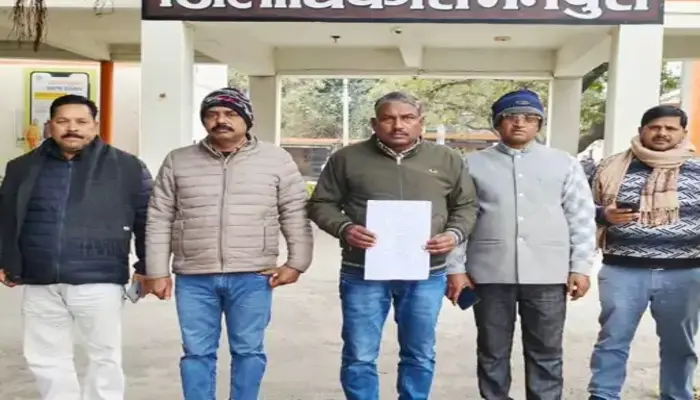
Case Summary
In Alipur Kheda Gram Panchayat of Mainpuri district, Uttar Pradesh, land belonging to a Hindu temple was encroached upon after the village head, Sant Prakash Swarnkar, who initiated unauthorised construction on temple property through the formation of a private trust. According to reports, the village head, Sant Prakash Swarnkar, initiated construction of shops on the premises of the ancient Gama Devi Temple, despite the land being traditionally associated with and recognised as temple property measuring approximately 14 biswa. Hindu residents stated that construction work was earlier stopped following a complaint submitted to the Sub-Divisional Magistrate, yet the illegal construction resumed on 7 January 2026 without any approval. The accused took control of the temple land through the formation of a private trust registered in the name of the temple, in which the village head appointed himself as president and included his son, uncle, nephews, and nieces as office bearers, effectively concentrating authority within his immediate family. Social activist Shivcharan Rajput informed officials that villagers were misled into believing the trust represented broader community interests, while in practice it remained dominated by the village head’s relatives. Therefore, villagers approached the District Magistrate and submitted a complaint, raising objections about illegal construction activities carried out on land belonging to the ancient Gama Devi Temple. Bhogaon SDM Sandhya Sharma stated that the matter was being investigated thoroughly, and further action would be taken based on the findings.
Why it is Hate Crime ?
This case has been documented under the primary category: Attack on Hindu religious representations. Under which, the secondary category selected is: Encroachment or illicit takeover of temple land/land near the temple. In Hinduism, a temple is the abode of the Deity. The Deity in the Temple is consecrated, thereby, making it a real, breathing entity. Hindus believe that not just the Deity but the temple premises itself are sacred to Hindus since Hindus hold the faith that the entire Temple space is an amalgamation of the divine energy of the deity. Not only the Temple but the Temple premises in its entirety are considered sacred by Hindus. In several cases, the premises of the Temple and/or religious centre are illicitly taken over by institutions belonging to other faiths – like the Waqf board or the Church. Other times, the temple property, land or the property of religious centres are illicitly encroached by non-Hindu groups. Any illicit take over or encroachment is a crime an initio, however, when non-Hindu groups illicitly take over or encroach the sacred land of Hindus, it is an affront to the Hindu community and is therefore classified as a religiously motivated hate crime under this category. This case has been added to the tracker because land belonging to the ancient Gama Devi Temple in Alipur Kheda Gram Panchayat was encroached upon and subjected to unauthorised construction, constituting a direct violation of the sanctity of a Hindu place of worship. The temple land was traditionally associated with and recognised as temple property, yet construction activity was initiated on the premises without lawful approval, despite prior administrative intervention to halt such activity. The temple land or areas around the sacred space are not simply a piece of property; they hold profound religious significance for the Hindu community. For Hindus, both the temple and its land are regarded as the abode of the deity. Thus, any form of encroachment or seizure of temple land is an attack on the religious rights and sentiments of Hindus, disrupting their ability to worship and to maintain their sacred spaces. Any unauthorised occupation or illegal construction in this space, especially one that halts worship and religious observance, is a violation of that sanctity. Such actions amount to a targeted violation of a Hindu religious site and its associated land and therefore qualify as a hate crime due to their religious impact and the deliberate targeting of a sacred Hindu space. Disclaimer: Villagers reported that the perpetrators resumed the illegal construction on 7 January 2026, though it was not stated when the temple encroachment began. While media coverage of the incident emerged on 9 January 2026, the Hinduphobia Tracker records the incident based on when the victim’s ordeal began or when the incident occurred, not when it was reported. Thus, the date of the incident has been recorded as 7 January 2026.


Case Status
Complaint filed


Perpetrators Details
Perpetrators
Others
Perpetrators Range
One Person
Perpetrators Gender
male
 Sources




