Attack on Hindu sentiments: Indian politician makes derogatory remarks against revered Hindu deity, calls for ban on "Jai Shri Ram" slogan
 Shivpuri, Madhya Pradesh, India
  5 January, 2026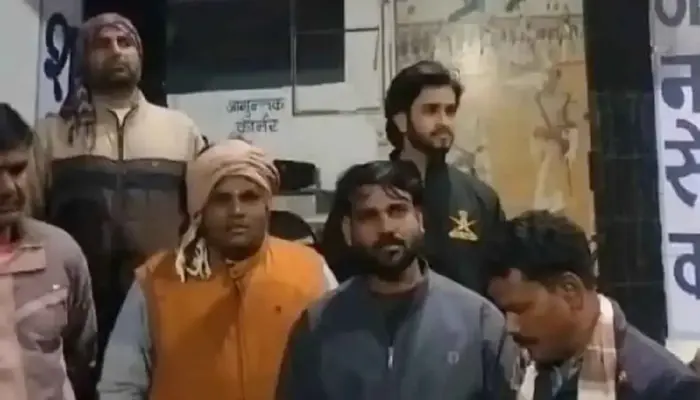
Case Summary
In the Shivpuri district, Madhya Pradesh, Hindu sentiments were insulted after Ramniwas Dhakad, Kisan Congress President of the Kharai block, made derogatory remarks against the Hindu deity Lord Ram and questioned the use of the slogan “Jai Shri Ram,” urging backward communities to refrain from using it. According to reports, in January 2026, a social media post made by Ramniwas Dhakad triggered significant political and religious unrest in the Kolaras area. The accused made a post, which was published on 6 January 2026, from his Facebook account, containing provocative remarks about Lord Shri Ram. He also questioned the use of the slogan “Jai Shri Ram,” calling for a ban on the slogan and urging members of the OBC community to stop using it. The post quickly went viral on social media and provoked strong reactions from the Hindu community, who viewed the remarks as offensive and provocative towards their religious beliefs. Subsequently, activists from the Vishwa Hindu Parishad and Bajrang Dal, two Hindu organisations, mobilised in large numbers and reached the Kolaras police station on 7 January 2026. They raised slogans condemning the remarks and stated that the post amounted to a direct insult to Lord Shri Ram and an intentional attempt to disturb communal harmony. The organisations submitted a written complaint to the police station in charge, along with screenshots of the social media post. As the controversy intensified, Ramniwas Dhakad deleted the post from his social media account, though the screenshots had already been secured and presented to the police. Protesters maintained that deleting the post did not nullify the offence and continued to press for strict legal action. Leaders of the Hindu organisations warned that failure to act promptly would result in intensified protests, stating that such comments contributed to social disharmony and could not be tolerated. Kolaras police station in-charge Gabbar Singh Gurjar confirmed that a written complaint and supporting material had been received and that an investigation was underway regarding the incident. He stated that further legal steps would be taken based on the findings of the investigation.
Why it is Hate Crime ?
This case is being added to the tracker under the primary category- Hate Speech against Hindus. The subcategory selected is- Anti-Hindu slurs, mocking faith. Anti-Hindu slurs and the deliberate mocking of the Hindu faith owing to religious animosity involve the usage of derogatory terms, stereotypes, or offensive references to religious practices, symbols, or figures. One of the common anti-Hindu slurs used against Hindus is “cow-worshipper” and “cow piss drinker”. The intention of using this term is to demean and mock Hindus as a group and their religious beliefs since Hindus consider the cow holy. Additionally, some symbols and the slurs attached to them have a historical context that exacerbates the insult, hate, stereotyping, dehumanisation and oppression against Hindus. Cow worship has been used for centuries to denigrate Hindus, insult their faith and oppress Hindus specifically as a religious group. There has been overwhelming documentation about how cow slaughter has been used to persecute Hindus with cow meat being thrown in temples and places of worship. There has also been overwhelming documentation where cow meat (beef) has been force-fed to Hindus to either forcefully convert them to Islam or denigrate their faith. Apart from cow worship, the Swastika – which holds deep religious significance for the Hindus – has also been misinterpreted and distorted to use as a slur against Hindus. Similarly, the worship of the Shivling has been used by supremacist ideologies and religions to denigrate Hindus owing to religious animosity. Such slurs and denigration stem out of inherent animosity and hate towards Hindus and their faith, therefore, it is categorised as hate speech targeted at Hindus specifically owing to their religious identity. This case has been added to the tracker as it represents a clear instance of anti-Hindu hate speech and deliberate provocation of Hindu religious sentiments by Ramniwas Dhakad, through social media. Ramniwas Dhakad, Kisan Congress President of the Kharai block in Shivpuri district, publicly targeted a core expression of Hindu faith by questioning, ridiculing, and calling for a ban on the slogan “Jai Shri Ram,” while urging members of the OBC community to stop using it. “Jai Shri Ram” is not a political chant but a deeply sacred invocation for Hindus, symbolising devotion to Lord Ram, an embodiment of dharma, righteousness, and moral order. It translates to "Victory to Lord Ram" and holds profound significance for Hindus as a devotional chant honouring Lord Ram, the seventh avatar of Vishnu. Thus, any attempt to delegitimise or suppress its usage constitutes a direct attack on Hindu religious expression. By singling out the slogan and calling for the OBC community to stop using it, the accused sought to frame a Hindu religious expression as illegitimate or objectionable. This was not an isolated or casual remark, but a calculated intervention aimed at creating internal fault lines within Hindu society by weaponising caste identities. The intent behind such actions was to weaken the unity of Hindu society and divide it along caste lines by suppressing Hindu religious identity, which transcends caste distinctions and promotes unity. The accused also made provocative remarks against Lord Ram, a revered Hindu deity. For Hindus, their deities are central to the Hindu religion and are held in high regard. Any attempt to mock or abuse them reflects outright religious animosity towards Hinduism. In this case, the derogatory comments were a direct assault on the sanctity of the Hindu faith. This was not a spontaneous or misguided act, but a calculated and premeditated attempt to destabilise Hinduism and the wider Hindu community. Such actions are rarely isolated; they form part of a persistent pattern aimed at disrespecting the Hindu faith, driven by entrenched hostility and contempt for Hindus and their beliefs. This incident fits into a broader pattern where Hindu religious symbols, chants, and deities are selectively targeted for ridicule or suppression under the guise of social reform or political commentary. Such narratives contribute to the normalisation of contempt towards Hindu beliefs, embolden further hostility, and create an environment where Hindus are discouraged or intimidated from openly expressing their faith. Here, the intentional targeting of a revered Hindu deity and suppression of Hindu religious expression firmly categorise this incident as religiously motivated hate speech. Therefore, this incident is being recorded in the Hate Crime Database of the Hinduphobia Tracker.


Case Status
Complaint filed


Perpetrators Details
Perpetrators
Others
Perpetrators Range
One Person
Perpetrators Gender
male
 Sources




