Hindu sentiments outraged as Muslim man makes derogatory remarks against Hinduism on social media
 Mahasamund, Chhattisgarh, India
  9 January, 2026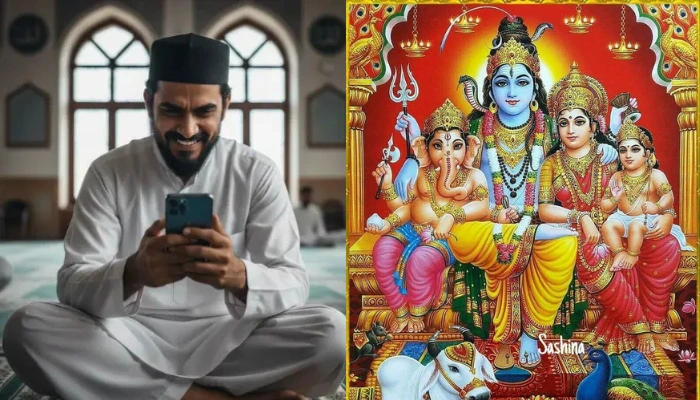
Case Summary
In the Saraipali area of Basna, Mahasamund, Chhattisgarh, Hindu religious sentiments were outraged as a Muslim man named Ibrahim made derogatory remarks against the Hindu faith on social media. According to media reports, this incident is related to a WhatsApp group belonging to an Indian political organisation, in which the accused, Ibrahim, made derogatory remarks about the Hindu religion. As soon as the comment surfaced, anger spread among the local Hindu community and various Hindu organisations. Mahendra Sao, the provincial general secretary of the All India Hindu Council, described the matter as serious and filed a written complaint at the Basna police station. In the complaint, he demanded strict legal action against Ibrahim. Mahendra Sao said that such comments not only hurt religious sentiments but also create an atmosphere of animosity and tension in society. He further said, "Hindu society has always been tolerant, liberal and peace-loving, but some anti-social elements take wrong advantage of this tolerance and repeatedly make objectionable comments on Hindu deities and faith. Hindu society will not tolerate any kind of tampering with its faith." Meanwhile, the police administration confirmed receiving the complaint and stated that the matter was being investigated, and further legal action would be taken based on facts.
Why it is Hate Crime ?
This case is being added to the tracker under the primary category- Attack on Hindu religious representations. The subcategory selected is- Anti-Hindu slurs, mocking faith. Anti-Hindu slurs and the deliberate mocking of the Hindu faith owing to religious animosity involve the usage of derogatory terms, stereotypes, or offensive references to religious practices, symbols, or figures. One of the common anti-Hindu slurs used against Hindus is “cow-worshipper” and “cow piss drinker”. The intention of using this term is to demean and mock Hindus as a group and their religious beliefs since Hindus consider the cow holy. Additionally, some symbols and the slurs attached to them have a historical context that exacerbates the insult, hate, stereotyping, dehumanisation and oppression against Hindus. Cow worship has been used for centuries to denigrate Hindus, insult their faith and oppress Hindus specifically as a religious group. There has been overwhelming documentation about how cow slaughter has been used to persecute Hindus with cow meat being thrown in temples and places of worship. There has also been overwhelming documentation where cow meat (beef) has been force-fed to Hindus to either forcefully convert them to Islam or denigrate their faith. Apart from cow worship, the Swastika – which holds deep religious significance for the Hindus – has also been misinterpreted and distorted to use as a slur against Hindus. Similarly, the worship of the Shivling has been used by supremacist ideologies and religions to denigrate Hindus owing to religious animosity. Such slurs and denigration stem out of inherent animosity and hate towards Hindus and their faith, therefore, it is categorised as hate speech targeted at Hindus specifically owing to their religious identity. This case exemplifies religiously motivated hate speech, as the Muslim accused, Ibrahim, deliberately made derogatory remarks against Hinduism on social media. The incident unfolded within a WhatsApp group affiliated with an Indian political organisation, a platform designed for broad dissemination among members. By choosing this public forum, Ibrahim ensured his inflammatory comments reached multiple recipients, amplifying their reach far beyond a private conversation. This calculated choice underscores his intent to provoke widespread outrage and inflict maximum harm on Hindu religious sentiments. Hinduism stands as one of the world's most prominent faiths, embraced by millions of devotees globally, and denigrating its core beliefs constitutes a direct assault on the collective identity of its followers. Such targeted vilification reveals a malicious purpose to wound the Hindu community profoundly, rendering this a textbook instance of religiously motivated hate speech rooted in anti-Hindu hostility. The precise wording of Ibrahim's statement remains unavailable in public reports, yet the immediate fallout speaks volumes about its severity. A formal complaint lodged by Mahendra Sao, provincial general secretary of the All India Hindu Council, sparked instant fury across Hindu organisations and the local community in Mahasamund, Chhattisgarh. This visceral reaction confirms the remarks' potency in denigrating Hinduism, striking at the heart of deeply held spiritual convictions of the Hindu community. When such remarks against Hinduism are made on social media, they instantly embolden others to follow suit, sparking a cascade of similar abuses that amplify hatred and animosity towards Hinduism and the Hindu community. This viral contagion normalises derision of sacred Hindu traditions, deities, and practices, drawing in opportunistic trolls who pile on without restraint. The resulting echo chamber entrenches prejudice, portraying Hindus as fair game for mockery and division. Such escalation transforms isolated barbs into widespread hostility, making it a clear case of anti-Hindu aggression designed to erode communal harmony. Social media in general has devolved into a hub of anti-Hindu vitriol, inundated with derogatory memes, comments, and images that relentlessly mock and abuse Hinduism, its deities, and its revered scholars. These coordinated assaults permeate platforms daily, transforming sacred icons into punchlines and caricatures. This pervasive pattern of anti-Hindu hate speech constitutes clear instances of online Hinduphobia, inflicting profound hurt on Hindu sentiments and rendering the community a perpetual target for ridicule and abuse. Since this case meets the parameters of a religiously motivated offence, it is being added to the hate crime database of the Hinduphobia Tracker. Disclaimer: The Hinduphobia Tracker records the dates of incidents based on when the crime occurs, not when it is reported by the media. However, in this case, media reports have not stated the exact date when the accused made denigrating remarks against Hinduism. Hence, the date when the media published this report, that is, 9th January 2026, has been selected as the indicative date of the incident. This is documented for record-keeping purposes.


Case Status
Complaint filed


Perpetrators Details
Perpetrators
Muslim Extremists
Perpetrators Range
One Person
Perpetrators Gender
male
 Sources




