Hindu woman gang-raped and tied to a tree, her hair cut off by Muslim men in Bangladesh amidst ongoing persecution of Hindus
 Jhenaidah District, Bangladesh
  2 January, 2026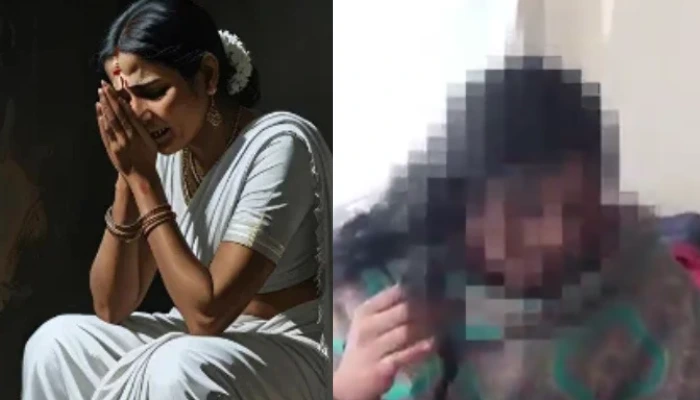
Case Summary
In Jhenaidah’s Kaliganj municipality in Bangladesh, a 40-year-old Hindu widow was gang-raped at the hands of two Muslim men, Shahin and Hasan. The perpetrators also tied her to a tree, cut off her hair and physically assaulted her relatives. Reports also confirmed that the accused had subjected the victim to prolonged harassment. According to media reports, nearly two and a half years ago, the victim from Kheda Para village in Kaliganj Upazila legally purchased a two-storey house and three decimals of land on the riverbank area of Ward No. 7 for BDT 20 lakh. The property was bought from the two Muslim accused, Shahin and his brother Hasan, local residents of the area. Following this, Shahin soon began making unwanted advances and repeated indecent proposals to the victim. When she firmly refused, he escalated to systematic harassment, intimidation, and threats, exploiting her vulnerability as a widowed woman living alone to impose control and instil fear. On 3 January 2026, some relatives of the victim had come from her native village to visit her home. Taking advantage of the moment, Shahin and Hasan forcibly entered the woman's house and raped the Hindu victim, one after the other. After the assault, they demanded BDT 50,000 from her. When she refused to comply, the perpetrators brutally attacked her visiting relatives and drove them out of the house, ensuring the woman was left isolated and silenced. When the victim screamed and resisted the crime, Shahin and Hasan tied her to a tree and forcibly cut her hair, an act widely understood in the region as a deliberate form of social and cultural humiliation. They filmed the abuse and later circulated the footage on social media. At Jhenaidah’s 250-bed General Hospital, Superintendent Dr Md. Mostafizur Rahman stated that the woman initially struggled to recount her ordeal. Subsequent medical examination, however, confirmed that she had been subjected to severe physical abuse and sexual violence. Jhenaidah Additional Superintendent of Police Billal Hossain confirmed that the victim had filed a formal complaint. “We have recorded her statement and assured that the highest legal action will be taken following a thorough investigation,” he said. A fresh wave of anti-Hindu violence prevailed across Bangladesh following the death of Sharif Osman Bin Hadi. This escalation occurred against the backdrop of ongoing anti-Hindu violence that had persisted since the ouster of the Sheikh Hasina government in August 2024, during which Hindu homes, temples, and religious spaces were repeatedly attacked, and the Hindu community faced intimidation, arson, and mob attacks. In the aftermath of Hadi’s death, Hindu homes were selectively targeted and set ablaze in multiple localities by Muslim mobs, forcing families to flee and rendering many homeless. The violence was not sporadic but patterned, with Muslim mobs targeting Hindu neighbourhoods, properties, and religious symbols with impunity. One of the many victims of this wave of violence was a Hindu man named Dipu Chandra Das, who was brutally lynched by a Muslim mob over false allegations of blasphemy. Such targeting of innocent Hindus over fabricated charges illustrated the vulnerability of the Hindu minority under conditions of rising communal hostility. Posters and written materials calling for the extermination of Hindus were displayed in public spaces, signalling an alarming normalisation of genocidal rhetoric. Combined with acts of physical violence, arson, and vandalism, these developments demonstrated a coordinated campaign designed to terrorise the Hindu community and assert Islamic dominance. Notably, Sharif Osman Bin Hadi was a Muslim political activist and student leader known for his anti-Hindu and anti-India stance. He was actively involved in the political unrest that followed the fall of Sheikh Hasina’s government and was killed in Dhaka in December 2025 during clashes, after which Hindus were blamed and subsequently targeted.
Why it is Hate Crime ?
The primary category selected in this case is- Attack not resulting in death. The subcategory selected is- Attacked for Hindu identity. In several cases, Hindus are attacked merely for their Hindu identity without any perceived provocation. A classic example of this category of religiously motivated hate crime is a murder in 2016. 7 ISIS terrorists were convicted for shooting a school principal in Kanpur because they got ‘triggered’ seeing the Kalava on his wrist and tilak that he had put. In this, the Hindu victim had offered no provocation except for his Hindu religious identity. The motivation for the murder was purely religious, driven by religious supremacy. Such cases where Hindus are targeted merely for their religious identity would be documented as a hate crime under this category. This case stands as a clear instance of religiously motivated crime as the Hindu victim was brutally gang-raped, her hair cut off, and her relatives attacked by two Muslim men in Bangladesh amidst the ongoing religious persecution of Hindus in the country. This incident reflects deep-seated hatred tied to the victim's faith in a nation gripped by anti-Hindu hostility. While some may argue that the case details do not explicitly indicate a religious motive. However, the broader context of anti-Hindu persecution in Bangladesh cannot be ignored. When there is an ongoing ethnic cleansing based on religious identity, every crime in and of itself is assumed to be motivated by the same religious animosity, even if there is a lack of a specific religious marker in the immediate crime. During an ongoing ethnic cleansing, the dehumanisation of people based on their religious identity and the normalisation of religious hostility drive the crimes committed against them, even when there is a lack of stated religious motive. For the purpose of documenting the 2024 ethnic cleansing of Hindus in Bangladesh and the subsequent ongoing persecution following the death of Osman Hadi, the Hinduphobia Tracker assumes religious motivation from the outset. If any case is proven beyond a reasonable doubt to stem from motivations other than religious hostility, it will be removed from the hate crime database post-facto. However, in this current case, the deliberate targeting of the victim, followed by her gang rape at the hands of two Muslim men, demonstrates that this was no random act of criminality or fleeting opportunity, but a vicious assault fuelled by religious hatred. She suffered relentless sexual harassment for years, endured a brutal gang rape on 3 January 2026, had her hair savagely cut off, and a video of her torment was filmed and spread across social media, all hallmarks of targeted persecution against a Hindu woman in the grip of Bangladesh's rising anti-Hindu violence. The act of sexually violating a Hindu woman purely because of her religious identity marks an undeniable, religiously motivated crime. These attacks lay bare the raw hatred Muslim perpetrators hold towards Hindus just for being Hindu, cementing this as a hate crime rooted in anti-Hindu bigotry. This assault qualifies as a hate crime also due to its targeted humiliation of the Hindu victim, as the Muslim perpetrators tied her to a tree and forcibly cut off her hair, an act deliberately chosen for its profound cultural and social degradation in the region, where long hair holds deep significance for Hindu women as a symbol of dignity. This public shaming, amplified by filming and circulating the video on social media, aimed not just to silence her but to strip her of honour. The Muslim men also turned on the victim's visiting relatives, beating them severely, which shows their clear intent to instil terror in the Hindu woman and her family. This act cast a shadow of fear over the entire local Hindu community. By gang-raping her the moment her relatives arrived, seizing that very opportunity to degrade her, they sought to humiliate both her and her kin through sexual violence, exposing a textbook case of religiously profiled targeting of a Hindu woman due to her identity. Notably, this incident occurred just days after a Hindu man, Dipu Chandra Das, was brutally murdered, his body set ablaze by a Muslim mob over a fabricated blasphemy claim against Islam in Bhaluka town, Bangladesh, on 18 December 2025. These recurring acts of religiously driven violence against Hindus reveal not an isolated tragedy, but a grim pattern of targeted attacks by Muslims, carried out with chilling impunity. In the case of the widowed Hindu woman, since the religiously motivated nature of the crime is evident, this case is being added to the hate crime database of the Hinduphobia Tracker. Disclaimer: In this case, media reports confirmed that the gang rape of the Hindu woman, followed by her being tied to a tree and her hair cut off, occurred on 3 January 2026. The reports also stated that her ordeal began two and a half years earlier when the accused started harassing her, with no exact date specified for its onset. Amidst the intensified persecution of Hindus in Bangladesh following Sheikh Hasina's political exile in August 2024, this current case date has been documented as 3 January 2026, the date when the gang-rape occurred.
Victim Details
Total Victim
1
Deceased
0
Gender
- Male 0
- Female 1
- Third Gender 0
- Unknown 0
Caste
- SC/ST 0
- OBC 0
- General 0
- Unknown 1
Age Group
- Minor 0
- Adult 1
- Senior Citizen 0
- Unknown 0


Case Status
Complaint filed


Perpetrators Details
Perpetrators
Muslim Extremists
Perpetrators Range
From 2 To 5
Perpetrators Gender
male
 Sources




