Hindu sentiments outraged as Muslim man makes derogatory remarks against Hindu deities on social media
 Sonbhadra, Uttar Pradesh, India
  2 January, 2026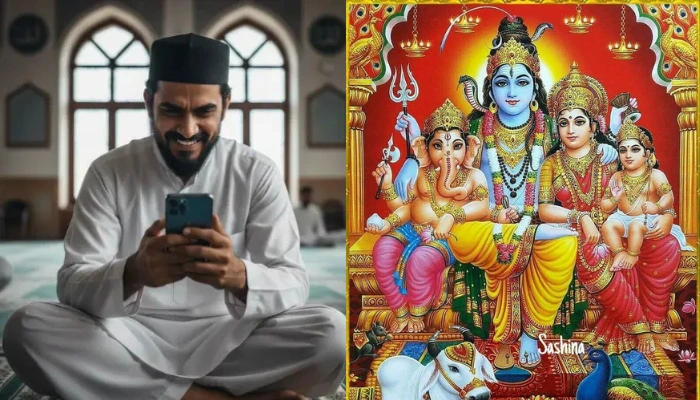
Case Summary
In Khairahi, Sonbhadra, Uttar Pradesh, derogatory and offensive remarks against Hindu deities were being made on social media by a Muslim man named Mohammad Kaif. According to reports, the accused Muslim youth sent obscene comments about Hindu gods and goddesses to Hindu girls' social media inboxes. He also sent offensive photos related to them. This incident came to light when many people on X (formerly Twitter) began raising complaints from 3 January 2026, stating that the accused was making derogatory comments about Hindu gods and goddesses on social media. In view of the seriousness of the case, immediate action was taken by the police in this matter. According to Inspector-in-Charge Karma Rajesh Kumar Singh, in compliance with the instructions, an FIR was registered at the Karma police station under relevant sections of the Bharatiya Nyaya Sanhita, and while investigating the case, the accused Mohammad Kaif was arrested on 4 January 2026. After questioning, he was produced before the court. SP Abhishek Verma initially directed the Robertsganj police to investigate the case and take action. It later emerged that this case was related to the Karma police station area. After this, the action was transferred to the Karma Police, and the accused was arrested and booked.
Why it is Hate Crime ?
The primary category selected in this case is- Hate Speech against Hindus. The subcategory selected is- Anti-Hindu slurs, mocking faith. Anti-Hindu slurs and the deliberate mocking of the Hindu faith owing to religious animosity involve the usage of derogatory terms, stereotypes, or offensive references to religious practices, symbols, or figures. One of the common anti-Hindu slurs used against Hindus is “cow-worshipper” and “cow piss drinker”. The intention of using this term is to demean and mock Hindus as a group and their religious beliefs since Hindus consider the cow holy. Additionally, some symbols and the slurs attached to them have a historical context that exacerbates the insult, hate, stereotyping, dehumanisation and oppression against Hindus. Cow worship has been used for centuries to denigrate Hindus, insult their faith and oppress Hindus specifically as a religious group. There has been overwhelming documentation about how cow slaughter has been used to persecute Hindus with cow meat being thrown in temples and places of worship. There has also been overwhelming documentation where cow meat (beef) has been force-fed to Hindus to either forcefully convert them to Islam or denigrate their faith. Apart from cow worship, the Swastika – which holds deep religious significance for the Hindus – has also been misinterpreted and distorted to use as a slur against Hindus. Similarly, the worship of the Shivling has been used by supremacist ideologies and religions to denigrate Hindus owing to religious animosity. Such slurs and denigration stem out of inherent animosity and hate towards Hindus and their faith, therefore, it is categorised as hate speech targeted at Hindus specifically owing to their religious identity. This incident stands as a clear instance of religiously motivated hate speech, as the Muslim perpetrator abused and denigrated Hindu gods and goddesses through obscene comments, deliberately sending them to Hindu girls' social media inboxes. For Hindus, these deities occupy an immensely sacred position, central to their faith, upbringing, and daily worship from childhood. They embody profound spiritual reverence, cultural identity, and religious devotion towards these deities. Any act of abusing Hindu deities constitutes a direct assault on Hinduism itself, designed to provoke outrage, inflict deep emotional wounds, and erode the dignity of Hindu believers. This targeted denigration qualifies unequivocally as a hate crime, as it exploits religious vulnerabilities to incite division, foster fear, and violate the sanctity of a community's core beliefs, crossing into criminal territory by weaponising faith against an entire group. By sending such offensive and derogatory comments and photos regarding Hindu deities directly into Hindu girls' inboxes, the perpetrator executed a deliberate act to provoke and lacerate Hindu religious sentiments, rendering it a stark case of religiously motivated hate speech. When hate speech targets Hindu gods and deities in this manner, it emboldens others, sparking a dangerous ripple effect where individuals feel encouraged to unleash similar vitriolic statements. This proliferation normalises contempt for Hinduism, fostering an environment ripe for escalating Hinduphobia and threatening the social fabric where Hindus can practise their faith without fear. Far from harmless banter, these acts sow seeds of division, amplifying prejudice against Hindus and their faith. Since this case meets the parameters of a religiously motivated offence, it is being added to the hate crime database of the Hinduphobia Tracker. Disclaimer: The Hinduphobia Tracker records the dates of incidents based on when the crime occurs rather than when it is reported by the media. However, in this particular case, media reports have not stated the exact date when the accused made such derogatory comments. It only states that from 3 January 2026, people on social media were outraged over the accused's denigrating remarks. Therefore, for documentation purposes, 3 January 2026 is being considered as the indicative date of the incident.


Case Status
Arrested


Perpetrators Details
Perpetrators
Muslim Extremists
Perpetrators Range
One Person
Perpetrators Gender
male
 Sources




