Hindu youth committed suicide after being brutally assaulted by Muslim youth for protesting against atrocities on Hindus in Bangladesh
 Mungeli, Chhattisgarh, India
  30 December, 2025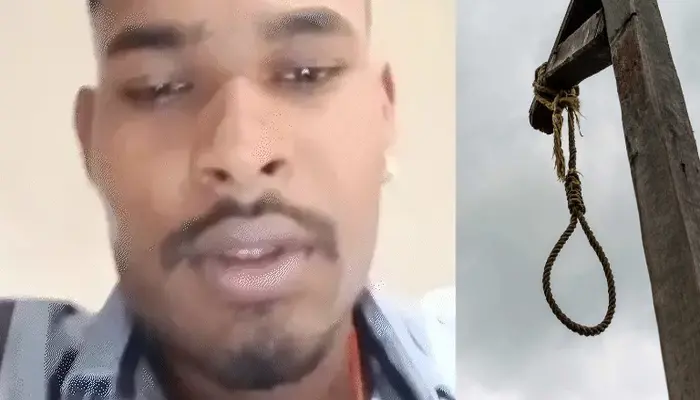
Case Summary
In the Bampara village of Mungeli district, Chhattisgarh, a Hindu youth named Naresh Sahu (19) committed suicide at his residence following a brutal assault on him by a Muslim youth named Sohail for participating in protests against the ongoing persecution of Hindus in Bangladesh. According to reports, Naresh Sahu, a resident of the Bampara village, was associated with a Hindu organisation and was residing in the Sarkanda area of Bilaspur for work purposes. He had taken part in a protest organised on 28 December 2025 to protest against atrocities committed against Hindus in Bangladesh. On the night of 31 December 2025, while returning home on his motorcycle near the Shanichari Rapta area, Naresh was intercepted by Sohail Khan and an associate, who blocked his path. They verbally abused him for his association with Hindu organisations, brutally assaulted him, tore his clothes, brandished a knife-like weapon and threatened to kill him, including death threats directed at a Hindu leader, Ram Singh. Fearing for his life, Naresh abandoned his motorcycle and fled the scene. Subsequently, Naresh approached the City Kotwali police station and submitted a complaint detailing the assault and threats. However, his ordeal did not end; he experienced severe mental distress, stating that he was being pressured by police and was compelled to give false statements, while no immediate, effective action was taken against the accused. Thereafter, Naresh returned to his family home in the Bampara village. On 2 January 2025, Naresh recorded a video shortly before his death in which he stated that he was going to die and named Sohail as responsible for the circumstances leading to his suicide. He also spoke of the pressure he faced during the police proceedings, and appealed to Hindu leaders and organisations to ensure justice, after which he hanged himself. The video circulated widely on social media, after which villagers reached his house and found him hanging from a noose. Police also arrived at the scene and sent the body for post-mortem examination. Following the incident, members of Hindu organisations surrounded the City Kotwali police station in Bilaspur, blocked roads and staged a sit-in protest demanding immediate arrests and strict action, warning that responsibility for any escalation would rest with the administration. In response to the unrest, additional police forces were deployed in the area. Senior police officials stated that evidence, including CCTV footage, had been collected and that a case of abetment to suicide was registered. Subsequently, Sohail Khan was arrested by the police based on the video and the materials available, while the broader circumstances, including the assault, the sequence of police actions, and the factors contributing to Naresh’s death, were under investigation.
Why it is Hate Crime ?
This case has been added to the tracker under the primary category of - Attack resulting in death. Within it, the sub-category selected is - Attacked for opposing radicals or trying to save victim. In several cases, Hindus are attacked for opposing religiously motivated crimes being committed against a fellow Hindu or simply for voicing an opinion opposing radical elements, who either have in the past or continue to persecute Hindus. In such cases, the initial attack against the victim, against which the Hindu was trying to defend the victim, would also need to be classified as a religiously motivated hate crime. Since the initial crime itself was religiously motivated and the subsequent crime of attempting to save the victim or speaking against the radical elements ends up inviting a violent attack, it would also be classified as a religiously motivated hate crime. Under this category, cases where the attack led to the death of the Hindu victim/s would be documented. The other sub-category selected is - Attacked for Hindu identity. In several cases, Hindus are attacked merely for their Hindu identity without any perceived provocation. A classic example of this category of religiously motivated hate crime is a murder in 2016. 7 ISIS terrorists were convicted for shooting a school principal in Kanpur because they got ‘triggered’ seeing the Kalava on his wrist and tilak that he had put. In this, the Hindu victim had offered no provocation except for his Hindu religious identity. The motivation for the murder was purely religious, driven by religious supremacy. Such cases where Hindus are targeted merely for their religious identity would be documented as a hate crime. Under this category, cases where the attack led to the death of the Hindu victim/s would be documented. The other sub-category selected here is- Attacked for supporting/being part of perceived Hindu party/org or working for Hindu community. In several cases, Hindus are attacked specifically or tangentially for their association with parties or organizations perceived to be pro-Hindu and/or for working in favor of the Hindu community. One of the classic cases was the attack against a Bharatiya Janata Party Yuva Morcha (BJYM) worker Praveen Nettaru. Nettaru was attacked and hacked to death for his association with Hindu organizations and his work for the Hindu community. He was murdered by PFI, a terror organization that aimed to commit a genocide of Hindus, target Hindu leaders specifically, and turn India into an Islamic Nation. In such cases, it is possible that the immediate trigger for the violence is non-religious – either according to the perpetrator or the police. However, there are surrounding circumstances from which the conclusion can be reached that the victim was attacked for his association with a Hindu organization. In a similar case, Rinku Sharma was attacked by radicals. He was a member of Bajrang Dal and regularly worked for the Hindu community. While the police cited a different non-religious trigger for the attack, it is true that he was associated to a Hindu organization and the family of Rinku Sharma specifically attributed his gruesome murder to him working for Bajrang Dal and raising Jai Shree Ram slogans. Such cases are intrinsically driven by religious hate. Under this category, cases where the attack led to the death of the Hindu victim/s would be documented. This case has been added to the tracker because the Hindu youth, Naresh Sahu, was targeted, assaulted, intimidated and driven to suicide by the Muslim accused Sohail. The victim was assaulted by Sohail primarily for his participation in protests highlighting violence against Hindus in Bangladesh. The assault was not the result of a personal dispute or a spontaneous altercation but arose directly from his public expression of solidarity with persecuted Hindus, making religious identity and expression the clear trigger. The assault, threats, subsequent pressure, and the circumstances leading to his death collectively established a clear pattern of targeted victimisation rooted in anti-Hindu hostility. Firstly, Naresh Sahu was singled out explicitly because of his participation in protests against atrocities committed against Hindus in Bangladesh. The attackers confronted him for his association with Hindu organisations and objected to his involvement in the protests that highlighted Hindu persecution. The verbal abuse directed at him, followed by a physical assault, tearing of clothes, and death threats, demonstrated that the violence was triggered by ideological opposition to his Hindu activism rather than any personal dispute. The accused also threatened to kill a Hindu leader named Ram Singh, demonstrating that the intent was to suppress Hindu voices collectively. Secondly, the escalation from verbal objection to physical violence shows that the accused sought to silence the victim for asserting his Hindu identity. The accused also tore Naresh's clothes in an effort to further humiliate him. The violence functioned as a method of enforcing ideological control through fear. It was designed not only to harm the victim but also to deter him and others from engaging in similar expressions of supporting the Hindu community. It is pertinent to note that Muslim extremists harbour specific animosity towards Hindus and their faith and also view India as a Hindu collectivity. The very basis of the partition of India was that Muslims believed that Islam was a nation unto itself, which could not survive with a Hindu collectivity like India. Therefore, the accused reacted with aggression towards the victim for protesting against Hindu persecution in Bangladesh, indicating that the resentment was towards Hindu solidarity and consciousness. Following the assault, the psychological pressure faced by Naresh compounded the harm inflicted upon him. He recorded a video before his death and identified Sohail as responsible for his death. His death was not an isolated act of despair but the culmination of targeted intimidation, ideological hostility and sustained mental trauma resulting from being attacked for his Hindu identity and beliefs. Taken together, the deliberate targeting of Naresh Sahu for his Hindu activism, the explicit hostility towards his participation in protests for Hindu causes, the use of violence and death threats to silence him, which ultimately led to his suicide, clearly established this incident as an anti-Hindu hate crime. Since the offence was driven by religious hostility and an intent to suppress Hindu expression; therefore, this case has been added to the hate crime database of the Hinduphobia Tracker. Disclaimer: The Hinduphobia Tracker records incidents based on when an event occurred or when the victim's ordeal began. Therefore, the date of the incident has been selected as 31 December 2025, the date on which he was assaulted, though he committed suicide on 2 January 2025. Disclaimer on perpetrator count- The perpetrator count in this case has been recorded as one, as only one individual has been formally identified and arrested in connection with the offence at the time of documentation. While reports indicate that the accused was accompanied by another individual during the assault, the available information does not confirm the identity of the second person, nor does it indicate that any formal charges have been registered against them so far. Hinduphobia Tracker records perpetrators based on verified identification and legal action to ensure accuracy and avoid speculative attribution. As the police have arrested Sohail Khan and registered a case of abetment to suicide against him based on available evidence, including the victim’s video statement, he has been counted as the sole perpetrator at this stage. If further investigation leads to the identification or arrest of additional individuals involved in the assault or intimidation, the perpetrator count will be reviewed and updated accordingly.
Victim Details
Total Victim
1
Deceased
1
Gender
- Male 1
- Female 0
- Third Gender 0
- Unknown 0
Caste
- SC/ST 0
- OBC 1
- General 0
- Unknown 0
Age Group
- Minor 0
- Adult 1
- Senior Citizen 0
- Unknown 0


Case Status
Case sub-judice


Perpetrators Details
Perpetrators
Muslim Extremists
Perpetrators Range
One Person
Perpetrators Gender
male
 Sources




