Attack on Hindu sentiments: Social media influencer makes obscene and derogatory remarks on Hindu deities
 Hyderabad, Telangana, India
  30 December, 2025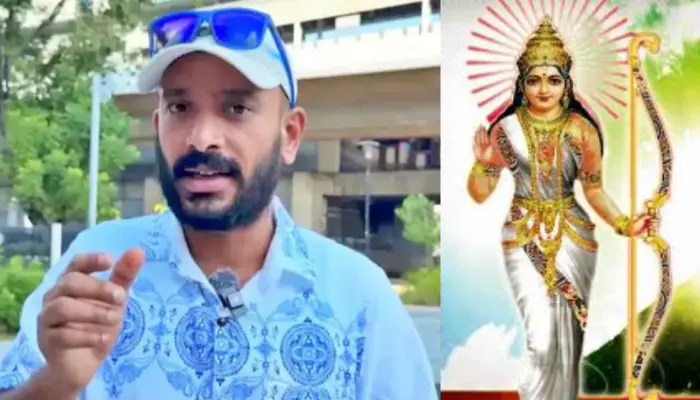
Case Summary
Hindu religious sentiments were insulted after Hindu deities were abused with obscene comments by YouTuber and social media influencer Anvesh, also known as Prapancha Yatrikudu. According to reports, the accused made derogatory, obscene and provocative remarks targeting Hindu deities, religious beliefs, culture and society through his YouTube channel and social media platforms operated under the name “Naa Anveshana.” The complaint was filed by film actress and BJP leader Karate Kalyani at the Panjagutta police station in Hyderabad, after she came across multiple videos in which the accused was repeatedly making defamatory and inflammatory statements about Hindu traditions and revered figures. The content included objectionable remarks about Goddess Sita and Draupadi, figures deeply revered in Hinduism, which caused widespread outrage, fear and a sense of insecurity among devotees and the general public. The comments were made on social media with a clear intention to disrupt communal harmony, while being circulated for personal publicity and monetary gain through views and engagement. Hindu organisations organised protests across the Telugu-speaking states, burning effigies of the YouTuber and demanding strict legal action, including steps to bring him back to India, as he resided abroad. As of the date of writing this report, the police had registered cases against the accused under relevant provisions of the Bharatiya Nyaya Sanhita, the Indian Penal Code and Section 67 of the Information Technology Act and initiated an investigation into the incident. They also stated that notices would be issued to Anvesh to record his statement as part of the proceedings.
Why it is Hate Crime ?
This case has been added to the tracker under the primary category- Hate Speech against Hindus. The subcategory selected is- Anti-Hindu slurs, mocking faith. Anti-Hindu slurs and the deliberate mocking of the Hindu faith owing to religious animosity involve the usage of derogatory terms, stereotypes, or offensive references to religious practices, symbols, or figures. One of the common anti-Hindu slurs used against Hindus is “cow-worshipper” and “cow piss drinker”. The intention of using this term is to demean and mock Hindus as a group and their religious beliefs since Hindus consider the cow holy. Additionally, some symbols and the slurs attached to them have a historical context that exacerbates the insult, hate, stereotyping, dehumanisation and oppression against Hindus. Cow worship has been used for centuries to denigrate Hindus, insult their faith and oppress Hindus specifically as a religious group. There has been overwhelming documentation about how cow slaughter has been used to persecute Hindus with cow meat being thrown in temples and places of worship. There has also been overwhelming documentation where cow meat (beef) has been force-fed to Hindus to either forcefully convert them to Islam or denigrate their faith. Apart from cow worship, the Swastika – which holds deep religious significance for the Hindus – has also been misinterpreted and distorted to use as a slur against Hindus. Similarly, the worship of the Shivling has been used by supremacist ideologies and religions to denigrate Hindus owing to religious animosity. Such slurs and denigration stem out of inherent animosity and hate towards Hindus and their faith, therefore, it is categorised as hate speech targeted at Hindus specifically owing to their religious identity. This case qualifies as a clear instance of religiously motivated hate speech because the accused deliberately targeted Hindu deities, religious beliefs and sacred figures in a derogatory, obscene and humiliating manner. Such comments had the effect of attacking the core religious identity of the Hindu community. Hindu deities such as Mata Sita and Draupadi occupy a central and revered position in Hinduism, symbolising dharma, moral integrity, sacrifice and feminine dignity, and are worshipped by millions of Hindus through daily prayers, festivals, scriptures and lifelong devotion. By abusing and making obscene remarks about these revered figures on public digital platforms, the accused did not merely express criticism or opinion, but actively demeaned objects of faith held sacred by Hindus, thereby inflicting religious harm. The repeated circulation of such content demonstrated conscious hostility towards Hindu beliefs and culture, reducing sacred figures to objects of mockery and vulgarity in order to provoke outrage and undermine the sanctity of the faith. When hate speech targets Hindu gods and deities in this manner, it emboldens others, sparking a dangerous ripple effect where individuals feel encouraged to unleash similar vitriolic statements. This proliferation normalises contempt for Hinduism, fostering an environment ripe for escalating Hinduphobia and threatening the social fabric where Hindus can practise their faith without fear. Far from harmless banter, these acts sow seeds of division, amplifying prejudice against Hindus and their faith. In recent times, social media has increasingly become a platform for anti-Hindu hate, with derogatory memes, videos, and messages targeting Hindu religious symbols, practices, and deities. Such content is recognised as part of a broader pattern of Hinduphobia and religious hate crimes online. This deliberate targeting of revered religious icons firmly establishes this act as a religiously motivated hate crime; therefore, it is being categorised under the hate crime database of the Hinduphobia Tracker. Disclaimer: The Hinduphobia Tracker records the dates of incidents based on when the crime occurs rather than when it is reported by the media. In this case, media reports did not state the exact date when the crime occurred. Henceforth, the date when the media report was published, 31 December 2025, is being considered as the indicative date of the incident. Disclaimer: Media reports did not specify from which state or country the accused made the statements, nor did they mention the country in which the accused was residing at the time of the incident. Therefore, the place of the incident has been recorded based on where the complaint was filed. Accordingly, Hyderabad, Telangana, has been selected as the indicative place of the incident.


Case Status
Complaint registered


Perpetrators Details
Perpetrators
Others
Perpetrators Range
One Person
Perpetrators Gender
male
 Sources




