Hindu sentiments outraged: Leftist-Ambedkarite woman shares offensive image of revered Hindu deity on social media
 India
India  31 December, 2025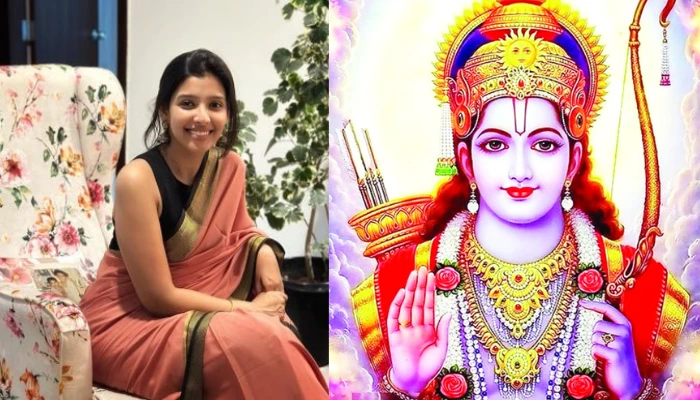
Case Summary
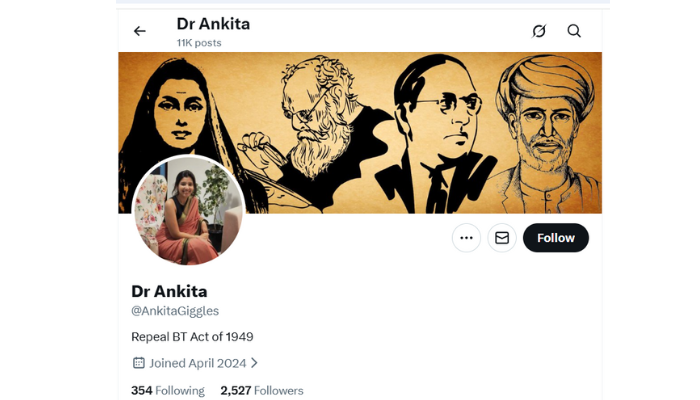
A derogatory, anti-Hindu post denigrating Lord Ram, a revered Hindu deity, was made on social media by a leftist-Ambedkarite woman. The accused created an offensive image of Lord Ram and shared it on X (formerly Twitter). The accused is a woman named Dr Ankita who used the X handle '@AnkitaGiggles'. She posted an offensive AI-generated picture of Lord Ram, where Lord Ram stood depicted as an accused in a courtroom, with folded hands in a posture of submission and guilt before Dr B.R. Ambedkar. The accused also mocked Lord Ram with a caption saying "Guilty". She meant to imply that Lord Ram was a criminal who was being punished by Dr B.R. Ambedkar. This image was posted at 11:06 a.m. on 1st January 2026 and went viral with almost 424.7k views. After this post went viral, it caused outrage among Hindu social media users who called it a deliberate attack on their religious sentiments.
Case Images
Why it is Hate Crime ?
The primary category selected in this case is- Attack on Hindu religious representations. The subcategory selected is- Iconoclastic representation of Hindu Gods/ Goddesses. An icon is a symbol of someone or something that is revered, or a religious representation of a spiritual ideal. Iconography is of vital significance in the Hindu milieu. It helps connect people’s spiritual beliefs with the real world. Iconography within the Hindu faith takes several shapes and forms. Murtis are of most significance to Hindus, to which daily rituals, prayers and offerings are done. Besides the murtis, there are several other symbols which have deep significance in the Hindu faith – the Om and Swastika for example. Any iconoclastic representation of these symbols, images and murtis is an affront to the religious beliefs and faith of the Hindu community itself since the symbols and icons are deeply religious in nature. In this sub-category of crime, we would record hate crimes and iconoclastic representations, in words, art, or any other form of representations of symbols that hold religious significance for the Hindu community. Since these symbols, icons and murtis are central to the Hindu faith, any iconoclastic representation of these symbols is born out of animosity towards the faith itself, manifesting itself through these symbols and therefore, these representations would be considered religiously motivated hated crimes. Another primary category selected is- Hate Speech against Hindus. The subcategory selected is- Anti-Hindu slurs, mocking faith. Anti-Hindu slurs and the deliberate mocking of the Hindu faith owing to religious animosity involve the usage of derogatory terms, stereotypes, or offensive references to religious practices, symbols, or figures. One of the common anti-Hindu slurs used against Hindus is “cow-worshipper” and “cow piss drinker”. The intention of using this term is to demean and mock Hindus as a group and their religious beliefs since Hindus consider the cow holy. Additionally, some symbols and the slurs attached to them have a historical context that exacerbates the insult, hate, stereotyping, dehumanisation and oppression against Hindus. Cow worship has been used for centuries to denigrate Hindus, insult their faith and oppress Hindus specifically as a religious group. There has been overwhelming documentation about how cow slaughter has been used to persecute Hindus with cow meat being thrown in temples and places of worship. There has also been overwhelming documentation where cow meat (beef) has been force-fed to Hindus to either forcefully convert them to Islam or denigrate their faith. Apart from cow worship, the Swastika – which holds deep religious significance for the Hindus – has also been misinterpreted and distorted to use as a slur against Hindus. Similarly, the worship of the Shivling has been used by supremacist ideologies and religions to denigrate Hindus owing to religious animosity. Such slurs and denigration stem out of inherent animosity and hate towards Hindus and their faith, therefore, it is categorised as hate speech targeted at Hindus specifically owing to their religious identity. This case constitutes a clear instance of a religiously motivated offence as the accused deliberately denigrated Lord Ram, one of the most revered deities in Hinduism. The accused posted an AI-generated image portraying Lord Ram as a criminal standing in a courtroom, depicted with folded hands in a posture of submission, guilt, and humiliation before Dr B. R. Ambedkar. Such a portrayal amounts to an iconoclastic representation of a Hindu deity, wherein the traditional and sacred image of Lord Ram is morphed, distorted, and derogatorily edited to depict him as weak, pathetic, and criminal. This act directly targets Hindu religious iconography and is intended to demean and insult Hindu beliefs, thereby constituting a direct attack on Hindu religious sentiments. Lord Ram holds an exceptionally sacred position in Hinduism. He is revered as Maryada Purushottam, the ideal of righteousness, dharma, moral conduct, and divine kingship. Millions of Hindus worship Lord Ram daily, regard him as an incarnation of Lord Vishnu, and consider him central to their spiritual, cultural, and civilizational identity. Any attempt to depict Lord Ram as a criminal or an accused person before a court is not merely an artistic expression but a deliberate act of religious insult, aimed at hurting the deeply held religious sentiments of the Hindu community. The generation and circulation of such imagery on social media, where it reaches a mass audience, aggravates the offence and establishes a clear intent to offend, provoke, and demean the Hindu community. Further aggravating the offence, the accused explicitly mocked Lord Ram by captioning the image with the word “Guilty.” Calling a revered Hindu deity “guilty” or portraying him as a criminal under trial constitutes direct mockery and vilification of a religious figure. This is not satire or criticism of a historical figure but a targeted insult to a living faith, designed to portray Hindu beliefs as illegitimate and worthy of ridicule. Such language and imagery reflect deep-seated religious hostility, revealing the accused’s animus toward Hinduism and the Hindu community by deliberately framing their most revered deity as morally and legally culpable. The religious animosity behind the offence becomes even more evident when viewed in light of the accused being an Ambedkarite. Ambedkarite ideology, under the stated objective of opposing caste discrimination, has frequently been used by its adherents to denigrate Hinduism, Hindu gods, and Hindu religious traditions as a whole. In many instances, opposition to caste has been weaponised to justify hostility toward Hindu deities and faith symbols, rather than addressing social reform constructively. In the present case, the accused’s use of Dr B. R. Ambedkar as a judicial figure presiding over Lord Ram further demonstrates an ideological attempt to humiliate Hinduism itself. Attacking an entire faith and its deities due to ideological hostility clearly amounts to hate speech and a hate-driven offence. Since this case meets the parameters of a religiously motivated offence, it is being added to the hate crime database of the Hinduphobia Tracker.


Case Status
Unknown


Perpetrators Details
Perpetrators
Others
Perpetrators Range
One Person
Perpetrators Gender
female
 Sources




