Hindu temple attacked, sacred religious symbols desecrated by miscreants in Madhya Pradesh
 Burhanpur, Madhya Pradesh, India
  28 November, 2025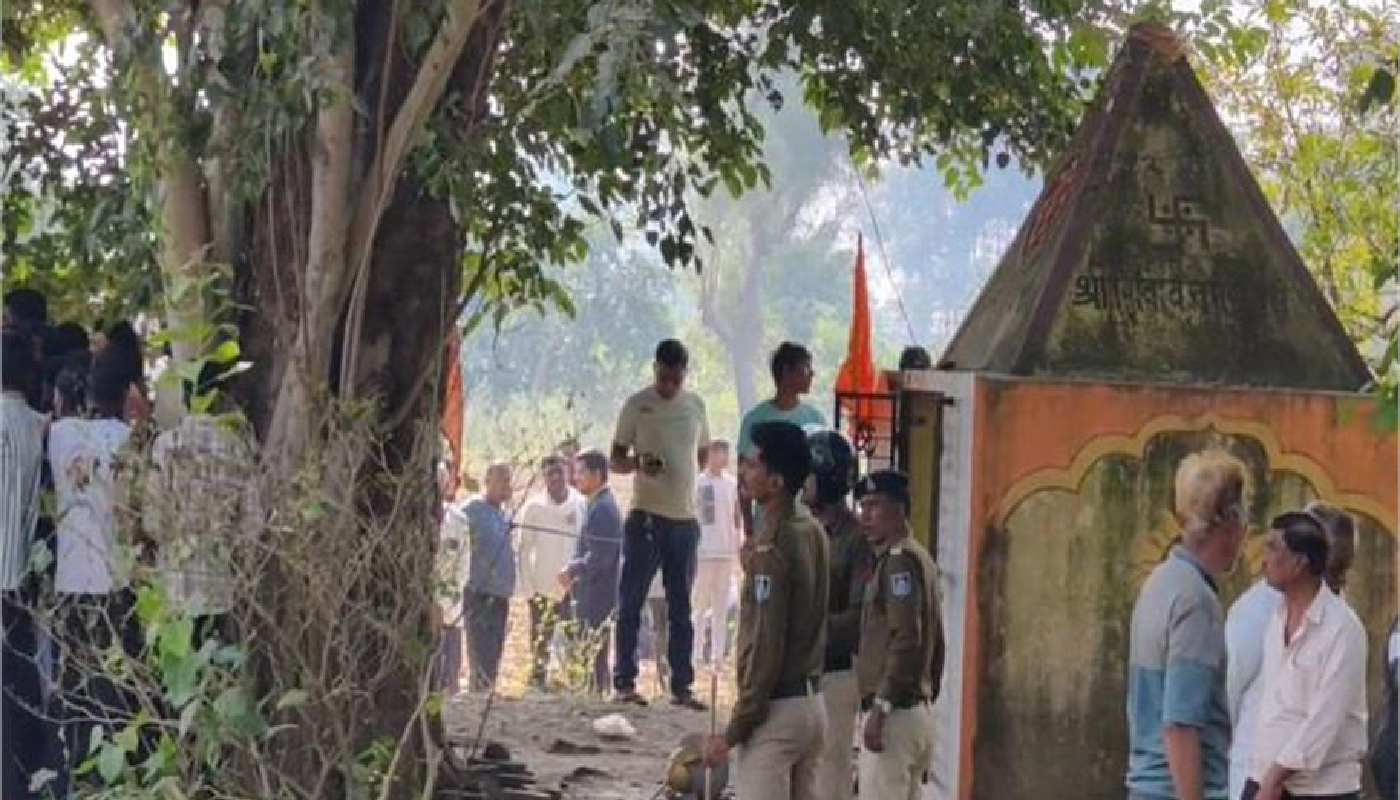
Case Summary
In Biroda village of Burhanpur district, Madhya Pradesh, a Hindu temple of Lord Shiva was attacked, and sacred religious symbols inside the temple were desecrated. This created tension among local Hindu residents on the morning of 29 November 2025. The incident took place in the Lalbagh police station area, where unknown miscreants damaged the Shiva temple located a short distance from the village. The temple’s kalash was toppled and broken, and the Shivling, a sacred religious symbol depicting Lord Shiva, inside the sanctum was also damaged. Nearby agricultural fields and the village water supply pipeline were damaged as well. When villagers learned about the vandalism early in the morning, a large number of people from the Hindu community gathered at the temple. The Additional District Magistrate (ADM), Sub-Divisional Magistrate (SDM), City Superintendent of Police (CSP), and a heavy police force reached the location and assured residents that strict action would be taken against the perpetrators. Officers urged the crowd to maintain peace while the investigation proceeded. Residents said that tension had been recurring in Biroda and that a major religious yajna, a Hindu religious ritual, was scheduled to be held in the village two days later. They believed the vandalism was an attempt to disturb communal harmony ahead of the event. Lalbagh police registered a case against unknown individuals and began an investigation. CCTV footage from the surrounding area was being examined to identify the culprits. Additional police forces were deployed in the village, and authorities stated that the situation had come under control. The administration said that those responsible would be identified soon and would face strict legal action.
Why it is Hate Crime ?
The primary category in this case is: Attack on Hindu religious representations. The first subcategory under this is: Attack on Temples. In Hinduism, a temple is the abode of the Deity. The Deity in the Temple is consecrated, thereby, making it a real, breathing entity. Hindus believe that not just the Deity but the temple premises itself are sacred to Hindus since Hindus hold the faith that the entire Temple space is an amalgamation of the divine energy of the deity. Given the central significance of Temples in Hindu Dharma, any attack against a Hindu Temple or its peripheral premises is an attack on the faith itself and is born out of animosity towards the faith, of which, the Temple is a central tenet. Any manner of attack against a Temple and/or its premises would therefore be considered a religiously motivated hate crime. The second subcategory under this is: Desecration of Hindu religious symbol. Icons and symbols or a religious representation of a spiritual ideal are widely revered in Hinduism. Iconography is of vital significance in the Hindu milieu. It helps connect people’s spiritual beliefs with the real world. Iconography within the Hindu faith takes several shapes and forms. Murtis are of most significance to Hindus, to which daily rituals, prayers and offerings are done. Besides the murtis, there are several other symbols which have deep significance in the Hindu faith – the Om and Swastika for example. Since these Hindu religious symbols hold paramount importance in Hinduism, any desecration of symbols, icons, murtis, religious representations and manifestations, is driven by animosity towards the faith itself which manifests itself through these murtis, icons and symbols. Therefore, any desecration of these Hindu religious symbols and representations is considered religiously motivated hate crimes under this category. This case has been added to the Hinduphobia Tracker because it presents clear indicators of a religiously motivated attack targeting Hindu sacred space, symbolism and community sentiment. The vandalism of a consecrated Shiva temple is not an act of random mischief; it strikes at a central pillar of Hindu religious life. In Hinduism, the Shivaling represents Lord Shiva's formless, infinite essence as a cosmic pillar of light, embodying creation, preservation, dissolution, and the union of masculine and feminine energies. It serves as a profound symbol of supreme consciousness, transcending physical form to connect devotees with divine energy and spiritual liberation. Temples in the Hindu tradition are not merely physical structures but living sites of worship, belief and religious identity. Attacking the temple, a revered religious institution, and damaging the kalash and desecrating the Shivling constitute a direct assault on sacred representations that hold deep religious significance for Hindus. Such acts are understood by the community as attacks on the very presence of the deity, making the act inherently religious in nature. The method and timing of the vandalism also reinforce its targeted character. The destruction of the Shivling, the kalash, and other temple elements reflects precise knowledge of what would create maximum hurt and disruption within the Hindu community. The simultaneous damage to surrounding fields and the water pipeline suggests deliberate selection of community assets associated with the temple environment. These elements demonstrate that the intent extended beyond property damage into creating an atmosphere of fear and offence that directly impacts religious practice. Community testimonies further reveal that this was not an isolated act but occurred in a setting where tensions had surfaced earlier. Villagers highlighted that a major religious yajna was scheduled in the area two days later, a detail that adds weight to the suspicion that the vandalism was timed to disturb preparations for a significant Hindu ritual. Attempts to disrupt collective religious events frequently demonstrate a broader agenda of hostility towards Hindu identity, rituals and congregation. The administrative response, involving the deployment of senior officials and a heavy police force, also underscores the severity of the situation. Such coordinated mobilisation generally occurs only when the incident possesses the potential to inflame communal tensions, which acts of temple desecration invariably do. While the culprits have not yet been identified, the nature, location and symbolism of the attack establish it as a religiously targeted hate crime under established markers used by the tracker. Because the harm was inflicted upon a Hindu place of worship and its sacred symbols, objects that embody profound religious value, the offence is rooted in animosity towards the Hindu faith and practice. For these reasons, the case has been included in the hate crime database of the Hinduphobia Tracker.


Case Status
Complaint registered


Perpetrators Details
Perpetrators
Unknown
Perpetrators Range
Unknown
Perpetrators Gender
unknown
 Sources




